In 1927 Virginia Woolf published an essay in the Yale Review called “Street Haunting: A London Adventure”, which had a simple conceit: “We are walking to the Strand to buy a pencil.” But the buying of the pencil becomes secondary to “haunting” the famous thoroughfare, watching the people who “pursue so many curious trades … or support life with even greater fantasticality”. If Woolf were to return today, almost a century later, she’d likely get equally waylaid because it's the Strand where those “pursuing curious trades” and those “with great fantasticality” flock once again – and that’s mostly the result of one block’s transformation.
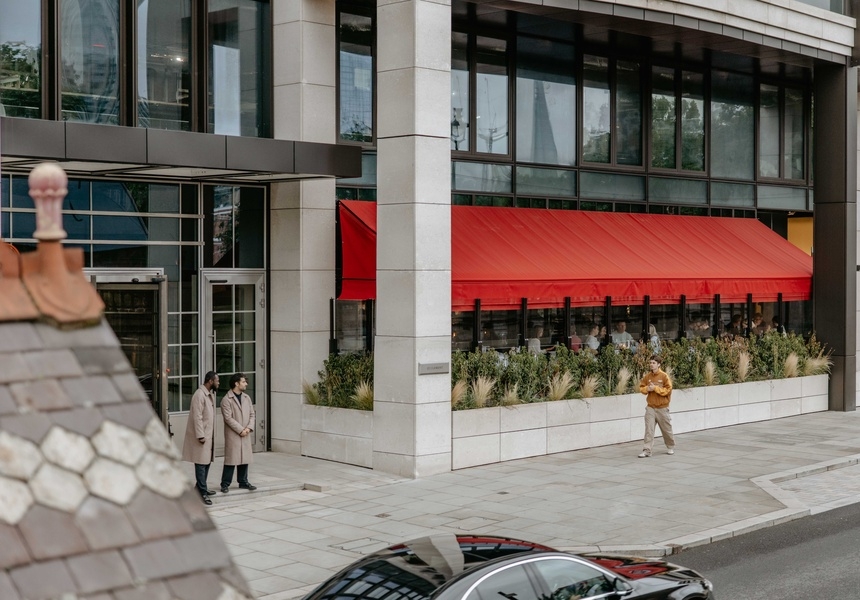
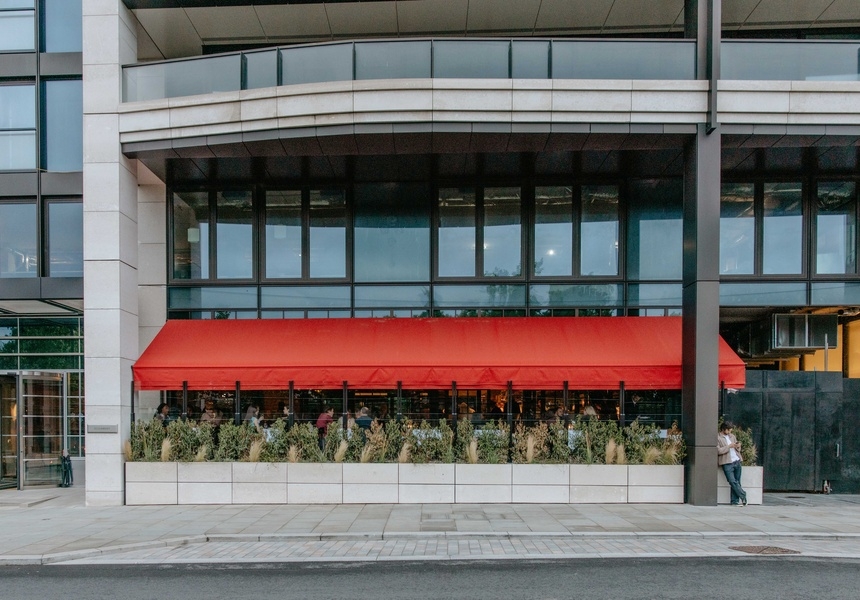
Cross Waterloo Bridge, turn right past Somerset House and the King’s College alumni wall, which runs the cultural gamut from Florence Nightingale to Kele from Bloc Party, and you’ll arrive at 180 the Strand. Take the parallel riverside route along Temple Place and you’ll arrive at 180 the Thames. Together the two buildings, flanked left and right by Surrey Street and Arundel Street, make up 180 Quarter – but, increasingly, “180” does just fine.
“The first time you could say to a taxi driver, ‘Take me to 180,’ it felt pretty good,” says designer Alex Eagle, who, with her creative partner (and best friend from school) Sophie Hodges, has been responsible for the look and feel of most of the quarter’s component parts.
It has progressed, piece by piece, over the last decade or so, but the 180 project is now reaching something of a crescendo. St Clement, the Nick Jones-helmed hotel that’s been in buzzy soft-launch mode all summer, opens its doors officially in mid-September, in time for London Fashion Week. Florence Knight’s panoramic 11th-floor restaurant, Lunette, and Eagle’s new concept store will follow. The 25,000-square-foot 180 Health Club with its 25-metre river-view pool arrives in October, and a freshly landscaped public square will be unveiled later in the autumn, ready for a festive spectacle.
The geography here is curious. Normally this kind of placemaking-at-scale happens in rundown urban corners, but this is bullseye central London and has been since Roman times. According to Geoff Browell and Eileen Chanin, authors of The Strand: A Biography, “few streets have been more eventful and influential in the wider world over such a long period”. They cite it as the birthplace of broadcasting and where the mystery of DNA was first unravelled. But it “just got sort of … forgotten a bit,” says Jones, who began work on St Clement after stepping away from his Soho House empire in late 2022.
Arundel Great Court, the brutalist building reborn as 180 the Strand, was originally designed by architect Sir Frederick Gibberd and completed in 1975. Its last guise was the unsexy London HQ of accountancy firm Arthur Andersen and a businessy Swissôtel (The Howard, which, according to a 2003 review in the Guardian, was “a hotel of two halves – if you're at the back you'll probably want to keep the curtains drawn”). In 2012 it was acquired by entrepreneur and property developer Mark Wadhwa, who later saw the whole thing threatened by Boris Johnson’s financially and logistically insane – and thankfully abandoned – garden bridge proposal.
Wadhwa, who has been married to Eagle for 14 years and is the founder and creative director of 180 Quarter, is regularly seen on site chatting to tenants and holding meetings, but he prefers to keep himself out of the limelight and details of his life are scant. He was born in London to an Indian father and an English mother and was brought up for a while in Soho, where the couple currently lives. He studied design history at the Royal College of Art, spent time in Manhattan with Andy Warhol’s business manager, Fred Hughes, who introduced him to loft culture, worked on the redevelopment of Camden’s Art Deco ‘Black Cat’ building and projects on Soho’s Marshall Street (among others), and founded The Vinyl Factory in 2001 after securing some original presses from north-west London’s iconic EMI building. It was a risky move in peak CD era, but the vinyl resurgence followed and The Vinyl Factory remains the UK’s only major pressing plant, producing more than two million records every year. (It also publishes two issues a year of cult music magazine Fact.)
The Strand project also had a long game. “I remember seeing this building, I don't know how long ago, with Mark,” Jones says. “It was derelict and empty, but listening to his vision about the area – it’s where London started. It’s so beautiful, and the river gives it such spirit.” But as building work began, “It did feel a bit sad,” Eagle admits. “When it's alive, you love it for its utilitarianism, but brutalism seems that much harsher when it’s not being used.”
Wadhwa’s driving philosophy is inspired by the “fun palace”, an idea conceived by theatre director Joan Littlewood and architect Cedric Price in 1961. The pair dreamed of a single, flexible building where communities could come together in the name of art, science and culture. “Choose what you want to do – or watch someone else doing it,” their manifesto explained. “Dance, talk or be lifted up to where you can see how other people make things work. Sit out over space with a drink and tune in to what's happening elsewhere in the city.” As a nod to this founding principle, the building’s original layout included a DJ booth lit by a giant neon Fun Palace sign, where Optimo’s Keith and Jonnie would regularly turn up behind the decks in the early days.
“More than being property, or production, or making, or developing, Mark’s a community person,” says Eagle. “Without him choosing the community, it wouldn’t have this essence of soul, this flavour, this – horrible word – authenticity.”
Today that community spans everyone from New York Times-owned sports publisher the Athletic to designer Harris Reed to, full disclosure, your very own Broadsheet London. But in its infancy this vast concrete building only had a few tenants. Dazed Media had sizeable floor space and the late polymath designer Virgil Abloh was one of the first with an office. “Virgil first introduced me to Mark at 180 Strand in 2017,” explains Tawanda Chiweshe, co-creative director of Abloh’s design studio Alaska Alaska. “I was confronted with a labyrinth of a building with just a few studios. It didn’t make sense to me at the time – I’d never seen prime property used in such a fluid but still serious way.” Its industrial blank-canvas nature also made it the perfect venue for London Fashion Week to decamp permanently in 2017, and The Vinyl Factory was programming crowd-pulling work from artists including Hacienda designer Ben Kelly, Arthur Jafa, Ryoji Ikeda, Kahlil Joseph and Abloh himself.
In 2020, a plucky young artist also pitched an idea. Jonah Freud, his New York residency plans banjaxed by Covid, had retreated back home. “I’m in the countryside at my dad's place,” Freud explains. “[Dazed founder] Jefferson Hack comes for lunch and ends up staying for four months. I’d explained to him I’d always had this idea for a library. And he was like, ‘Oh, I've just moved into this building, you should meet my landlord. He loves books – see if he's got any interest.’”
Later that year, Freud’s Reference Point – part library, part bookshop, part bar – was given a space on Arundel Street. Wadhwa’s only question was “Do you like moving books?”, reasoning that if Freud liked the worst part of the job, he’d do well at everything else. “There was absolutely no reason for Mark to take a huge swing on the greenest person possible,” admits Freud. “Early on I said, ‘I don't think this is going to make much money, but I think there's a world in which it becomes something really interesting,’ and he said, ‘It doesn’t matter, it’s not about money. I like what this is about.’” Reference Point now stocks more than 12,000 books and programmes regular cross-cultural events.
Slowly, more people were lured to what was building on the Strand. Beauty brand Charlotte Tilbury shifted its glamorous HQ to a street-level space on Surrey Street. Next door to Tilbury, Frieze founders Amanda Sharp and Matthew Slotover opened their restaurant, Toklas, in October 2021 with the logic that “the art world loves good food – not the most expensive restaurants but where interesting things happen”. In February 2022, Soho House’s rooftop 180 House (on which Jones, Eagle and Hodges collaborated closely) became a headline attraction. “I think it helped shift the perception of the area from somewhere people simply passed through to somewhere you might actually come to spend time,” says Aliyah Plummer, the group’s head of membership. “Seeing London from that height, even if you’ve lived here for years, you suddenly see familiar landmarks and parts of the city in a completely different way. It has a way of making you feel connected to London as a whole, rather than just one particular pocket of it.” 2022 ended with Iré Hassan-Odukale and Jeremy Chan’s West African-inspired restaurant Ikoyi taking up a prime corner location and swiftly landing a second Michelin star. “I think [180’s] fluid beginning has defined its trajectory,” says Chiweshe, who remained in the building as Alaska Alaska evolved into YY, his new studio with collaborator Francisco Gaspar. “It’s been this accessible hub with museum-level production and a point of entry for everyone.”
Last summer another corner location opened, the aptly named Corner Shop, which cemented the area’s mini-neighbourhood status. The all-day cafe and grocery store quickly became the heartbeat of the block, where students, tourists, locals and those working nearby would flock to meet, eat, drink and shop a well-curated array of quality produce. “We see a lot of the same people come back every day,” says its operations chief, Gus Haughton, proudly. “I’m trying to remember names, but I know the orders! It's meant to be social. You can come in and just order a water or spend £150 on groceries – there's no pressure for anything. It’s something that all Londoners can use.”
Perhaps buoyed by Arundel Great Court’s successful rebirth, the wider area has recently benefitted from accelerated backing. Westminster City Council invested £22 million to convert over 7000 square metres of road around St Mary le Strand church into a landscaped and pedestrianised “people’s piazza” in 2022, a move that has seen both air quality and visitor numbers climb sharply. The Courtauld’s £82 million redevelopment of its Somerset House campus is now well underway and expected to finish in 2029, while Somerset House itself had a culinary glow-up, with Poon’s and Aram taking residence in the past 12 months. Jeremy King’s Simpson’s regen finally reopened to great fanfare in March. Conde Nast’s 2025 arrival in the area, at Adelphi House, felt important enough for another nearby mega-development, Brettenham House, to list the Vogue publishers as “local occupiers” twice in its sales brochure.
The area’s first landmark has played its part, too. “I wanted to imagine if The Savoy had been built today,” Jones explained the first time he introduced me to St Clement. I asked The Savoy’s managing director, Franck Arnold, how he viewed the comparisons. “In many ways, there’s an interesting parallel between the vision Nick Jones has brought to St Clement and the spirit Richard D’Oyly Carte brought to this part of London when he opened The Savoy in 1889,” he said. “In very different eras, they both set out to create something distinctive, ambitious and of its moment. With so much new life along the Strand, it is becoming somewhere to spend time again.”
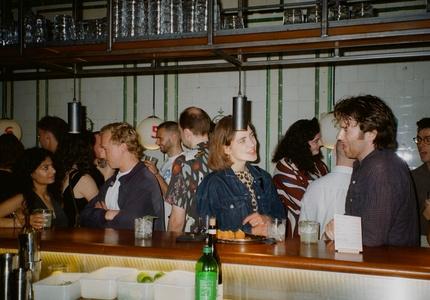
The Savoy chose to wow guests with its modernity – “Electric lighting, lifts (or ‘ascending rooms’, as they were known) and hot and cold running water were extraordinary innovations,” says Arnold. Jones, who wants St Clement to be thought of as “a really fantastic place to stay when you’re in London, and not just another big hotel with a load of marble in it”, has opted instead for extraordinary generosity during the early open-for-locals days. Returning guests have been promised a preferential rate. Its crowd-pulling, critic-pleasing all-day restaurant, Cafe Clement, has extended discounts to those working in 180 Quarter and its neighbours, as well as offering the local cabbies free coffee, breakfast and late-night burgers on certain dates. Bobbi’s, the hotel’s semi-private bar, has already hosted a few “I was there” nights – and had all its branded ashtrays pocketed in the process.
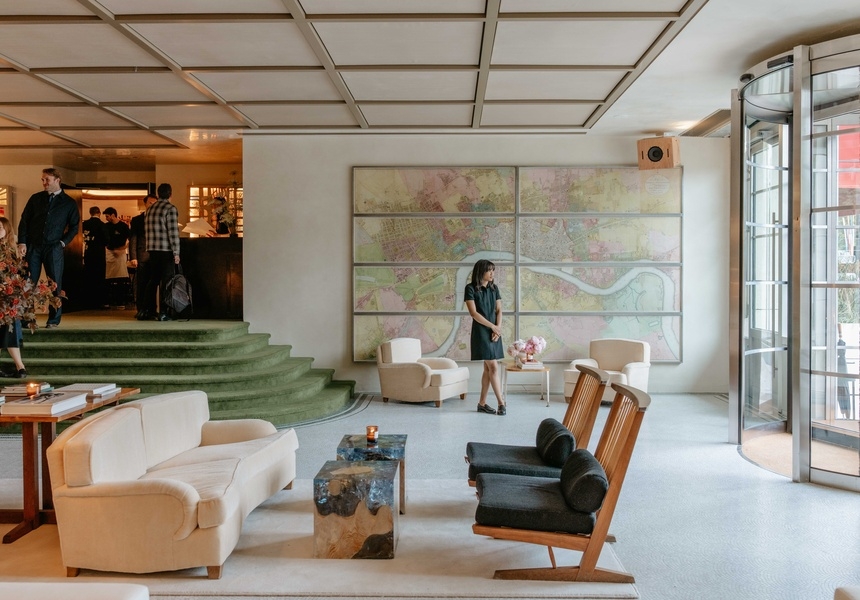
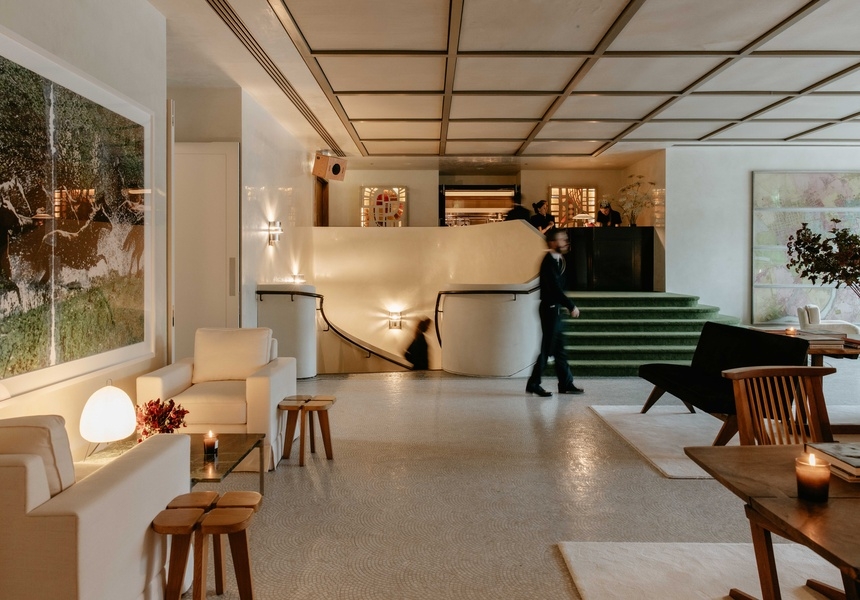
From a design perspective, the entire 180 the Thames precinct – which comprises Bobbi’s, Cafe Clement, the hotel and a host of residential apartments (on sale, through word-of-mouth only, for between £1.2 million and £30 million) – was a chance to build on what had come before. “We were trying to not be too derivative of anything we’d really seen,” says Hodges. “But obviously, the main plan was to make sure it felt nothing like Soho House.” The flooring became “an obsession” for her and Eagle. “It has come from 180 the Strand and spilled out to 180 the Thames – the use of mosaic, the use of [high-end wood-plank flooring] Dinesen,” explains Hodges. “In Bobbi’s, we found some really old teak flooring that came from a bank in Fleet Street and now sort of feels like it's been there for about 100 years – partly because of the amount of alcohol that’s been spilt on it already.” Hodges also talks up the impact of Sorelle, the “chemical-free, British-grown, seasonal flowers” grown by an old friend on a two-acre farm in East Devon and now stocked at Corner Shop. “[Those flowers] have kind of reinvented the look [at St Clement] a few times already.”
Actually, almost everyone I speak to mentions Sorelle as a kind of analogue for the symbiotic nature of the overall operation. “[Mark’s] philosophy is to have someone really own their own four walls,” explains Haughton. “Then you'll naturally meet other people in industries that are side by side or at similar stages who you could work well with together – and that’s how you’ll get the best results long-term.”
“I was never drawn to commercial spaces,” admits Sophie Clyde, as she shows me her new work-in-progress basement studio. Clyde, who first met Wadhwa and Eagle while working in Ibiza, is described by some as the spiritual heart of 180. She operates somewhere between artist-in-residence and breathwork and movement coach, whose practice centres on the very grounding use of wood. “I couldn’t believe the feeling when I walked in – the creative pulse was just kind of rippling. [Mark and Alex] really took the time to get to know what I was about and the philosophy behind my work. I'd never had so much creative freedom, and that’s so priceless.”
Jonah Freud agrees. “We've run completely autonomously since the day we started. We've never been nudged in a direction. We've never been asked to do anything. The building is an ecosystem that works because there's not, like, a central command trying to get everyone to talk to each other. Everyone gets to create their own world. And those worlds just naturally flow because there's a shared philosophy rather than a shared rule book.”
So does an ecosystem of this scale ever reach an end point? “Hopefully no community ever ends,” muses Hodges. “It might not need any of us,” adds Eagle. “But it will still live on in its own way.”
This article originally appeared in the fifth issue of Broadsheet London's magazine.