What comes to mind when you think of the ’90s? Eyebrows as thin as pencil lines? Bucket hats, baby tees or beer-soaked parkas? Underground raves where pupils bloomed to black? Tate Britain’s new exhibition The 90s: Art and Fashion brings the decade back into focus through more than 100 photographs, artworks and garments, tracing creative exchanges between magazines, dance floors, catwalks and galleries.
As you enter the exhibit, a pair of Dr Martens takes centre stage, but with a razor-sharp surprise: blades are embedded in the toecaps. It’s an early work by Sarah Lucas, one of the Young British Artists (YBAs), in which she transformed a working-class staple into a weapon of defiant femininity – a suitably jagged introduction to a show about capturing a country’s image in all its gritty, grungy and gory glory.
Guest curator and former British Vogue editor Edward Enninful became fashion director of i-D, one of the era’s “style bibles”, at just 18. For co-curator Helen Little, who grew up in the industrial north of England, overlapping creative worlds offered a way in. “My entry into the art world was not directly through contemporary art or any kind of art history,” she tells Broadsheet. Instead, it came through magazines, clubs and fashion.
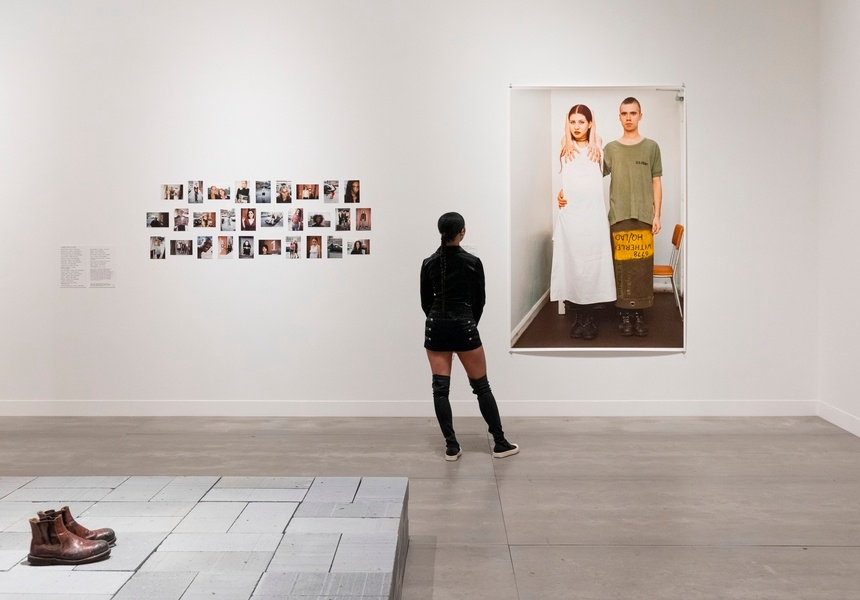
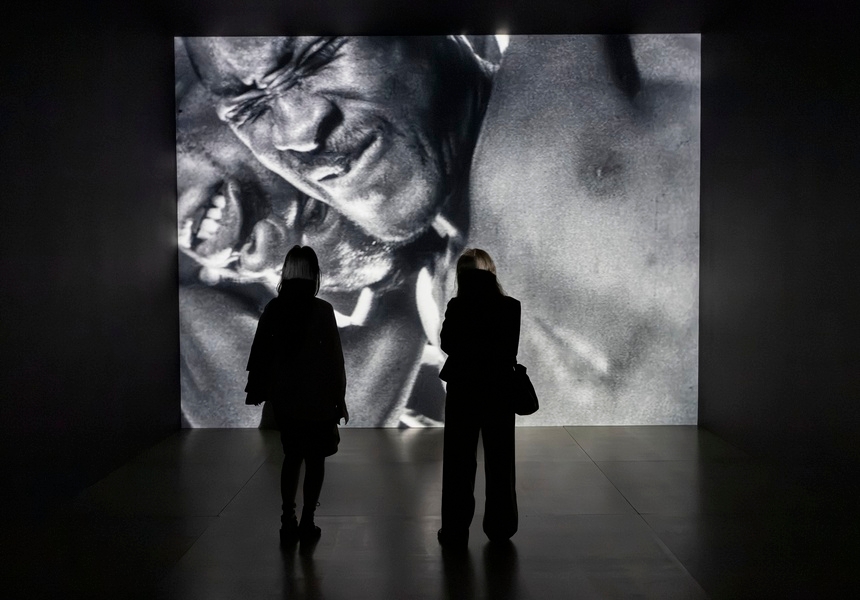
The opening rooms capture a generation stripping away the neon and opulent excesses of the 1980s. Nigel Shafran photographs suburban teenagers in their own clothes; a waifish Kate Moss wears a pink vest and a cross, fairy lights glowing around her like a Madonna’s halo in a portrait by Corinne Day. In Juergen Teller’s photograph, Moss lies in bed, pink hair splayed across the pillow like tufts of candyfloss. Nearby, Naomi Campbell shaves her legs, looking stylishly spidery, while artist Gillian Wearing dances in Peckham on a television screen overhead.
It’s a celebration of girlhood in all its unpolished, vulnerable and awkward shades. “A lot of the work in the show is asking what it means to be a girl from this time,” Little says. These artists brought what she calls “the messy business of life” onto the catwalk and into the gallery.
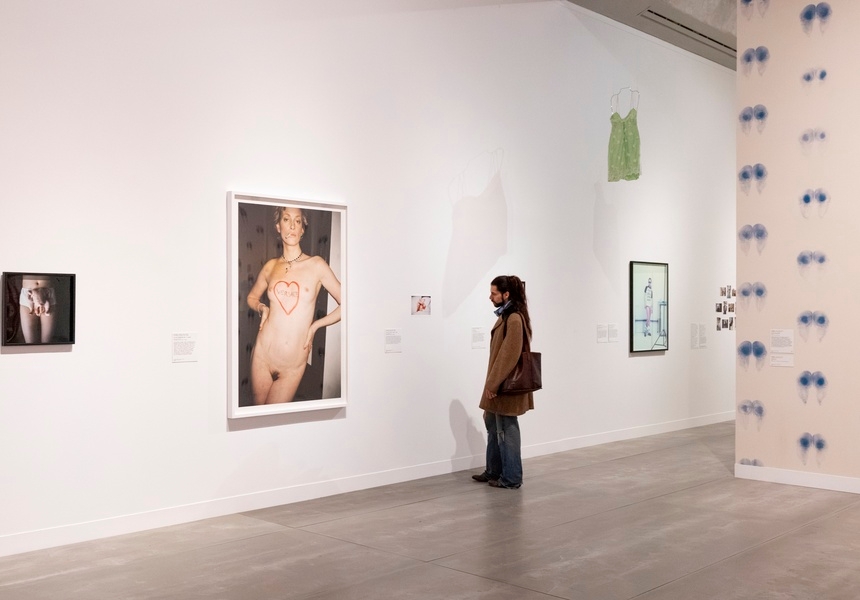
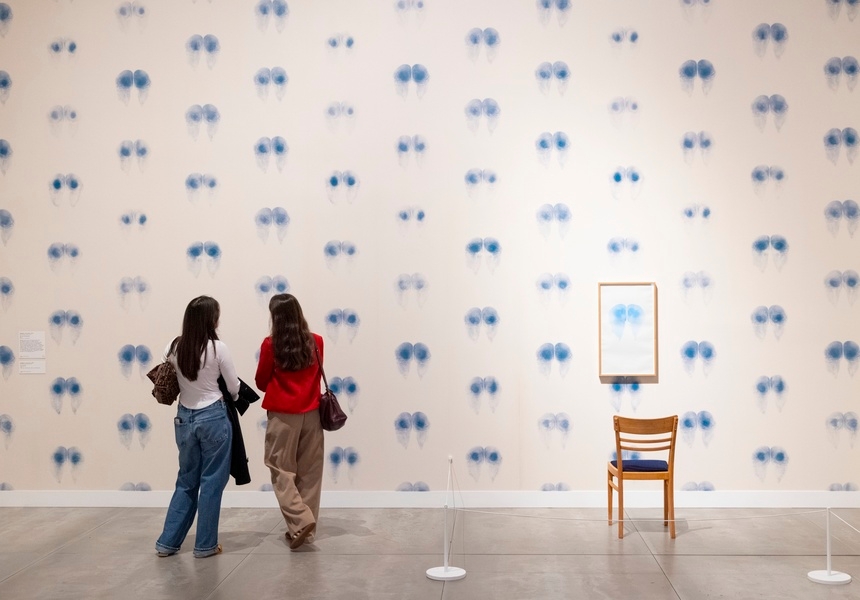
In the next room, the clothes come off. Abigail Lane’s Bottom Wallpaper covers a wall in blue impressions that, from a distance, could pass for a swarm of jellyfish. Up close, they resolve into inked arses. Little dubs it “artistic mooning”. Nearby, Jenny Saville’s body presses against Plexiglas, while in Lucas’s Chicken Knickers, a raw chicken covers the artist’s underwear – the idea of women’s bodies as meat made as literal as can be.
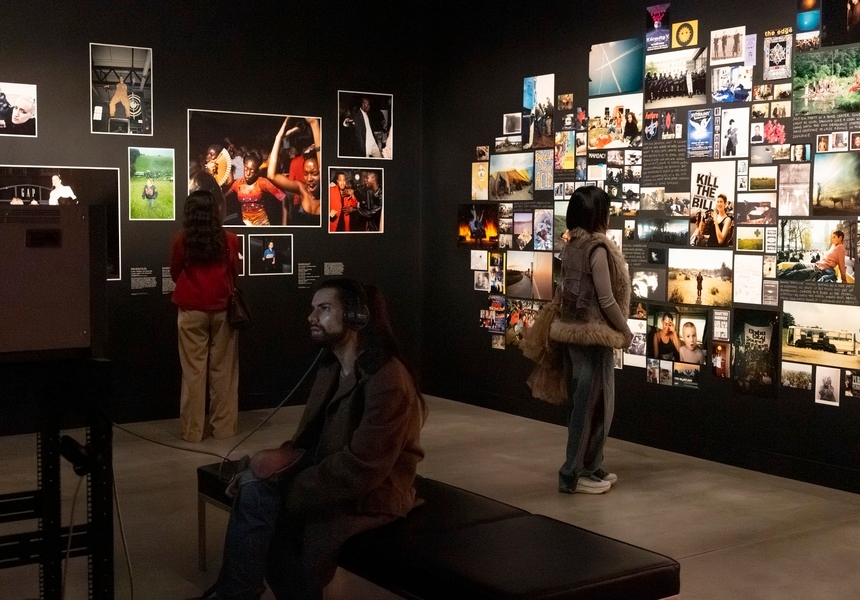
A dimly lit room shifts the tempo into a celebration of rave culture. Against black walls, photographs show bucket hats, chokers and wide-eyed dancers at Manchester’s legendary club Hacienda and beyond. Photographer and artist Vinca Petersen’s wall-long collage places party flyers alongside armed police and a squatters’ handbook, capturing the freedoms and confrontations of this free-party culture.
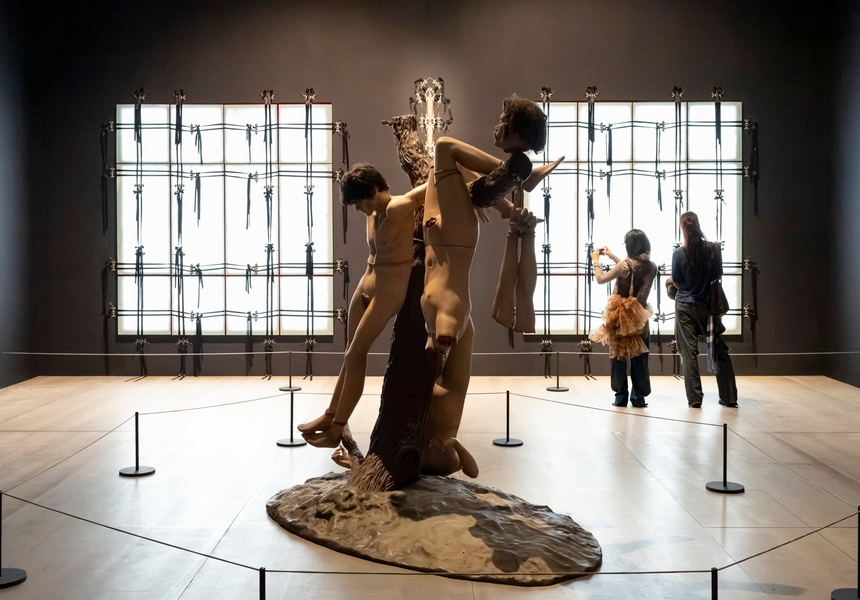
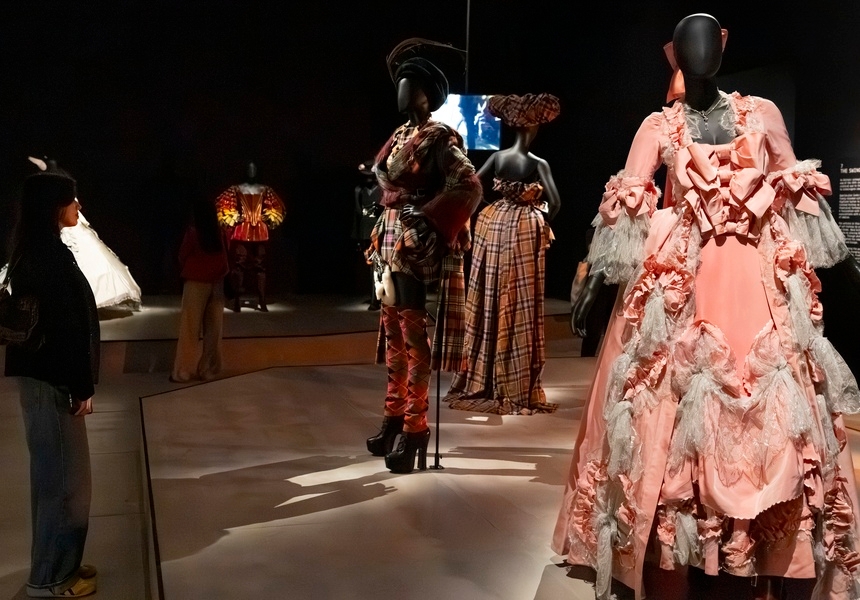
Things take a darker turn in the portion of the exhibition named Body Shock, where the work is often grotesque, gothic and intentionally provocative. Alexander McQueen’s animal skins and armour-like bodices share space with Jake and Dinos Chapman’s mutilated figures draped across a tree, inspired by Goya’s The Disasters of War. Hamad Butt’s sculptures containing hazardous chemicals bring the fear and stigma surrounding HIV/AIDS into focus.
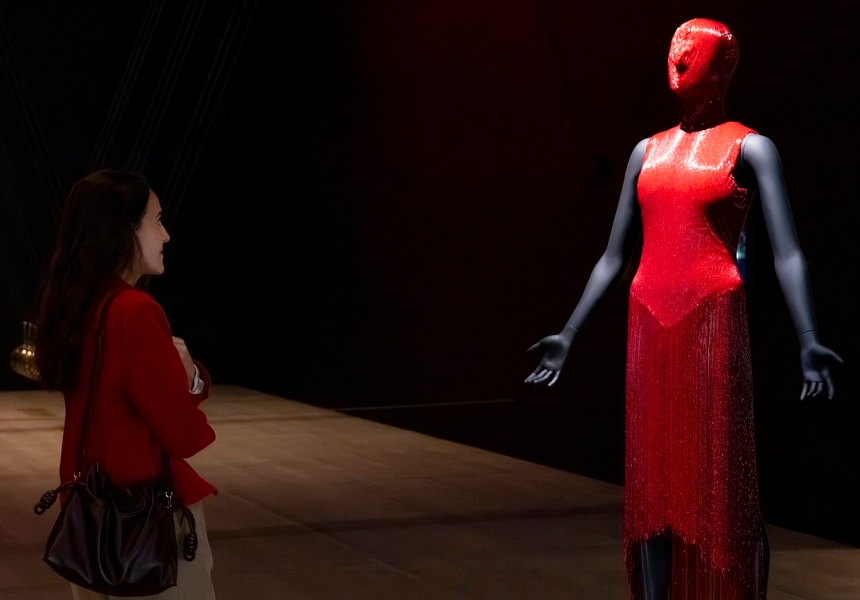
Then comes a much-needed breather in the next room, which is focused on ’90s minimalism. Hussein Chalayan’s conceptual clothing is a real highlight, including an airmail dress once worn by Björk and a tiered modernist coffee table that, in accompanying footage, becomes a wooden skirt as a model steps inside it. It’s a testament to Chalayan’s brilliance in turning fashion into conceptual performance art.
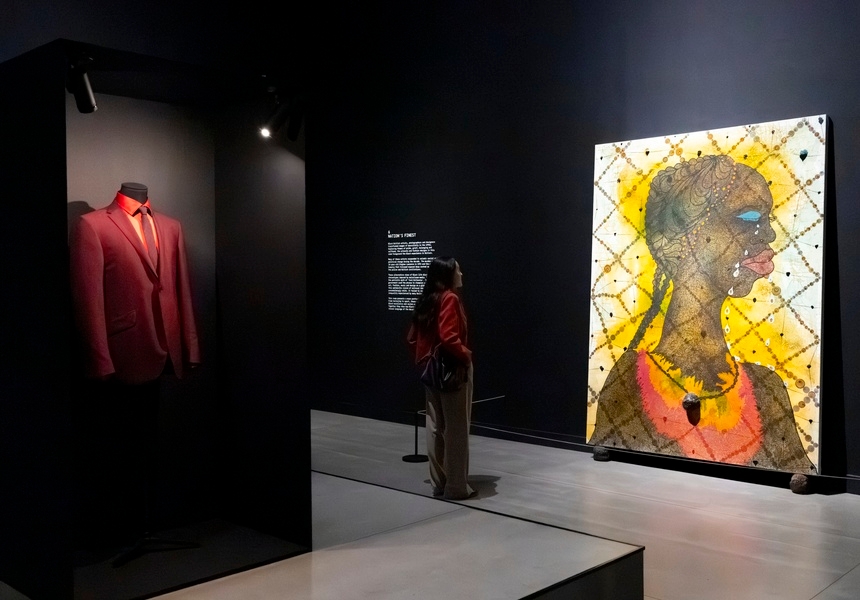
Later rooms question how inclusive Cool Britannia really was. Chris Ofili’s No Woman, No Cry, a multi-media tribute to Doreen Lawrence and her son Stephen Lawrence, who was murdered in a racially motivated attack in London in 1993, appears alongside work championing Black British creativity. Maud Sulter casts Black women as classical muses, while Yinka Shonibare inserts himself into Victorian aristocratic life as a flamboyant dandy, refashioning history to put himself in the frame.
Together, these works by 70 artists and designers capture the culture Enninful describes as “raw and restless and open to reinvention”. The bucket hats and baby tees are very much here, but so is the decade’s darker side. “We’ve been very unapologetic about tackling the challenges of the period,” Little says, “as well as the optimism.”
The 90s: Art and Fashion runs at Tate Britain from October 8–February 14, 2027.