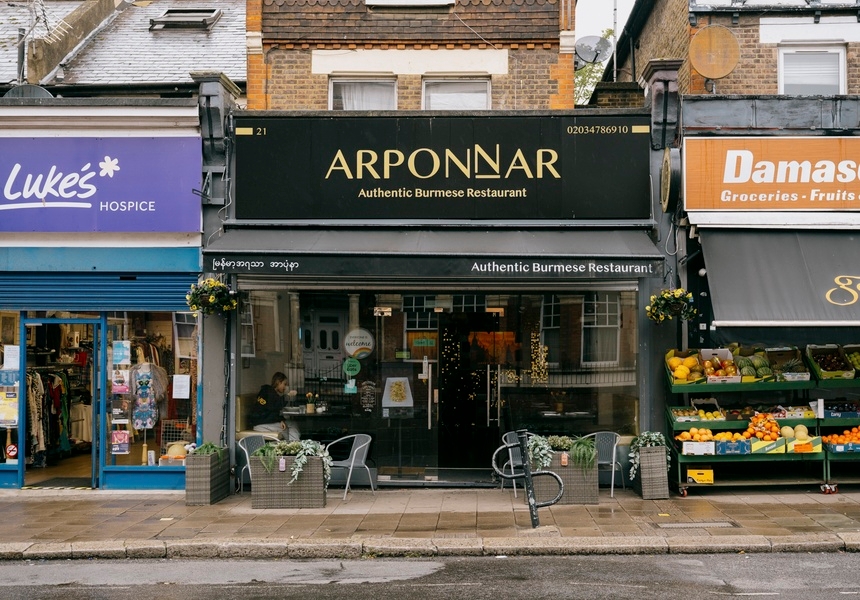
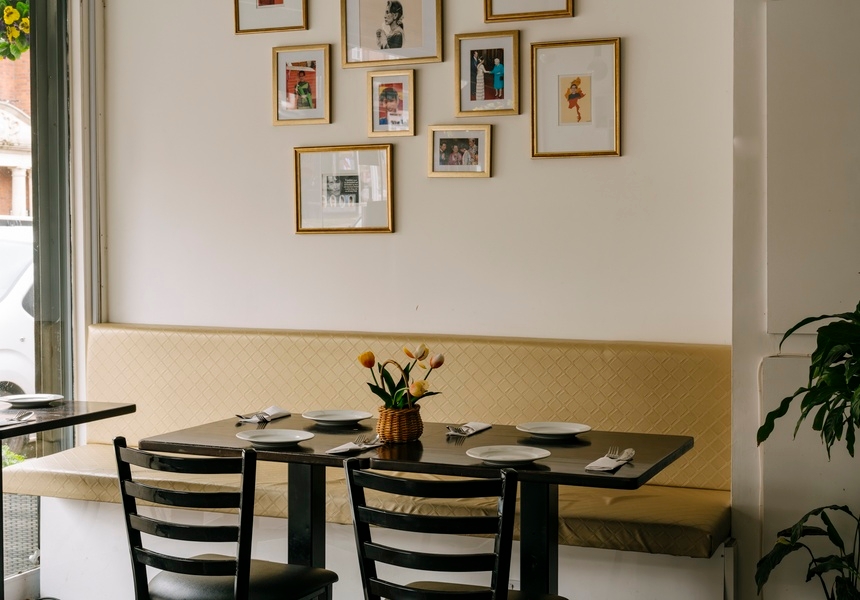
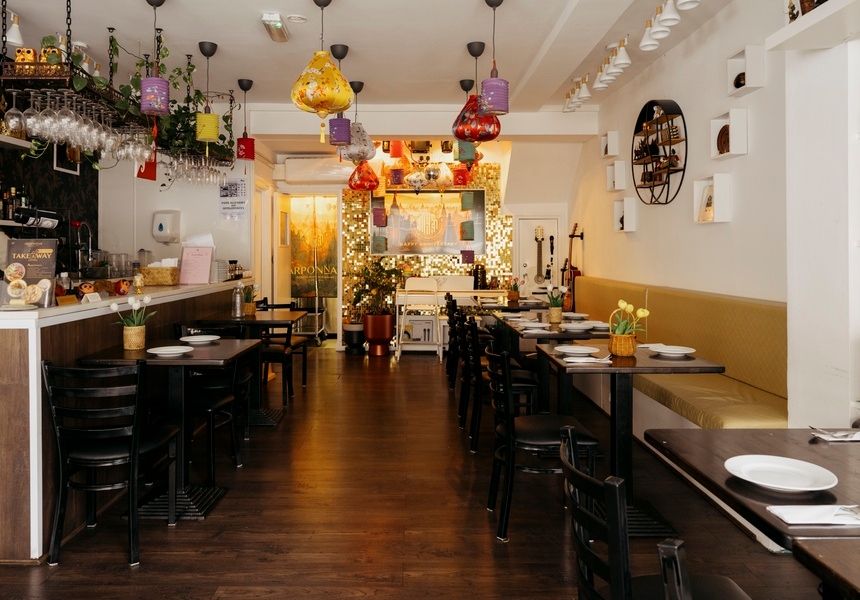
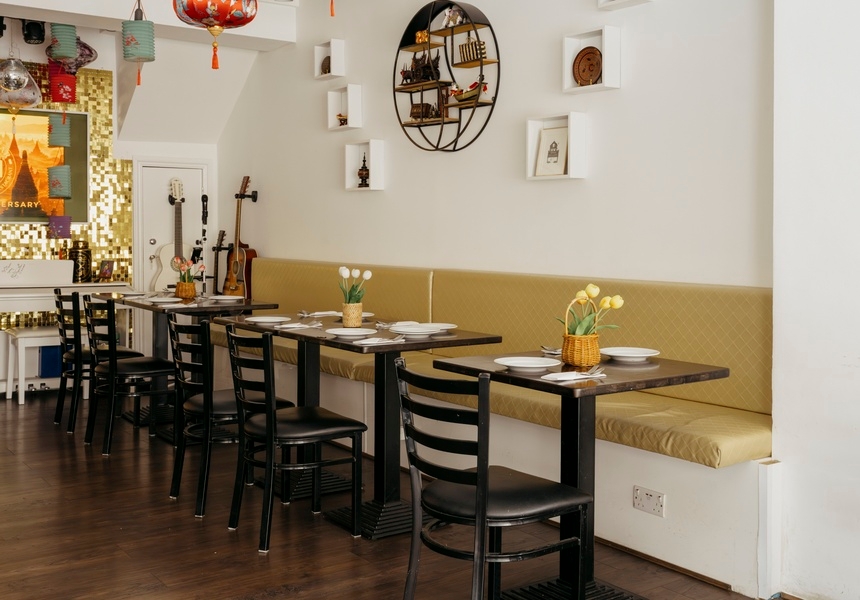
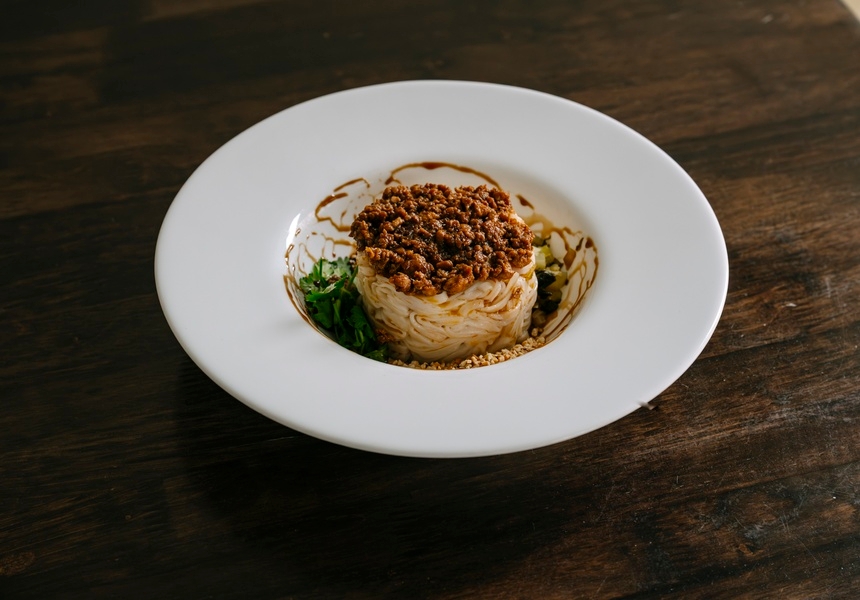
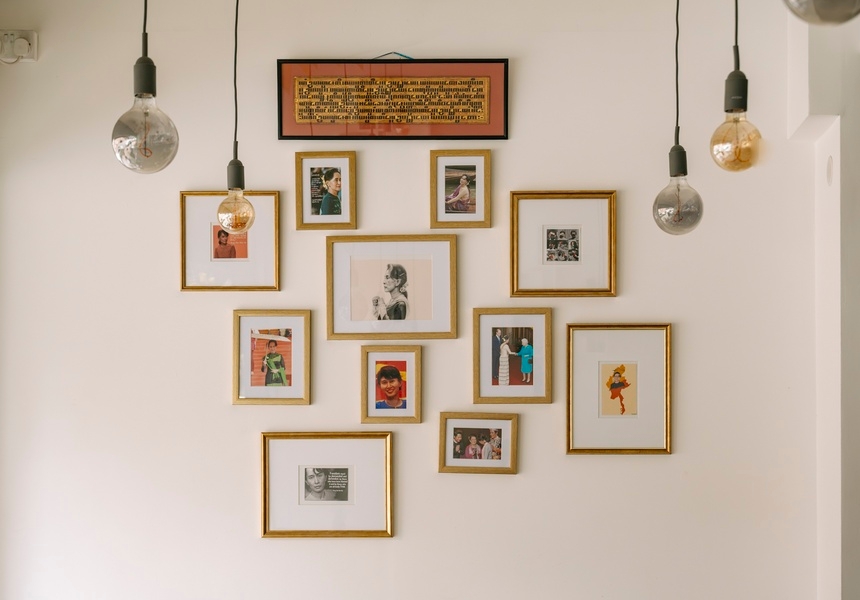
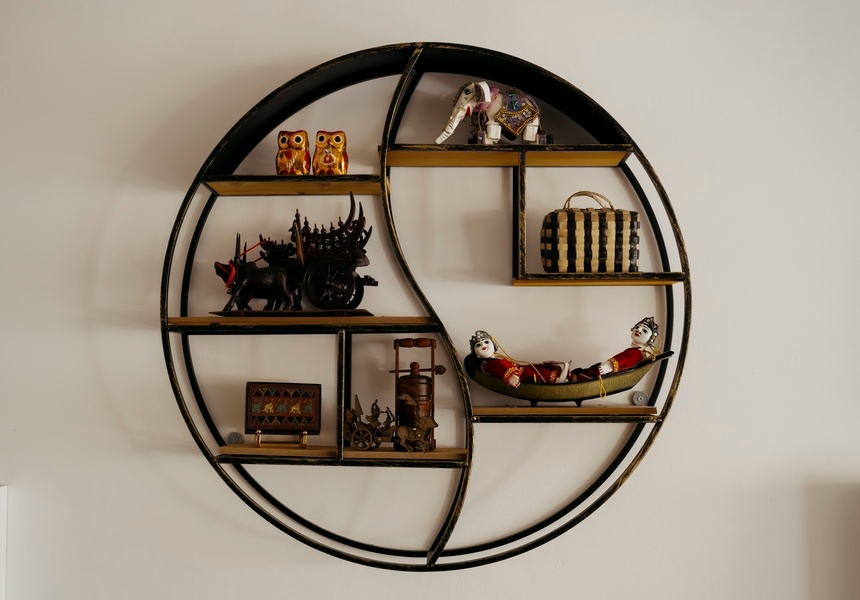
Anyone with a Burmese relative will feel a sense of familiarity the minute they step into Arponnar in Willesden. There’s the reassuring drone of a Burmese radio station in the background, as an elder monologues about the events of the day; the intricate teak carvings of harps and Buddhist stupa; and the still-prevalent framed images of Aung San Suu Kyi that dot the shelves mounted on the wall. And there’s a faint sizzle and the unmistakeable aroma of ngapi, the nation’s distinctive shrimp paste, hitting hot oil.
Burmese restaurants are few and far between in London – the city hasn’t had a homestyle Burmese restaurant since the long-tenured Mandalay Golden Myanmar closed in 2021 – so a new arrival is understandably treated by the community as a major event. Arponnar, which opened in 2024, started as a lockdown project when co-founders Zarne Koko and Thant Zin – also the restaurant’s chef – were furloughed from their jobs. Their home-cooking project picked up buzz in the local Burmese community, eventually growing into Saw 19 Kitchen, a catering company based out of Koko’s home in north London that did everything from weddings and monastery events to huge fundraisers like the Raise Three Fingers festival supporting those affected by Myanmar’s military coup.
When the opportunity came to open a restaurant, the pair pondered whether they might find more success with a format widely recognised by Londoners – a broadly “Asian” restaurant, as Koko puts it – until they decided to bet on themselves.
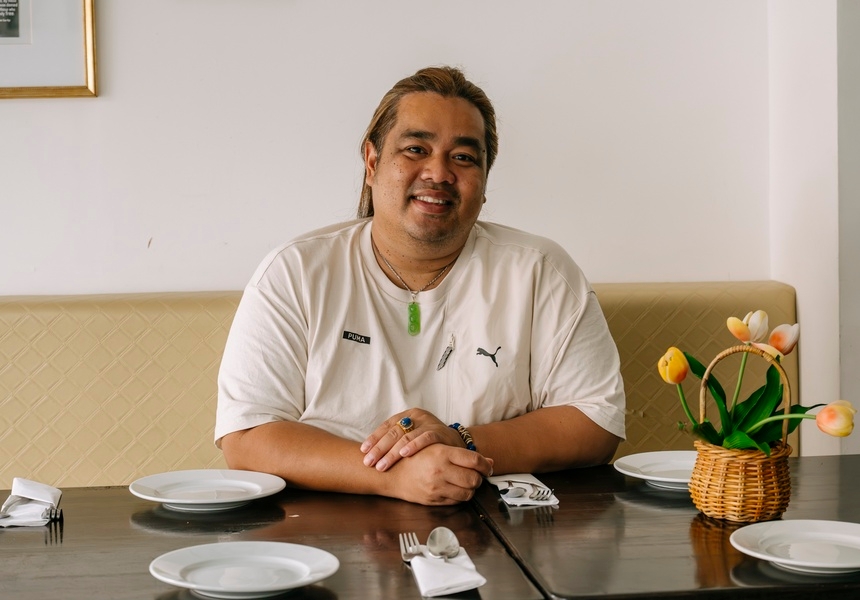
“I thought, ‘We have lots of Burmese people demanding me to cook for them. Why not?’” Koko says. “When I did the menu, it was about what I wanted to eat. I wanted to show off our cuisine.”
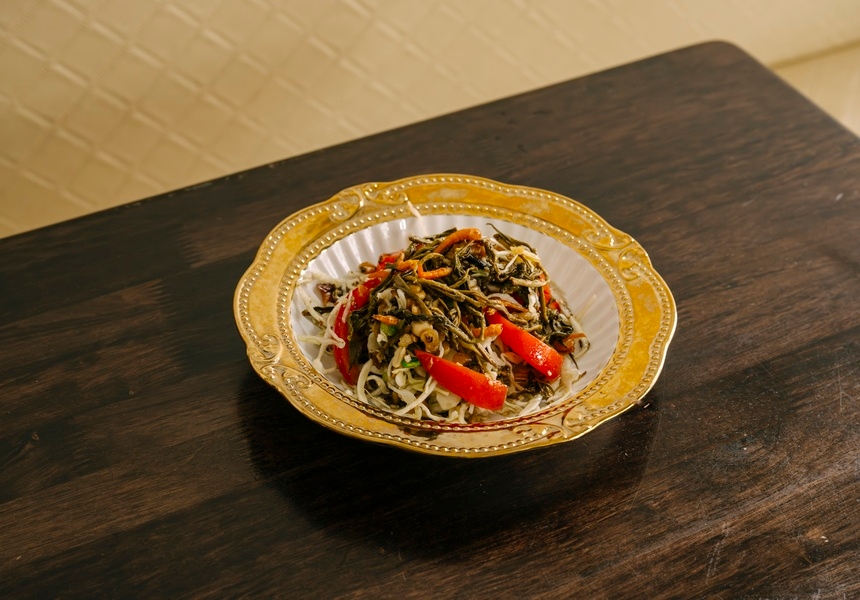
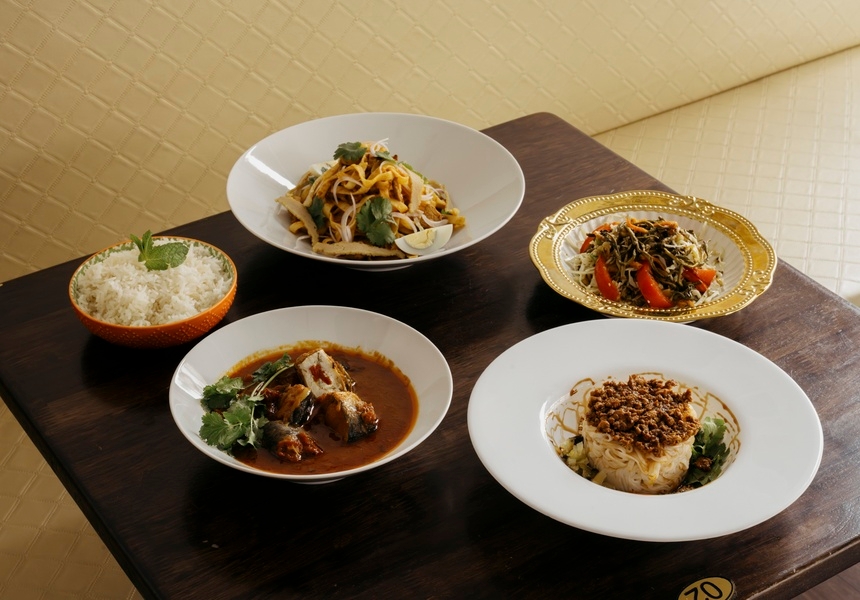
For first-timers, Koko is proud of the restaurant’s gin thoke (ginger salad), a tangle of pickled ginger, tomatoes, chillies, crunchy fried beans and nuts, garlic, dried shrimp and split-pea flour that pleads for another spoonful after the last.
“[Burmese] salads are totally unique,” Koko smiles. “No one makes salads like ours. The ginger salad is so unique, and the lahpet [tea-leaf salad] is unique as well. “
Then there’s Zin’s Shan khao swe (Shan noodles), a popular rice noodle dish with tomatoes and tender chicken, plus crunch from pickles and warmth from chilli oil. Every dish tastes as if it had been cooked and served at a Burmese kitchen table, unmodified for Western palates.
Greater depth arrives in lesser-seen plates like mandalay meeshay (rice noodles with pickled mustard greens and clear soup); kyay oh (a noodle soup with freshly ground meatballs); and wet thar dote htoe, a street-vendor snack of stewed pork offal on skewers, served with the aromatic cooking broth and chilli sauce.
“We changed it … [for]a restaurant setting. It’s not popular for the Western people, but Chinese and Taiwanese customers love it,” Koko says. “In Burma, normally it’s street food. You can see everything – you can see pork belly, pork ear, offal. You point to it, and they’ll cut it and put it on the skewer. Afterwards, the vendor will count the pieces and that’s the bill. And you’ll drink a bit of the broth and eat it with chilli sauce.”
In a city increasingly familiar with organ meat, the dish has been a hit. “I put it on the menu because it’s one of my favourites,” Koko says. “People order it a lot. There are some nights where almost every table has wet thar dote htoe.”
The restaurant’s popularity with locals has been buoyed by the area’s growing Burmese community – itself bolstered by an influx of Burmese students fleeing the junta’s conscription policy, which targets men between the ages of 18 and 35 and women aged 18 to 27. Koko says half his regulars are Burmese.
Koko himself was forced to change his identity after his outspokenness on social media landed him in hot water. “The soldiers came to my house in Burma,” he says. “They were asking my mother and family where I was. So I had to change my name completely.”
According to Koko, “arponnar” is a term for aunties who make desserts at gatherings, and it has also become an affectionate nickname for him. But he’s not inward looking – if anything, he wants his culture and cuisine to be embraced more widely, even going as far as prospecting central London sites for a second Arponnar down the line.
“When I came to the UK in 2004, in Manchester, there was only one Vietnamese restaurant. But now in Manchester there’s a lot of Vietnamese food, and people know how to eat [it],” he says. “As a community, we should be proud and open our restaurants everywhere, because people should know Burmese food. My target isn’t just two restaurants – it’s about identity and awareness.”
Arponnar
21 Walm Lane, NW2 5SH
Hours:
Mon 1pm–10pm
Tue 6pm–10pm
Wed to Fri 1pm–10pm
Sat & Sun 11am–10pm