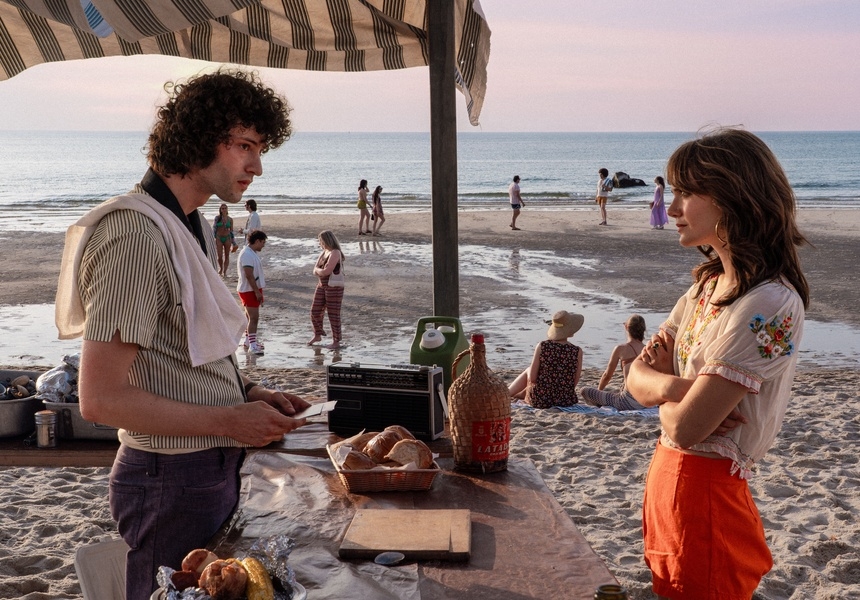
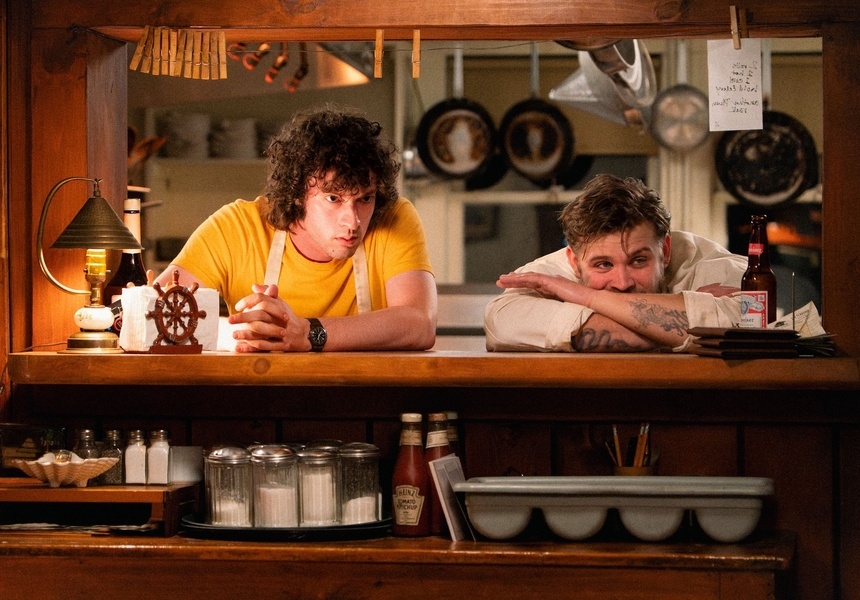
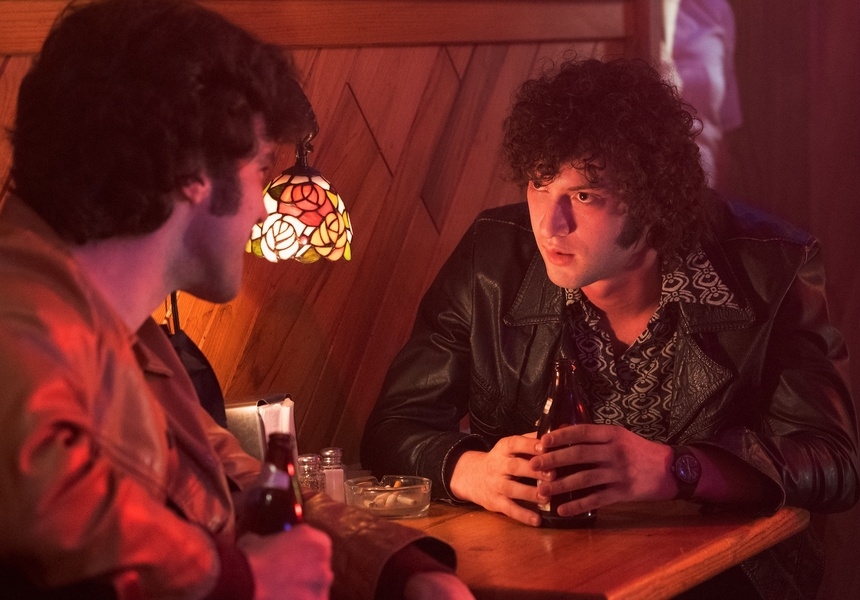
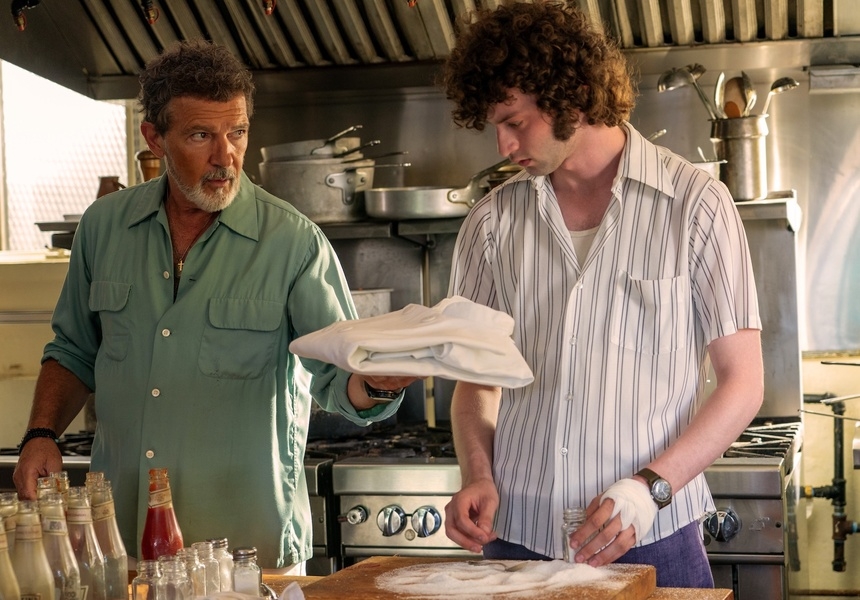
Since it was first reported in 2024 that A24 and Star Thrower Entertainment (The Post, King Richard) would produce a film about Anthony Bourdain, the internet has been brewing up a stew of contention. Would Bourdain have wanted this film made? Would he have cared? Or is there, as his long-time assistant and collaborator Laurie Woolever posited, really no point in guessing?
But for all the hypotheticals, there’s one thing that most reviewers agree on: Tony is a great film. That’s thanks to director Matt Johnson, who aimed to create a “hopeful” movie that steers away from the towering legacy of Bourdain and towards his path to purpose.
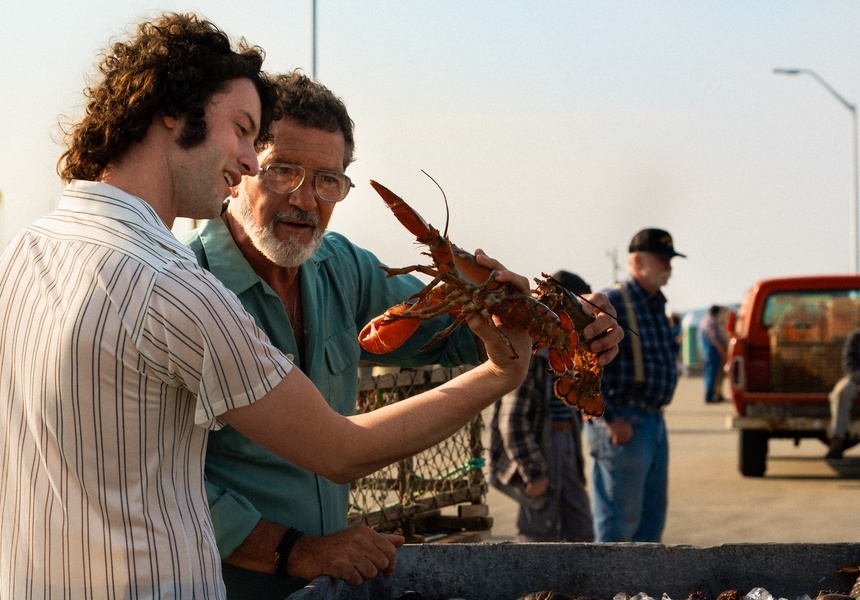
“The concept for the film is taking a single, formative summer of Anthony Bourdain’s youth and expanding on a lot of the mythology that people know about him, which originated out of this one little pocket of time,” said Johnson in a statement.
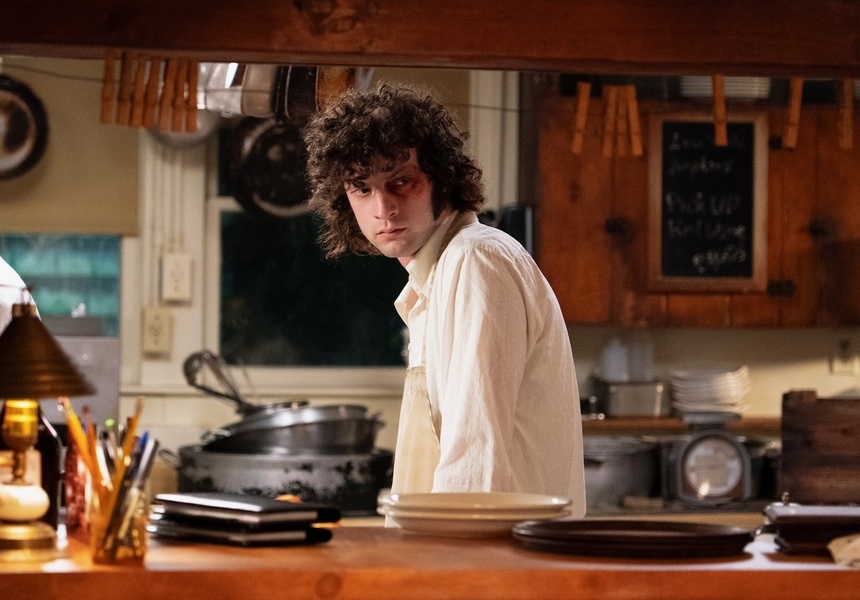
Dominic Sessa’s performance is the beating heart of the film. Twenty-three-year-old Sessa is perfectly cast as a 19-year-old Tony Bourdain. He doesn’t just nail Bourdain’s gait and voice, but also manages to be simultaneously arrogant and anxious. He’s not doing an impression, rather piecing together a character from scraps of Bourdain’s book Kitchen Confidential and stories from Provincetown locals.
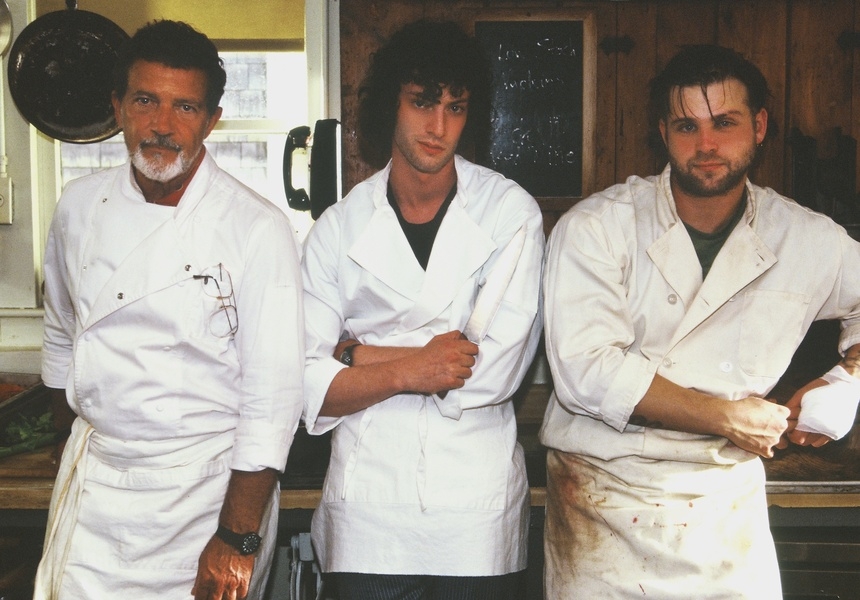
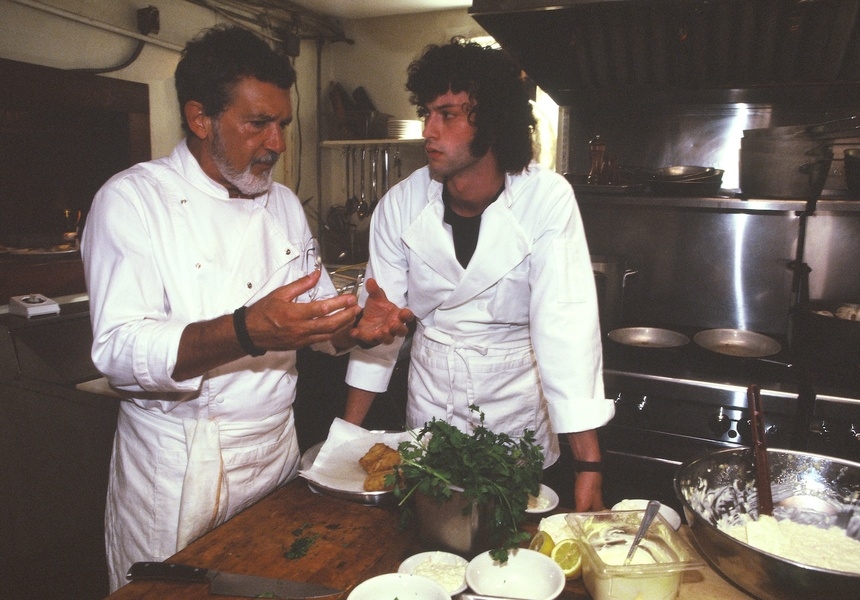
Alongside Sessa, Antonio Banderas, Leo Woodall and Stavros Halkias round out the kitchen. It’s a coming-of-age story that guesses at the events that took a young Bourdain from a Vassar writing program to enrolling in the Culinary Institute of America.
Broadsheet spoke to Sessa about the making of the film, learning the ins and outs of a kitchen and what it feels like to add to a legacy of such a beloved figure.
How were you first approached about the film?
Matt and I received the script that Todd Bartels and Lou Howe had originally written on-spec. I didn’t know much about Anthony Bourdain before starting this project, and when I’d read the script, I thought it was based on something that was heavily documented. I thought it was based off a book that he wrote about himself as a kid. So initially I thought this [didn’t] seem [like] what I would want to do, in the sense that I thought he already told this story and it felt wrong to retell it.
But then I met Matt and I learned a lot of the story was fictionalised to create an idea of what it could have been like for this guy because it wasn’t something that was super documented. That’s when I got excited about it because I felt like Matt and I had a lot of freedom to really tell a story rather than make a documentary.
After you got the part, did you approach the character in the same way you would have with a narrative film, or did you begin researching by diving into No Reservations and Kitchen Confidential?
Matt was the first person to give me a copy of Kitchen Confidential. I hadn’t even read that book before reading the script. That was the first thing I read as source material for the movie, and I watched a lot of his shows and stuff. But really I was just trying to find a way to make an emotional connection with this person, you know? Trying to understand what their sentiments and feelings towards the world were at 19, 20 years old. And I couldn’t really use any of that [later] stuff to do that. There’s a lot of stuff in Kitchen Confidential that referenced the people around him and his experience working in kitchens at a younger age and that sort of thing. But for me, at a certain point, I just had to rely fully on the script and working with Matt.
Had you worked in a kitchen before, or did you visit any kitchens to get a culinary crash course before filming?
There’s a restaurant in Prospect Park in Brooklyn called Gertrude’s, and the chef Eli Sussman allowed me to go into the restaurant and meet his crew and see a bit of a service. [Sussman] taught me how to shuck oysters, which was cool. That was the one real skill that I actually walked away with from the movie.
In the process of going into these kitchens did you meet anyone who knew Bourdain?
There were a lot of people because he worked at a few different restaurants in Provincetown that are still there and still owned by the same families. That pizza shop in the movie Spiritus Pizza is still owned by the same family that was there when Bourdain was there. He used to sleep in the attic of the pizza place.
Even random people who didn’t really know him personally wanted to tell us about little interactions they had [with him], like times where they just ran into him and even just saw him. You know, he really is like a prophet, he’s like a religious figure in that town.
I love the idea of your piecing together a character from all these interactions. It’s like a mystery to work back to the beginning of Bourdain.
Of course. Matt and I are filling in so many holes. And we just had to rely on ourselves a lot. Like [asking each other], what would you do in this situation?
When you were meeting all these people who knew him did that put pressure on your performance or did it feel exciting that you were going to get to bring a new piece to life of something that meant so much to people?
It was exciting. I never spent too much time with any of these people. Matt lived [in Provincetown] for like five months, and he spent a lot of time with tons of people. But for me, we were shooting there for a week, and we would shoot in a lot of places that he used to be at.
Like we were shooting in the Old Colony Tap, that really cool dark bar in the middle of P-Town, and just meeting the owner there, for example, and him telling us about times when Bourdain came in, and how much respect people had for him. It felt good that people were happy we were there and we weren’t offending them in any way, they were actually excited about this.
You’re in almost every scene in the movie. What was it like to have no downtime on the set?
I personally enjoyed it because when you’re acting on a movie, you’re waiting most of the time. You’re sitting around and waiting for the camera set-ups and the angles, and the time that you actually spend doing the work is much less than just getting your make-up done and all that stuff. So for me, it was nice just being on set all the time, and never really having any downtime because I hate going into a green room or sitting in a trailer. I lose my mind doing that. I loved just constantly being in it. With Matt too, his style was just being with me the whole time, it felt really good. It was like a marathon though. At the end, you just get out of it, and you’re so exhausted. But it forced me to constantly be in the right headspace.
Tony lands in UK cinemas on Friday August 14.