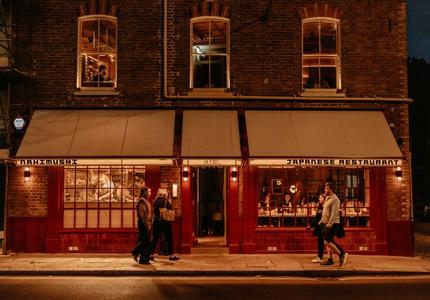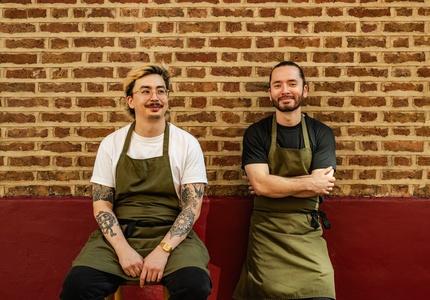
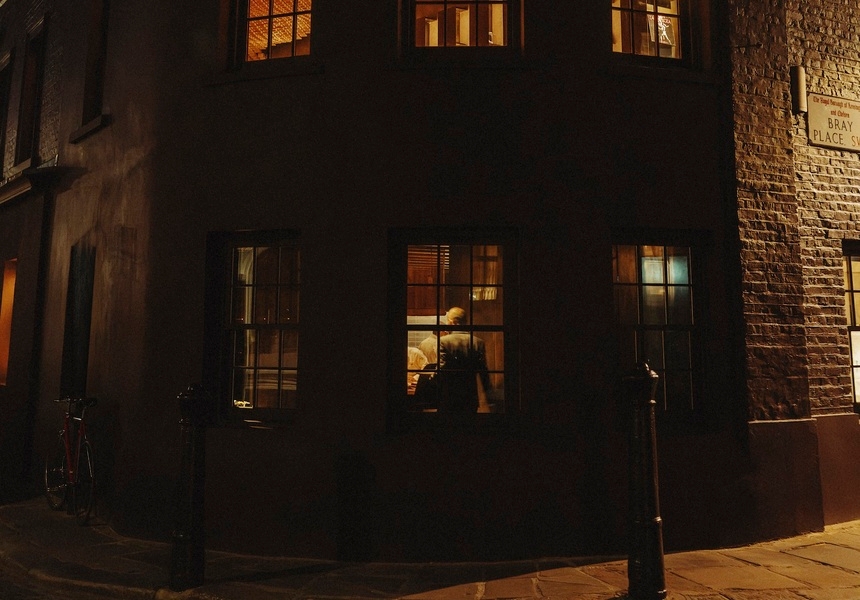
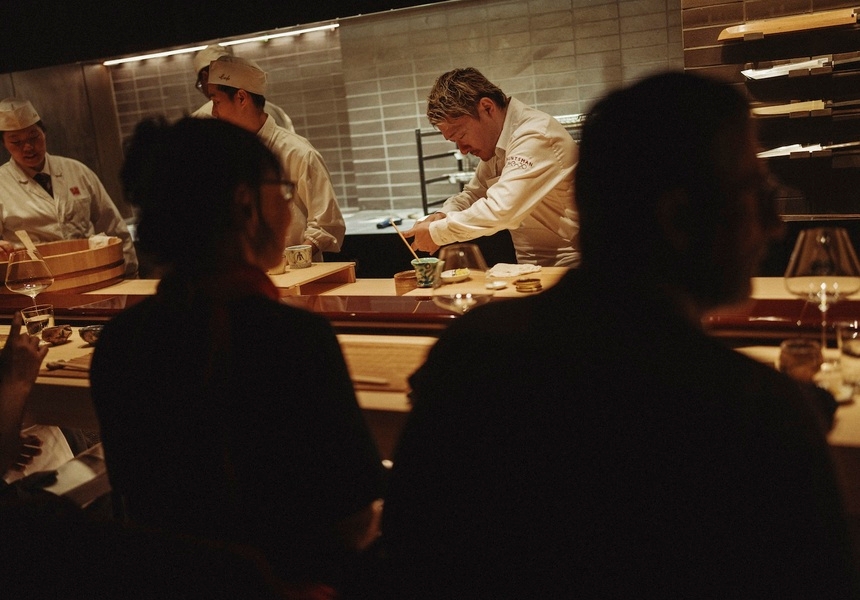
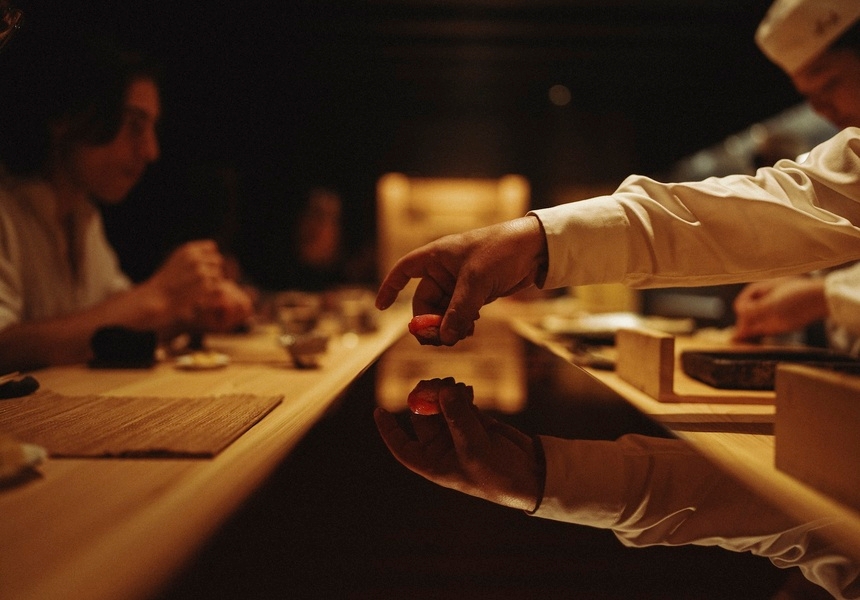
When you enter the new 10-seat sushi counter at Endo, you may feel like you’ve stepped into the future. Unlike typical omakases, with their blond wood and austere, shaven-headed chefs, the new Chelsea restaurant is a brooding room of blackened wood and brick. It’s rooted in the style of omakases of the 1920s, inspired by Endo Kazutoshi's great-grandfather’s sushi restaurant.
“When you go to Tokyo, they all look the same,” he tells Broadsheet. “I’m totally the opposite.” He sees himself as the link between the techniques of a century ago and those of a century from now. “I’m the middleman,” he says.
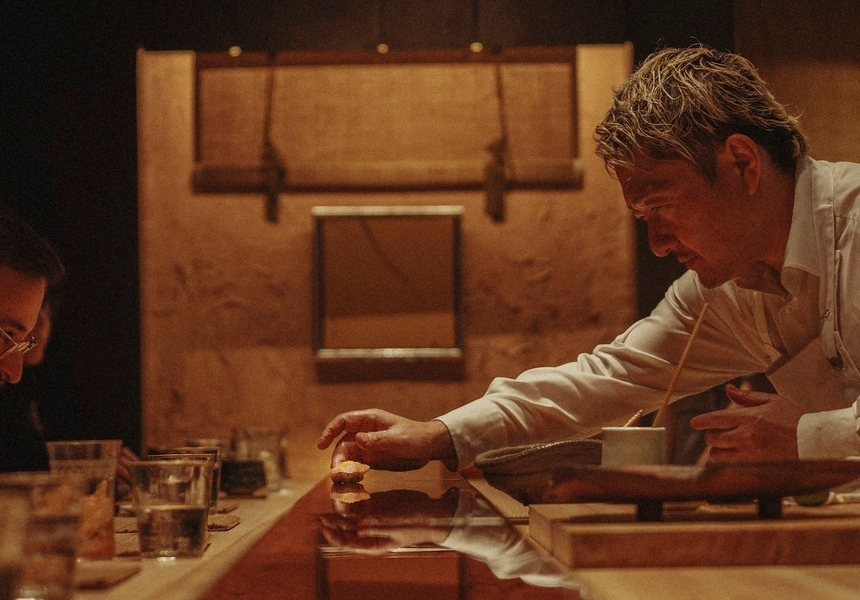
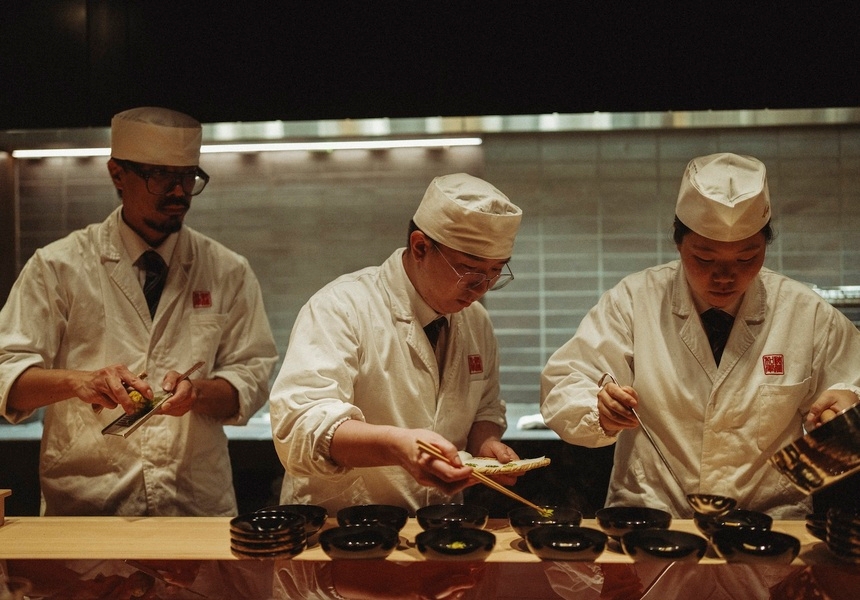
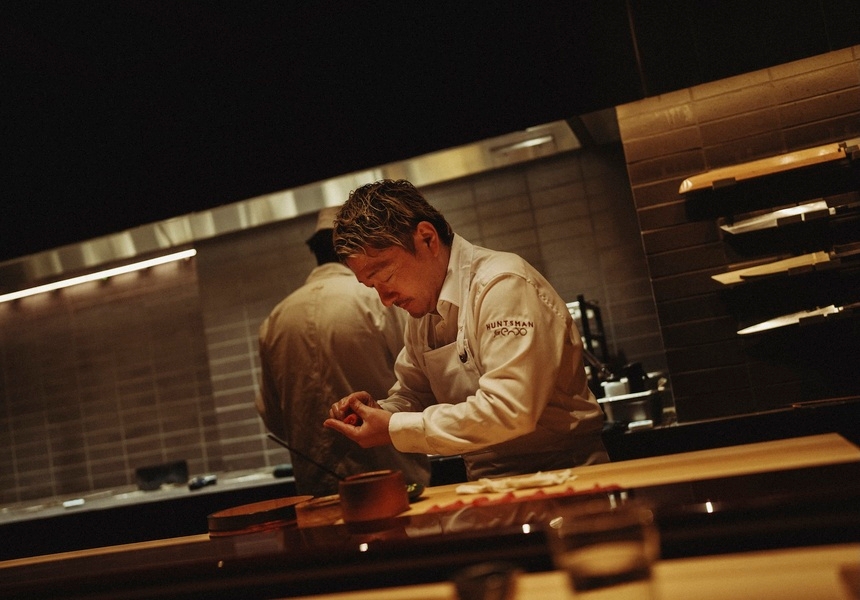
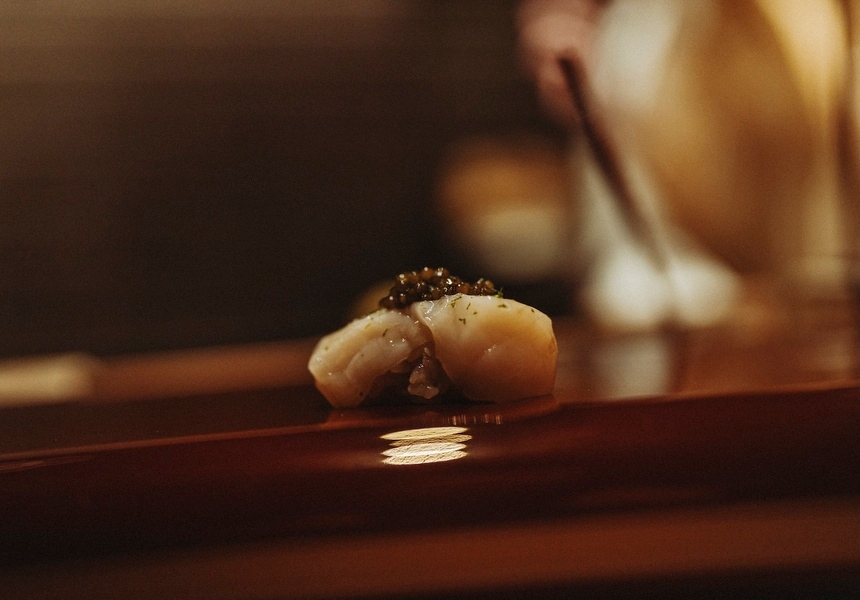
Designed by Javier Villar, who previously worked with Kazutoshi as part of Japanese architecture firm Kengo Kuma & Associates, the room centres on a hinoki counter (a counter made from premium Japanese cypress), where Kazutoshi places each nigiri on oxblood Wajima-nuri lacquered tsukedai (traditional service trays). The chefs wear white hats and jackets marked with a red seal, while front-of-house staff wear suits or grey herringbone dresses with navy piping, tailored on Savile Row.
The arrival of Endo in Chelsea has been much anticipated following the fire last September that destroyed the original at the Rotunda in White City. “I really don’t want to say it’s a new opening,” Kazutoshi insists. “It continues the philosophy from Endo at the Rotunda, and I don’t want to draw a line. Of course the location is different, but for me it’s the same DNA.” The restaurant reopened exactly a year after the fire, a date that understandably weighs on him. “Every day, every service, when I wake up I’m already emotional. I think, ‘I have to do my best tonight.’”
Many of the signatures that defined Endo at the Rotunda remain. One of the first things guests eat is the “business card”: chopped fatty tuna and sushi rice wrapped in a rare, winter-harvested nori sourced from Tokyo’s Toyosu Market, which snaps like glass. It’s an ecstasy-inducing bite that holds the essential ingredients of any sushi restaurant (tuna, rice, seaweed, vinegar and wasabi).
The sushi rice, which he prepares in front of guests surrounded by dramatic billowing steam, is made in three batches, seasoned with a different vinegar each for tuna, whitefish and shellfish. The vinegars draw on recipes from his master, his grandfather and himself. All the fish is wild-caught in the British Isles, with the nigiri varying according to the season’s catch from his Cornish fisherman, who is “like family already”.
Guests can also expect a langoustine nigiri that has been through 50 or 60 iterations over seven years. The claw is steamed for the sushi, while the head is grilled and its brown meat is mixed with N25 kaluga caviar marinated in kombu (seaweed). “Now, it’s maybe complete,” he says. Elsewhere, there may be hagashi, a rare, premium cut of fatty tuna; red mullet marinated in kombu and dusted with kimi-oboro, a fluffy powder of cooked egg yolk; or strikingly sweet Orkney Islands scallop.
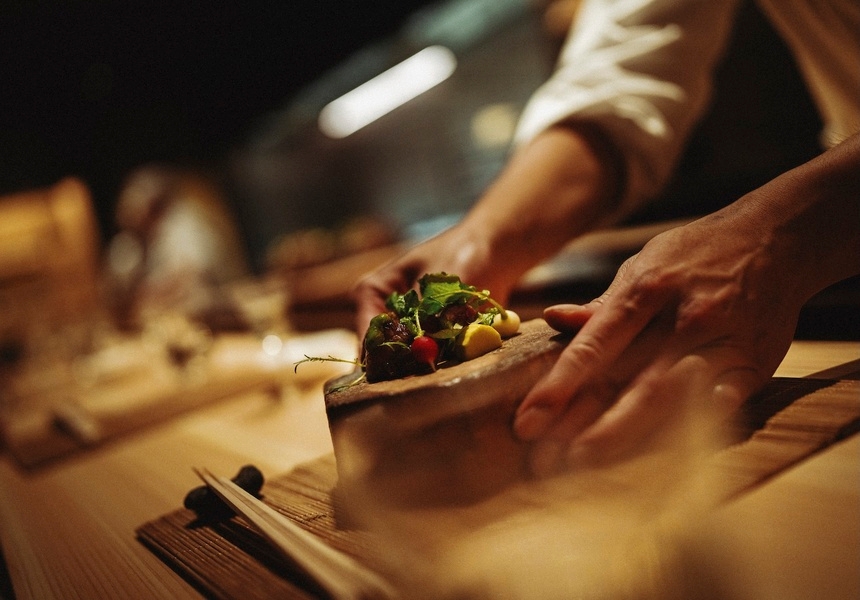
What makes Endo much more than sushi is the thought put into the hot dishes that interlace the three servings of nigiri. There’s Nagasaki-style udon, sourced from a 90-year-old udon master, the noodles’ bouncy texture accentuated by the delicacy of a cold broth made from dashi, umeshu (salted plum), and sudachi (Japanese lime). There’s also Miyazaki Wagyu with negi (a long Japanese green onion) and a sweet-savoury yakiniku-style sauce, plated like a garden of herbs, and vegetables from suppliers in Cambridge and East Sussex. “It represents everybody,” he says, “all my relationships with producers.” A dessert of sake lees soufflé using lees (residual yeast) from Dojima sake brewery in Cambridge and tea ice-cream ends the experience in sophisticated style.
Alongside, there’s a range of rare, premium sakes, some made in collaboration with the restaurant, as well as wines. The pairing even includes a playful, and some might say brave, combination of Chateau d’Yquem, the world’s finest sauternes, with Ruinart vintage champagne.
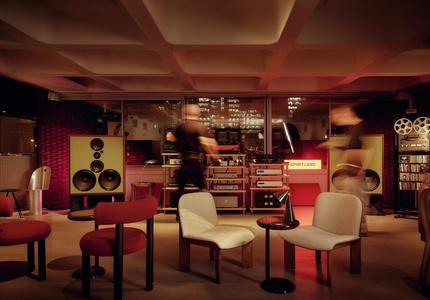
That playful spirit extends to Moga, the upstairs hi-fi listening bar inspired by the hidden bars of Taishō-era Tokyo. An undulating ceiling of masu sake cups hangs above a rough-hewn, rust-coloured stone bar, while Kazutoshi’s vinyl plays through custom Taguchi speakers. The cocktails are tea-led, made with Postcard Teas and served in etched crystal-style glasses. “I wanted to make something more homey,” he says. “I don’t want it to be just a bar.” For now it’s open only to Endo diners, with public bookings from December.
Kazutoshi is speaking to Broadsheet after reservations for November and December sold out in six minutes, but he’s already thinking in decades. “When you open a restaurant in London, nobody is thinking about 20 or 40 years,” he says. “But with Chelsea, I think 20 years, 30 years. If I’m not there, my younger generation will take on my mindset and keep going.”
Endo
8–9 Blacklands Terrace, SW3 2SP
Hours:
Wed to Sat (sittings at 5.45pm and 8.45pm)