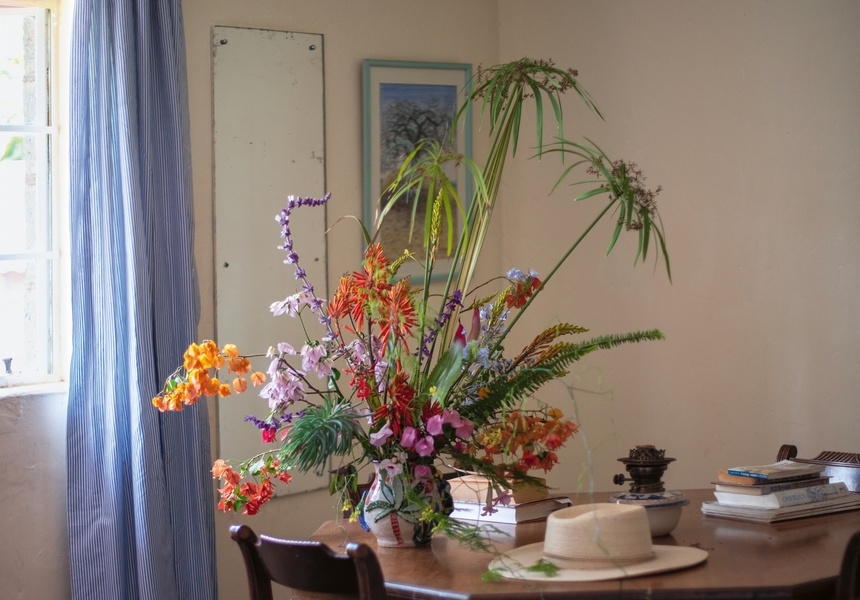
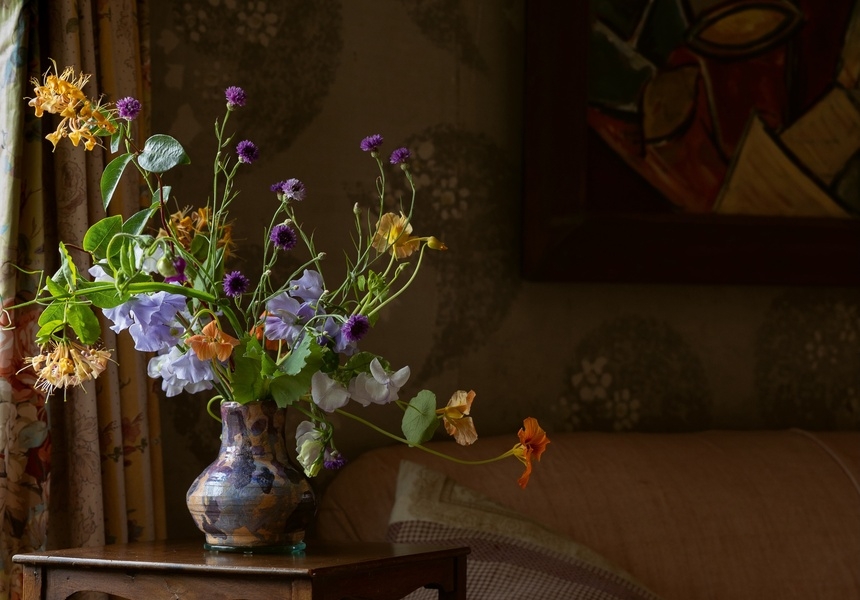
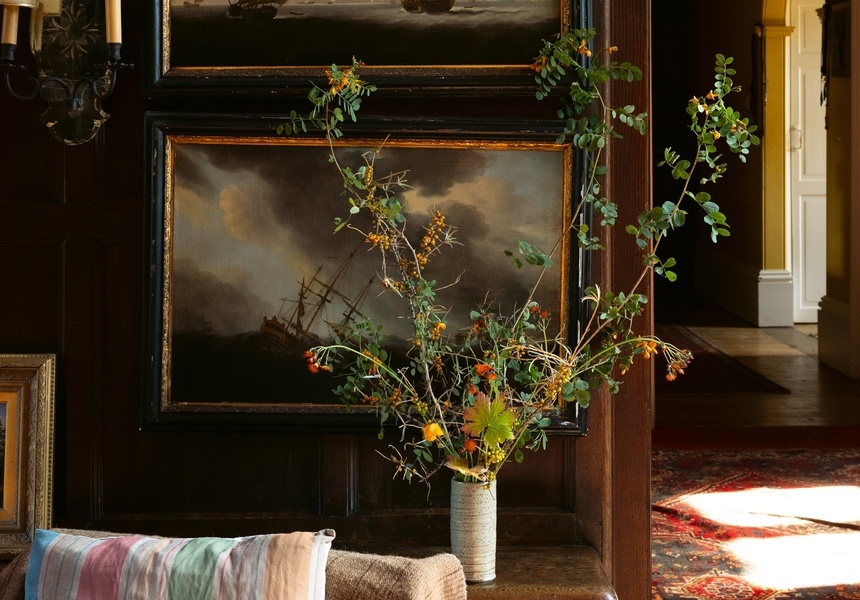
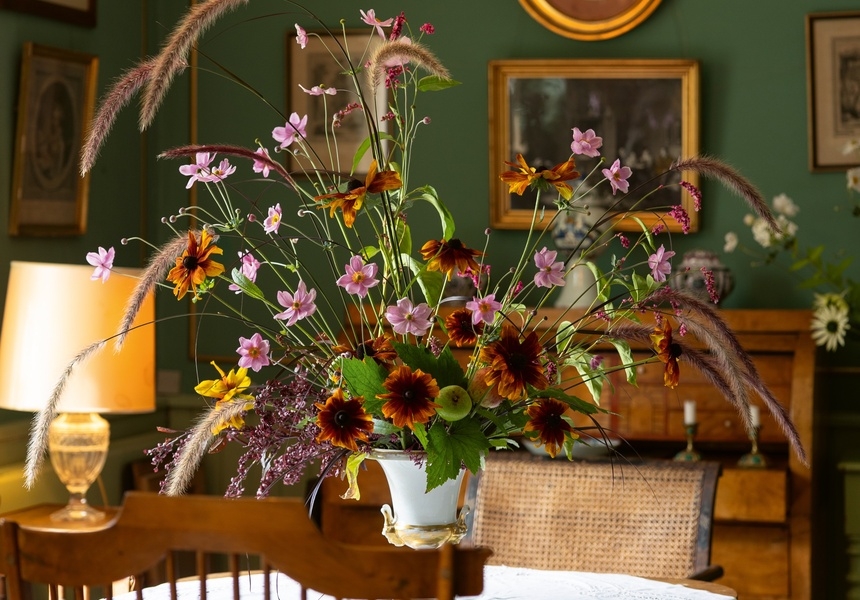
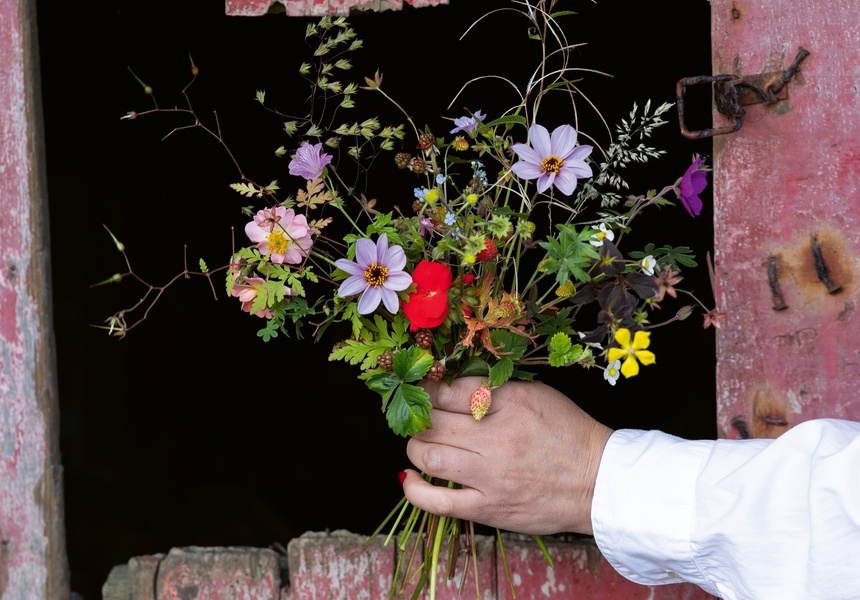
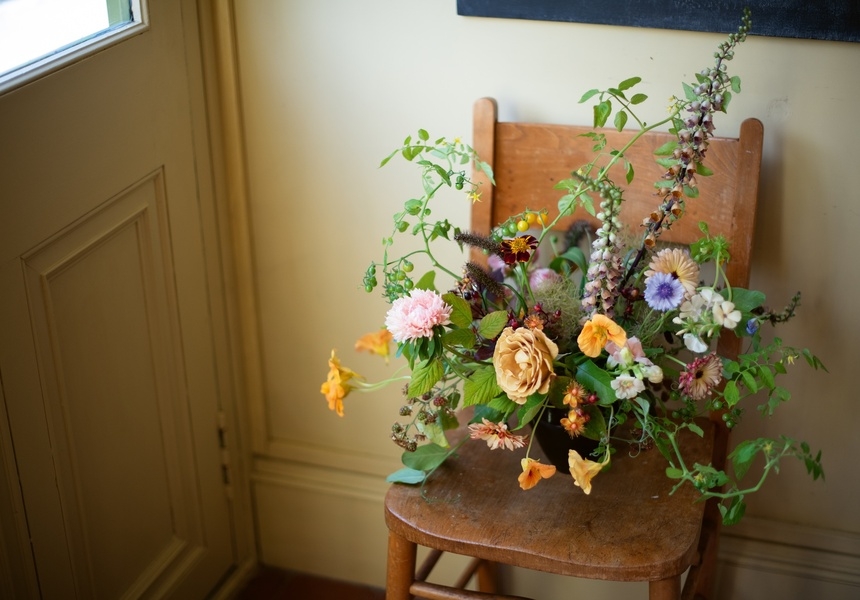
There is no better way to celebrate the arrival of spring, warmer weather and lighter, longer days than by making a beautiful arrangement of colourful spring blooms for your home. Arranging flowers is not only fun and creative – it’s also a surprisingly beneficial exercise in mindfulness, in slowing down and noticing the beautiful details in the natural world that surrounds us.
Spring is a heady time for the flower lover, when the warmth and longer days prompt the unfurling of leaves and opening of buds. Every week there are new varieties to discover.
At Aesme Studio, spring is when we fling open the doors of our London school to welcome visitors from near and far to learn the art of naturalistic flower arrangement, using the best seasonal materials to create beautiful, sustainable designs in the vase.
Here are our top tips and ideas for styling flowers seasonally and sustainably at home.
Where to source seasonal flowers
If you have a garden, start there. If you are buying flowers, prioritise seasonal, locally or British-grown blooms over those imported from overseas. Check in with your local florist or farmer’s market, or search online for a local grower that delivers to your door. Ask what’s local and fresh.
What’s in season now
Apple blossom, daffodils, tulips, ranunculus, anemones, fritillaries, lilacs, spiraeas and an array of exquisite wildflowers – primroses, wild garlic, forget-me-nots and cow parsley.
Getting started
You’ll need snips or secateurs (Niwaki makes the best gardening and floristry tools) and a vase full of clean water. Cut your stems at an angle and remove any leaves below the water line to avoid bacterial build-up
Styling your arrangement
Keep it simple; if you are new to arranging flowers perhaps start with just one or two varieties.
If you are using foliage, add the branches first to outline shape and height. Assess the natural shape of each stem and allow this to guide you.
Layer in your flowers. We recommend doing this in order of size, starting with the largest face or focal flowers and adding the daintier, wispier stems last.
To create a sense of depth, position the darkest flowers low; these draw the eye and appear visually heavier. Leave the lighter flowers’ stems longer for gesture and movement.
A common rookie error is to pack arrangements too tightly, which creates flatness – leave space between the flowers for the eye to travel, creating visual journeys through the leaves and petals.
Maintenance
To get the maximum vase life out of your arrangement change the water daily and remove or replace flowers as they fade.
Ally Nutting and Jess Lister are the founders of Shepherd’s Bush floral design studio and school Aesme Studio. Their new book Naturalistic Flowers is out now through Thames & Hudson and guides readers through creating naturalistic flower arrangements with a sense of place.