Shoreditch has changed a lot over the past 20 years, shifting from a hotspot of culture and creativity to a polished destination neighbourhood dotted with restaurants, bars and residences. Through all those changes, The Hoxton has stood on Great Eastern Street, luring both travellers and locals with its well-designed, accessibly priced rooms, and buzzy foyer that draws post-work crowds and freelancers. Launched in 2006, it was the first in a string of hotels owned by the Ennismore group that now reaches across the UK, Europe and the US, with plans afoot to launch in Australia and Mexico. Now, after 20 years of being at the forefront of the group’s growth, the OG Hoxton has had a glow-up courtesy of Ennismore’s in-house design studio, Aime Studios.
“It’s been two decades since the Shoreditch hotel was converted from an old car park,” says The Hoxton Shoreditch’s general manager Cecilia Horner. “In that time, the way a Hoxton looks and feels has naturally evolved, so it felt like the perfect moment to bring the interiors in line with where the brand is today.”
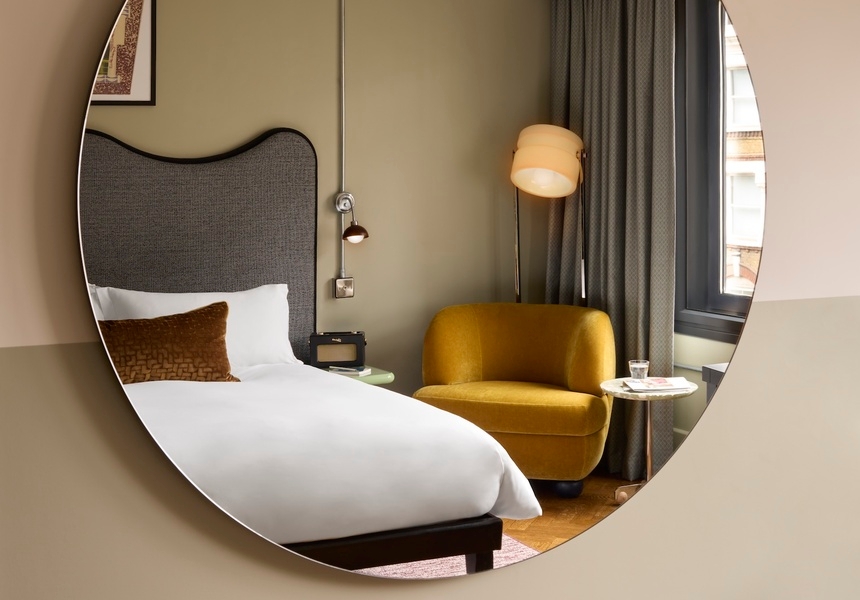
Rather than a comprehensive overhaul, the changes are subtle. Elements like the double-height scale of the lobby, parquet flooring and enormous round mirrors in the rooms were retained, as was the hotel’s exposed brickwork as a reference to the original design and the area’s heritage. One of the bigger changes is noticeable almost immediately upon entry: the new lobby bar and restaurant, Il Bambini Club, which launched in September. It’s open from morning, when it serves guests and the public breakfast, until late in the evening.
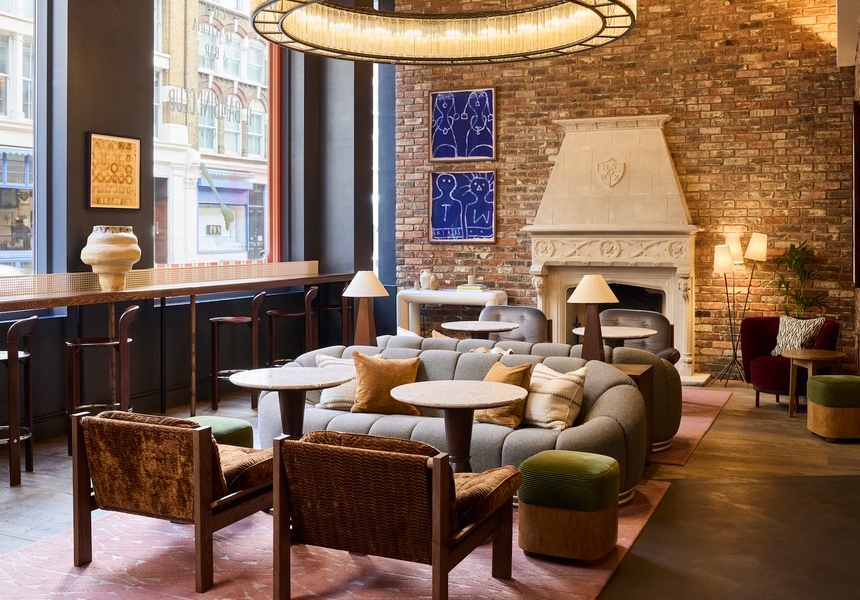
The lobby’s design has subtly shifted to incorporate materials that nod to Shoreditch’s manufacturing history of woodworking and glassmaking: dark timbers are used throughout, and guests sit at patchwork glass tables. Texture is layered into the space and offsets the industrial-style brick walls with velvet and boucle sofas in earthy tones and lampshades of draped fabric.
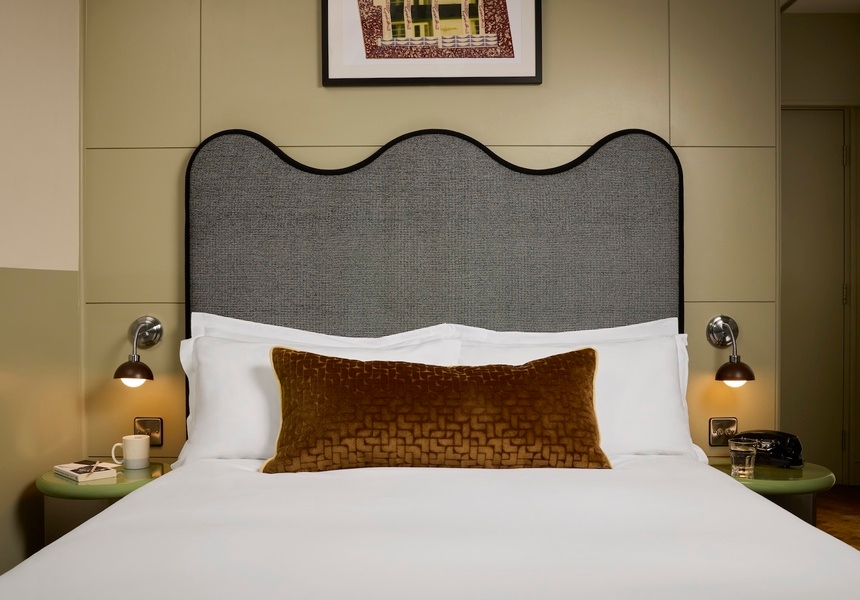
The hotel’s 210 rooms have been similarly refreshed. Original palettes of blues, blacks and greys with pops of bold yellows and reds have been swapped for mustard yellows, pastel greens and tan browns – more mid-century modern than mid-noughties. Terrazzo marble, curvy mint green bedside tables and new stainless-steel tops on the wooden desks layer in texture and colour. Importantly, the group has added a new room type: Cosy Up, a larger version of its Cosy room, which has a mustard sofa and offers more space for longer stays. “It feels more like somewhere you can properly hang out before heading out to explore,” says Horner.
While the group has expanded globally, in-room touches remain vital to grounding The Hoxton in its location. Guests can scan a QR code to order salt beef bagels from Beigel Bake on Brick Lane directly to their rooms from late night until breakfast, and custom artworks of local landmarks – including Columbia Road and the Tea Building – by east London artist Charlotte Joseph hang on the walls. Rooms are stocked with coffee bags from London-based company Cru Kafe.
Key to the hotel’s redesign was the desire to maintain it as a meeting point for everyone from freelancers working in the lobby to hotel guests rotating from room to restaurant, and nearby workers stopping for after-work drinks. “From the very start, The Hoxton has been a cornerstone of the neighbourhood, somewhere locals and guests could use equally,” says Horner. “I think that’s why people still treat it like an extension of their own living room.”