The Counter is a weekly column from award-winning restaurant writer and broadcaster Jimi Famurewa. Sign up to get The Counter first, sent to your inbox every Tuesday.
Hello there.
Manette Street, the partly tunnelled cut-through that connects Greek Street to Charing Cross Road, has the kind of complex old Soho history that is the stuff of multiple internet rabbit-holes. It’s the location of the original Foyles bookshop. Hive of Victorian literary trivia (it was originally Rose Street, a hotbed of 19th century anarcho-socialism, before it was renamed in honour of a Dickens character). Former home of Jäger-drenched heavy metal dive The Crobar. It is London’s jumbled multitudes in miniature – an alley that somehow contains both a Gothic-Revival alms chapel and a Simmons bar slinging pints of £4 Guinness from a hatch window.
And now, in the past fortnight, it has become the site of two competing visions for what the future may hold for Soho’s long, illustrious lineage of Italian restaurants. First came Osteria Vibrato: a theatrical, ultra-trad Greek Street trattoria from Charlie Mellor (formerly of the Laughing Heart) that flew out of the traps on Valentine’s Day and already looks, with its catnip backstory, judderingly cold Martinis and resoundingly brown food, like it will dominate food media conversation for weeks to come. Then it was the turn of Forza Wine Soho, the third outpost of Michael Lavery and Bash Redford’s irreverent, Italian-ish terrace bar spot, soft launched last week with a flowing river of espresso-spiked crème anglaise and a launch party that featured metal trays of Forza-branded cigarettes.
No market as busy and varied as Soho is ever a zero-sum game. Nonetheless, the fact that two splashy new ventures are operating in such close proximity, and taking aspects of the same core culinary culture off in wildly different directions, feels like a fascinating choose-your-fighter moment. So what do these openings bring to the table of a city in the midst of a neo-trattoria boom? And what do they tell us about where the London Italian restaurant, in Soho and beyond, might be heading?
Before we look ahead we should run it back a little. Though Italian diaspora presence in the area roughly bounded by central London’s four circuses (Piccadilly, Oxford, St Giles and Cambridge) stretches back longer than a century, Soho is actually the capital’s second Little Italy. The first, as still evidenced by places like L Terroni & Sons deli, was concentrated around Clerkenwell’s ripe, Victorian-era universe of Italian churches, overcrowded lodgings, street entertainers and nascent ice-cream empires. Slum clearances around the turn of the century nudged most of those hospitality workers and food entrepreneurs towards Soho. And, by the 1920s, restaurants like the original Quo Vadis – followed by the likes of Bianchi’s, Trattoria da Aldo, the OG Pizza Express, Polpo and trailblazing deli Lina Stores’s 2010s reinvention as a pasta bar – brought varying forms of Italian culinary exotica and “authenticity” to the area. Pepper grinders across the city, like hemlines, have shrunk and expanded with fashion. Yet, from the moment Bar Italia heaved London’s first Gaggia coffee machine onto a counter, Soho has tended to be the place where you go to see what the future holds for antipasti, primi, pizza and beyond.
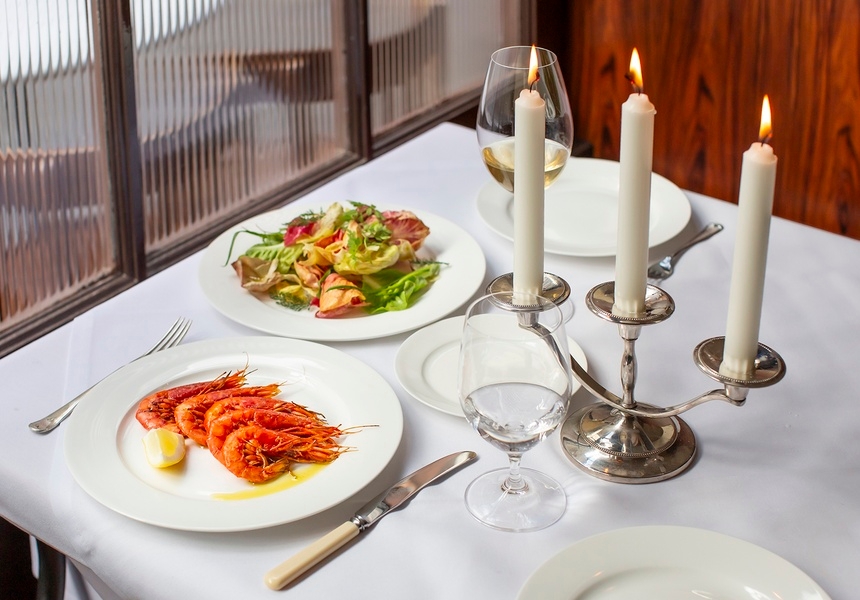
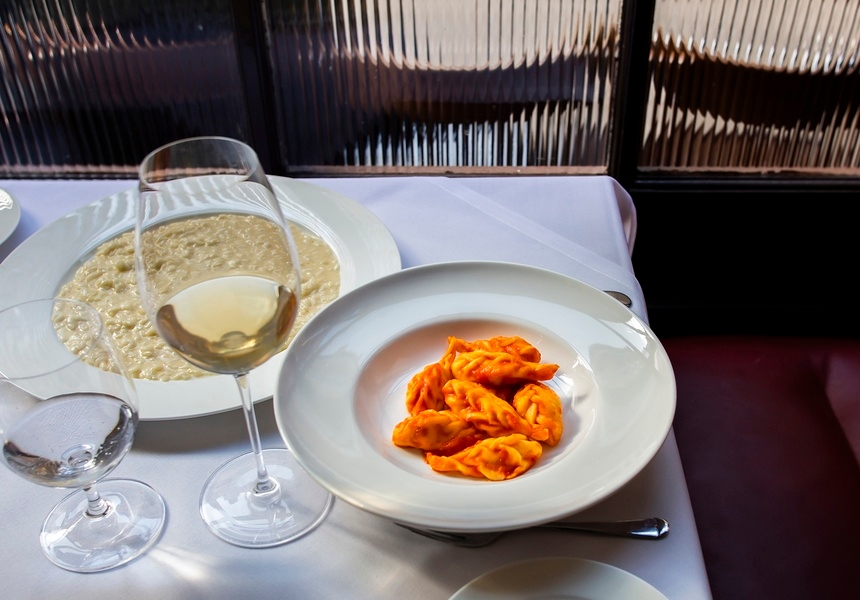
Vibrato reads as a natural progression of this. Just as at recent deep-immersion hits like Dalla and Tiella, Mellor and his team (including business partner Cameron Dewar, culinary consultant Gaia Enria and head chef Louis Lingwood) have opted to create something akin to the anti-Big Mamma: a lived-in, unapologetically premium version of a trattoria without modern flourishes, winking “Britalian” twists, or much at all in the way of obvious British intervention or adaptation. The compact room is a lobby-less, confronting hit of candlelight, billowing white tablecloths, rosewood panelling and tie-wearing servers, all borne by a tide of roaring voices. The in-house piano sits beneath a shelf for silver coupes of granulated parmesan and the arcane bottles of premium oil and vinegar unlocked by a coperto, or cover charge. As has been widely discussed, the region-hopping menu – with its ambrosial risotto bianco, moreish, gruntingly intestinal “courtyard” animal ragu and baked-to-order, chewy amaretti biscuits – is written entirely in the kind of Italian to make a mockery of your Duolingo streak.
On the face of it, this feels like a timely flex; a piece of in-group IYKYK signalling aimed squarely at those who summer in Florence, Rome or Bologna. But, a few days out from a completely terrific (though gently ruinous) meal there, I think I have a sharper sense of it. The feeling of being thrillingly unmoored, that many non-Italian speakers will experience here, is just part of the concept’s skilful, hospitality-forward construction. Pretty much everything at Vibrato – wine and food menus that open up dialogue with knowledgeable waitstaff, the starter-dessert-main format, the genuinely spectacular Martinis – encourages the kind of free-spending, Italian indulgence that is somewhat socially endangered but increasingly vital for restaurants looking to make the numbers add up in high-rent sites. Mellor, who grew up in Australia and has travelled all over Europe and the US, admitted that the osteria concept only really solidified when the saw the site (a former pizza place called Cinquecento). For all that Vibrato feels like a delicious, thickly Italian-accented throwback, it is also unmistakably a product of the particular appetites and conditions of London in 2026.
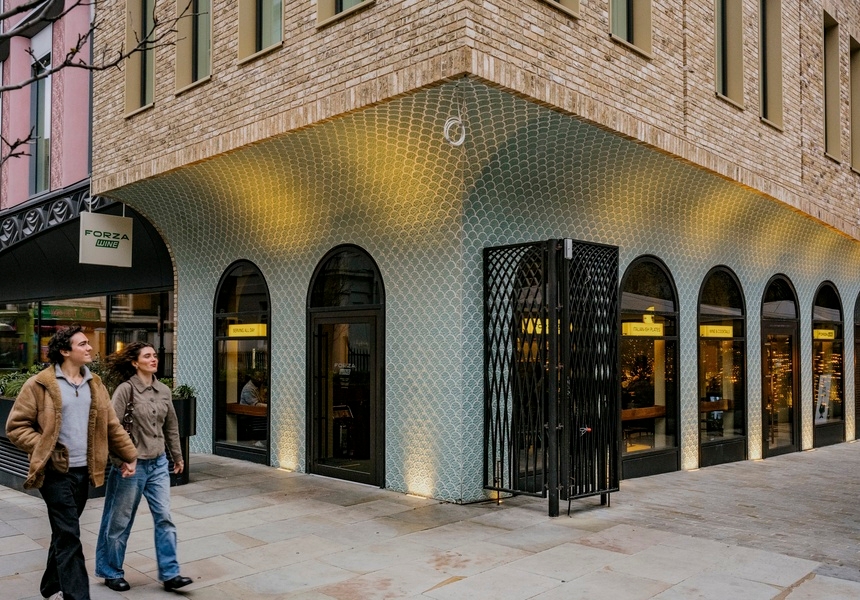
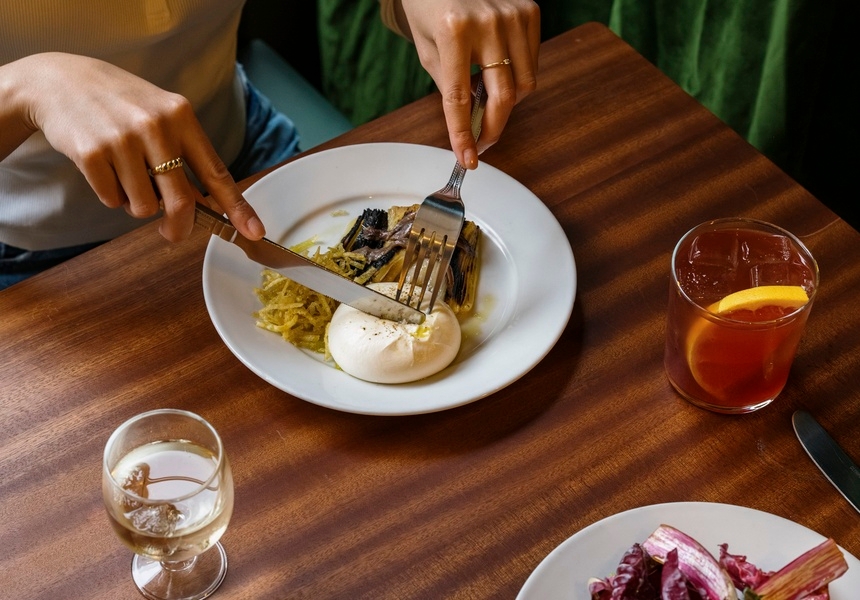
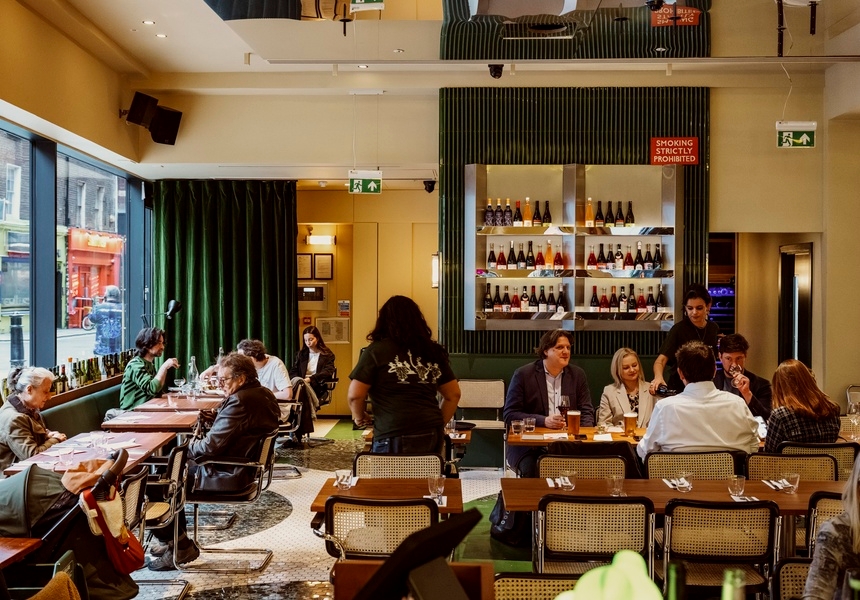
Around the corner, Forza Wine is offering different, though similarly vibe-forward, answers to the same operational challenges. Installed in a gargantuan, emerald-accented, largely glazed space with a faintly shagadelic mirrored ceiling (inherited from its previous occupant, a blink-and-you-missed-it modern Italian called Daroco) it very subtly refreshes a playful format that has already worked on a Peckham rooftop and outside the National Theatre. There are punchy £5 Forza Fivers of vermouth and soda. There are warm, parmesan-heaped loaves of brioche, squiggles of vanilla saffron soft serve on marsala sponge, and a hugely diverting snack plate of pane carasau (thin Sardinian flatbread), gorgonzola, finocchiona sausage (Tuscan pork salami) and pickles that unapologetically channels a kind of Italianate spin on Dairylea Lunchables. There are, somewhere beyond the brushed metal open kitchen’s fridge magnets and slushy machines, 1980s pop songs burbling out across the vibey barn of a room.
Though it is a volume business primarily built for speed rather than Vibrato-level, cancel-my-3pm-meeting comfort, the sheer scale of the place (the toilets lie at the end of a long, subterranean walkway that almost feels like it’s somewhere beneath Seven Dials) means lingering on the vast terrace, ordering a round of Custardos (drinkable, espresso-spiked crème anglaise) and picking at the remnants of the entire menu, is not out of the question.
The more you look at the history and impact of Italian food in Soho, the more you realise that it is less about fidelity to specific cuisine so much as an imported and long-lasting spirit of hospitality. It is the Pollo Bar’s bustling, clattering mix of cheap pasta, decidedly un-Italian gazpacho and stiff oxblood banquettes. It is Elena “Queen of Soho” Salvoni’s legendary 70-year-career and stewardship of the dining rooms at restaurants including L’Escargot. If there is something to be divined from these two openings, then it is the adaptability of Italian dining, and its continued dominance at a time when people want a meal out to be a culinary comfort blanket.
Osteria Vibrato and Forza Wine show that tradition being carried forward and updated for a new era of dining. The Soho Italian may be more than a century down the line. But if you want to be reminded of its hardy durability, endless versatility and continued relevance as a restaurant language that almost everybody speaks, well, you just need to get yourself down to Manette Street.
For Jimi Famurewa’s dish of the week, sign up to get The Counter first, sent to your inbox every Tuesday.