The Counter is a weekly column from award-winning restaurant writer and broadcaster Jimi Famurewa. Sign up to get The Counter first, sent to your inbox every Wednesday.
Hello team.
Restaurant writers striving for objectivity tend to prize rooms that offer a degree of social camouflage – bustling or vast spaces that enable the feeling, no matter how false, of blending into the background and taking the measure of a place from a discreet corner.
None of this is even slightly possible at Cloudstreet.
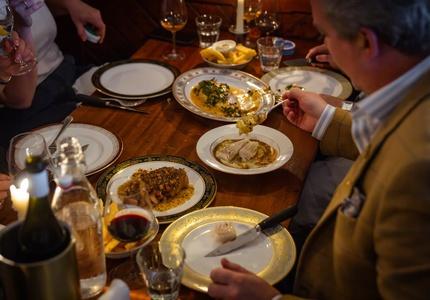
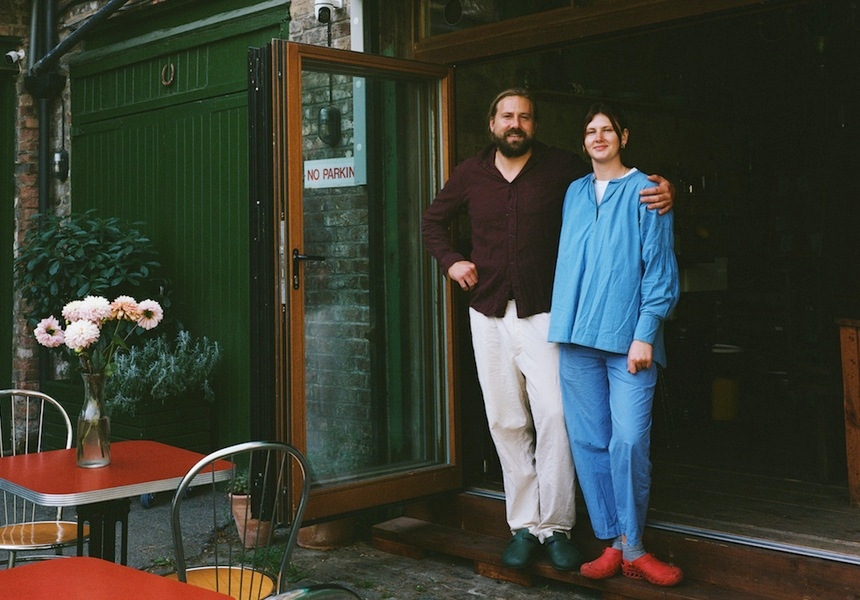
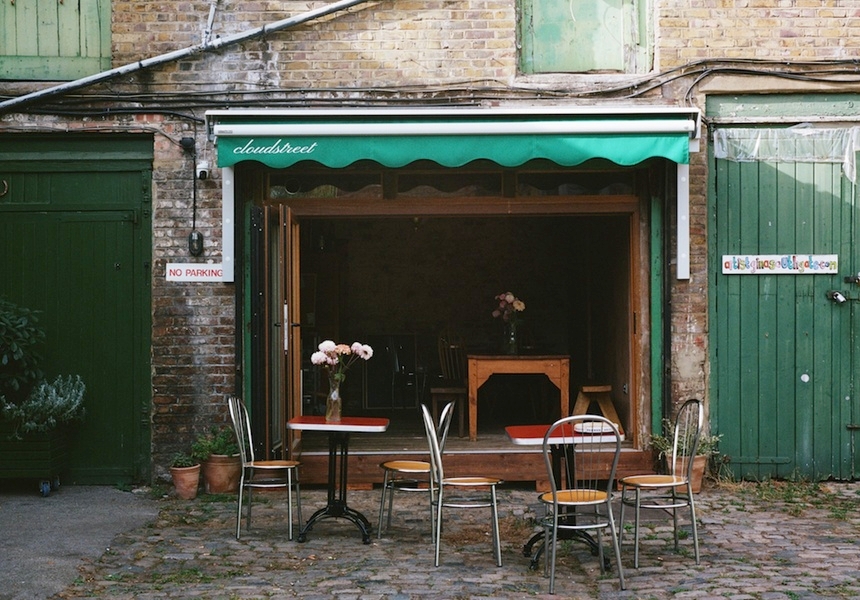
Founding couple Georgia Lahiff and Frank Guest’s tiny cafe bistro – which quietly opened a couple of months ago in a cobbled yard just off Stoke Newington Church Street – is so hilariously compact, so intimate and communal, that to pop in for lunch is to become an active participant in something that feels like a cross between a dinner party and an improvised immersive performance.
The handful of tables arrayed within its narrow, brick-lined unit (only available as walk-ins or if you swing by to personally make a booking in the weighty reservations book) are so close together that it’s an effort to stop every conversation becoming a shared one. When you need to see a menu, Guest, who works the room with garrulous charm and a booming delivery, heaves over the daily chalkboard of three or four dishes and props it up in front of you. On my first visit there, perched on one of the benches that gird the room’s large shared table, I was so close to Lahiff’s rudimentary kitchen that I could feel the warmth of a miniature oven on my back. “It’s cute, right?” said one female friend to another, as they turned to take in the antique armoire-style fridge where the box wine is kept, the quiver of fresh Pavilion baguettes on a high shelf, the servers bearing bowls of steaming dandelion and lentil soup, and the giant, whistling moka pot that Guest uses to pour out potent, near-bottomless measures of post-prandial coffee.
If this all makes Cloudstreet sound hazardously quirky and a touch disorienting, then, well, that’s because it sort of is. But it is also (and this is the crucial part) one of the most quietly thrilling restaurant openings of the year – a beautifully considered melding of culinary generosity and formal restraint that, with each perfectly fudgy boiled egg and piquant slow-braise of green beans, induces a kind of rolling wave of pleasure that stays with you long after you have staggered home. What’s more, despite seemingly breaking every rule of digital age dining (there is no Instagram account, no Tiktok-baiting viral dish, no website beyond a single-page placeholder), it has already emerged as a hectically busy and much-discussed hit, punching well above its weight class via multiple reviews and write-ups in outlets including Vittles and The Spectator, while also eliciting excited co-signs from the likes of Tiella’s Dara Klein and influential food writer Hilary Armstrong.
It is very much still a cult phenomenon. Yet I think it’s worth asking if this sort of steady buzz – for a low-volume, publicist-free business that can accommodate about 20 people at a squeeze – is just an aberration, merely a testament to Lahiff and Guest’s cooking and knack for hospitality, or a sign of a wider shift in what London diners are craving at the tail end of 2026.
So why exactly has Cloudstreet (named after a multigenerational family saga by Australian novelist Tim Winton) struck such a chord? To better understand this, it’s worth looking at the wider context of how it even came to exist. Lahiff, a nomadic, Canberra-born chef with stints in Sydney, Rome, at Skye Gyngell’s Spring and an Indian permaculture farm-cafe on her CV, had been working at Leila’s Shop in Shoreditch with Guest (ex-Sune and Lyle’s) before they struck out on their own. And it was a tip-off from someone with a similar ethos of nostalgic, produce-driven simplicity – Macintosh Ales founder Charlie Macintosh, who had turned his tiny, stridently minimalist Stoke Newington alehouse, situated next door to what would become Cloudstreet, into one of the neighbourhood’s most popular bars – that put them in touch with the landlord of the current space.
The success of something like Macintosh Ales, and the potential for a symbiotic relationship between bar and restaurant, showed that there was clearly a market and audience for something similarly pitched. Yet it also served to underline a burgeoning network and interconnected universe of quiet, pointedly analogue London hospitality businesses. Cask ales, pork pies and crackling vinyl at The Pocket and The Robin. Anchovy buns at Lant Street and eccentric comfort food, in the shadow of a McDonald’s drive-thru, at Tramps Bar. Vivid, Mediterranean-accented plates at stalwarts like Leila’s, Towpath and Italo (where Hugh Corcoran effectively soft launched what would become The Yellow Bittern).
What all of these spots have realised is that, set against the frenetically impersonal and occasionally AI-flattened morass of social media-driven hospitality, there is something soothing, and even radical, about embracing mystique, slowness and modes of human-centred socialising and dining that would have been recognisable a century ago. (Not for nothing are games like mahjong, backgammon and chess suddenly booming again.)
Though, of course, the thing that stops the best of the restaurants in this Instagram-averse movement from feeling insufferable is the palpable talent, pedigree and sensitivity of the people involved (Tramps Bar, notably, is led by former River Cafe chef Harry McKenzie). And, though Lahiff and Guest strike me as naturally self-effacing and egoless (“We were going to call the restaurant Sloptown because everything we make is basically slop,” joked Guest, at one point), this was pleasingly apparent throughout every moment of that recent lunch at Cloudstreet.
The messy, tactile pleasure of sliced radishes pulled through that humming dollop of cod’s roe. The oozing burst banks and buttery, beaten-copper crust of a raggedly domestic partridge and pork jowl pie. Afternoon sunlight drifting in through the open doors of the space as I pushed a shard of biscuity pastry through the sweet dregs of that custard tart. All of it had a clarity, honesty and wonky, cosseting charm that is rarer than it should be. “Anyone for a digestif?” Guest said, reaching for a bottle of Chartreuse and some posh glasses, a moment after I’d settled the hand-written, uncommonly reasonable bill. Cloudstreet’s intensely convivial, quasi-domestic approach may not be for everyone. Its low-volume, small-scale approach would probably cause most hospitality investors to gnash their teeth. And yet, it is a timely example that, if done exceptionally well, communing with the past might just be the best way to help define the future.
For Jimi Famurewa’s dish of the week, sign up to get The Counter first, sent to your inbox every Wednesday.
Got a question about London's dining scene that you'd like Jimi to answer, or a hot tip about a great place to eat or drink in London? Email jimi@broadsheet.com.