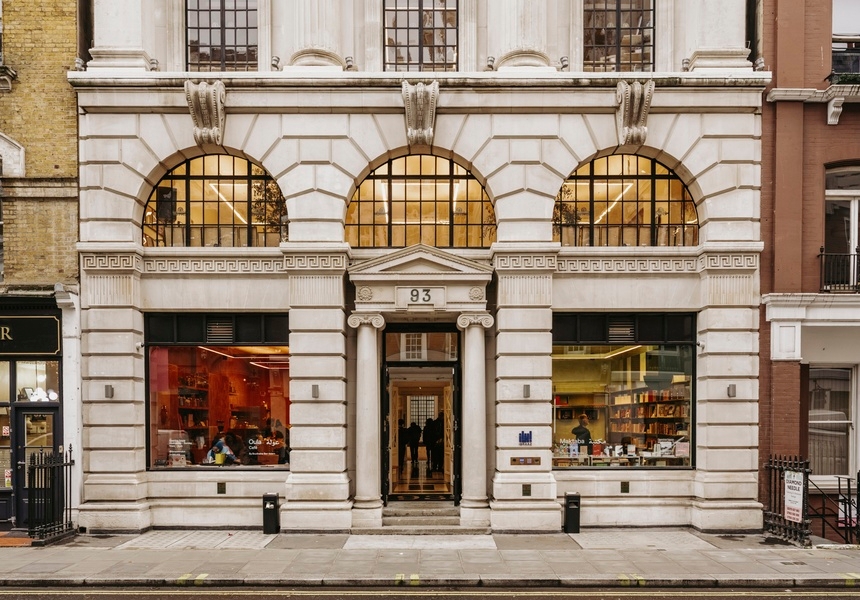
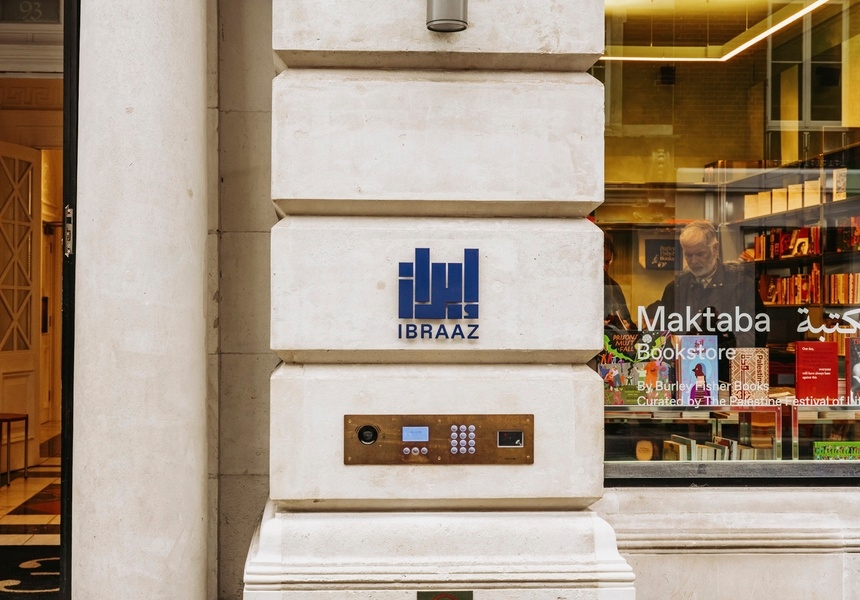
93 Mortimer Street has had many lives. The 10,000-square-foot Grade II-listed building in Fitzrovia has been a galvanic hospital; a synagogue; the home of 19th-century conservative MP Robert Bateson Harvey; and a members’ club for German musicians, artists and businessmen. Its latest incarnation sees it take on new life as Ibraaz, a space for art, culture and ideas from North Africa, the Middle East and the global majority.
Ibraaz began online in 2011, conceived in the wake of the Arab Spring as a forum for visual culture. Its recent move into a physical space marks a significant shift in how these ideas are disseminated. “The past few years have made something clear: digital space alone is no longer enough,” founder Lina Lazaar explains. “This moment demands a place where people can meet in person.”
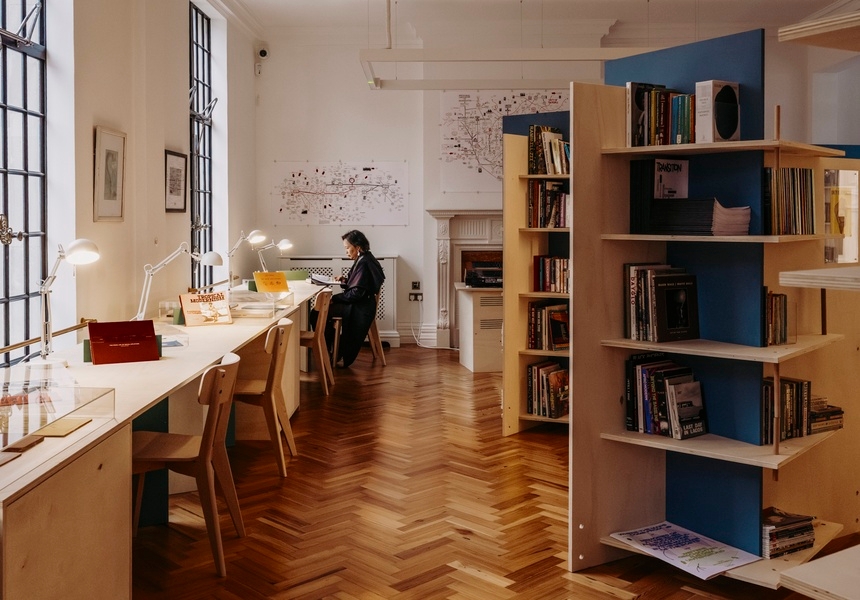
This is why Lazaar – an art critic and curator – turned to architect Sumayya Vally, designer of the 2021 Serpentine Pavilion and founder of Johannesburg design studio Counterspace, to help shape Ibraaz into a physical form. “Sumayya approaches architecture as a social and political practice shaped by gathering and community, which speaks directly to our desire to create a space for urgent dialogue rather than a traditional cultural institution,” she explains. Vally’s plans and blueprints run along the walls of the building, offering visitors a chance to follow her stream of consciousness as they navigate the space.
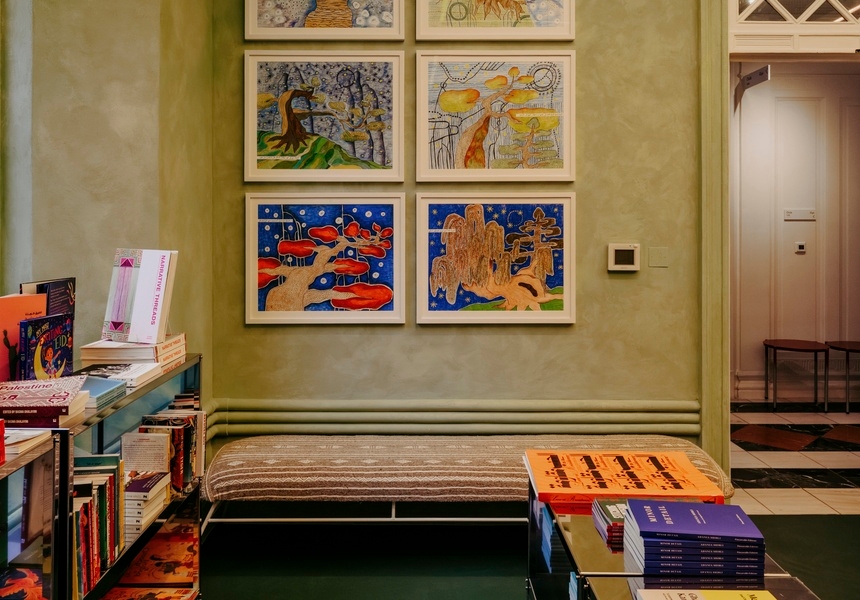
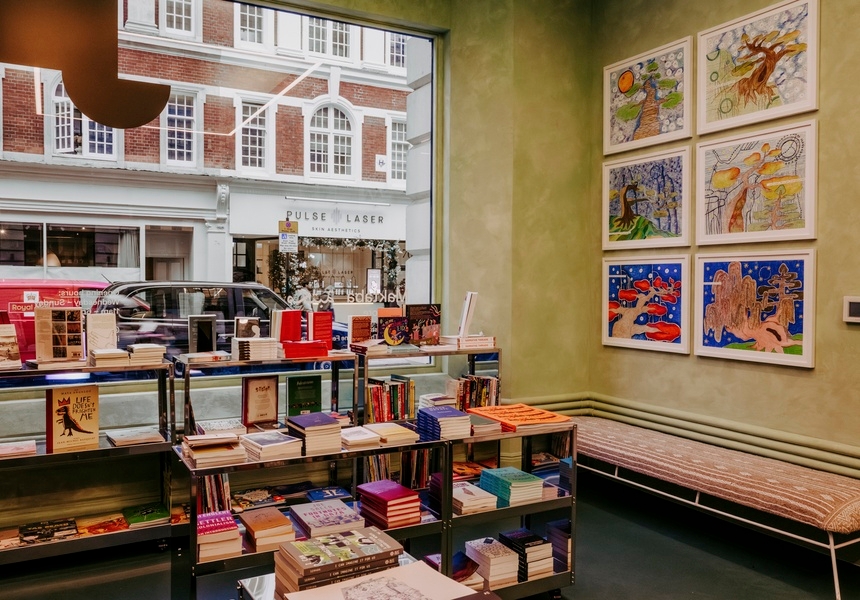
Step inside and the building branches out in three distinct directions. To the right is the pale green bookshop-in-residence curated by the Palestine Festival of Literature and Burley Fisher Books. Called the Maktaba, its shelves are stacked with titles spanning the Arab and Muslim worlds and their diasporas. To the left, the dusty pink Tunisian cafe Oula serves coffee, pastries and keskrout tunisien, a Tunis street-side sandwich layered with wild capers and fermented vegetables, and smothered in harissa.
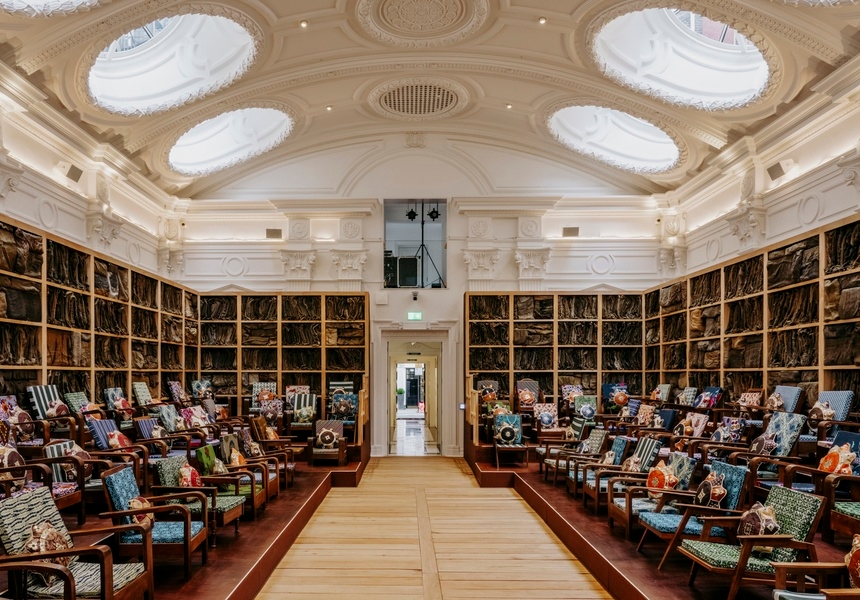
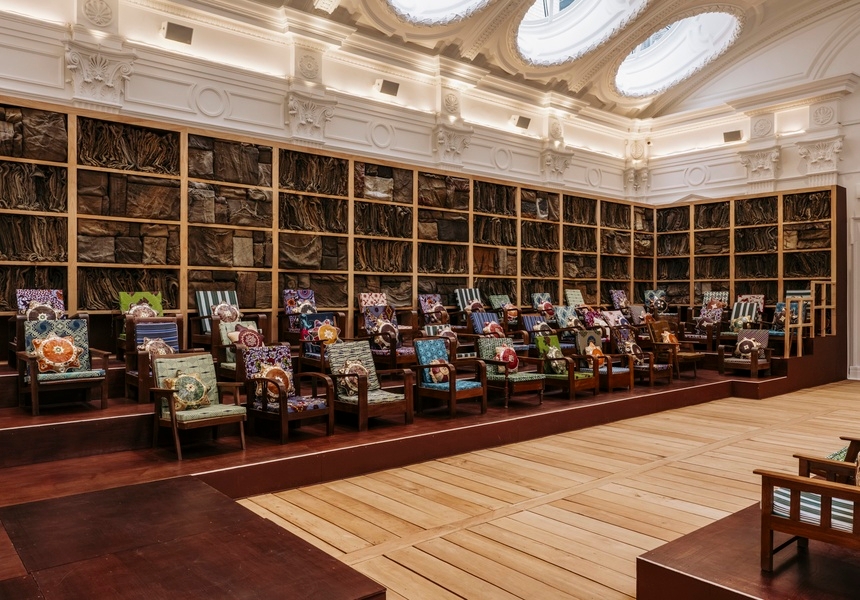
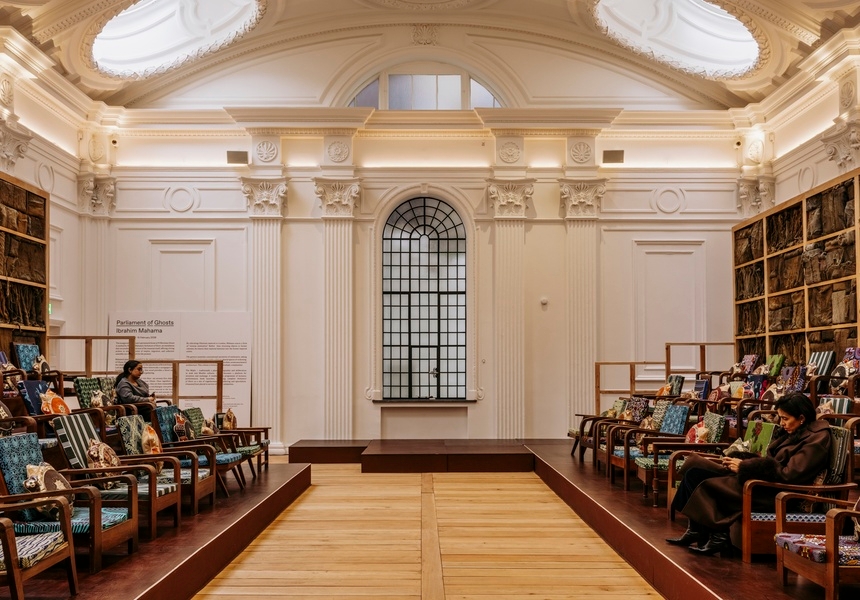
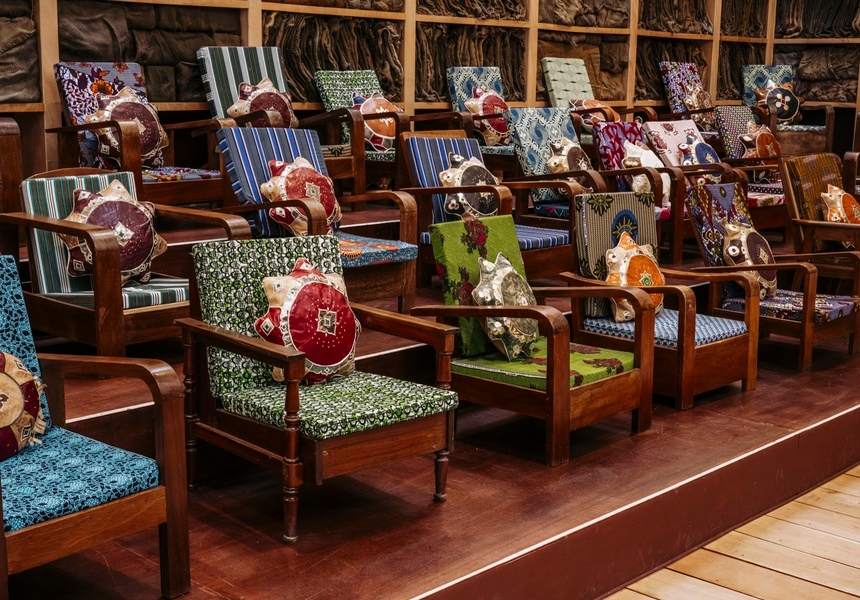
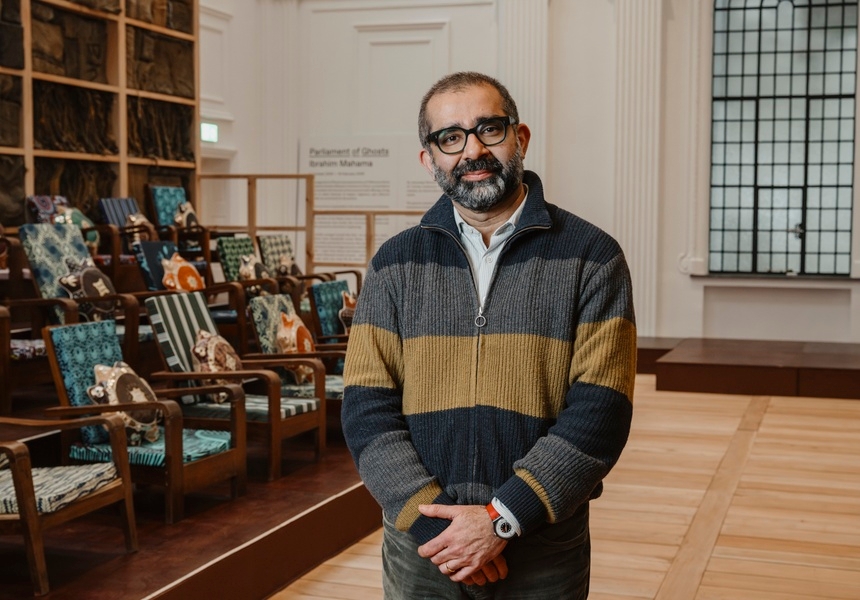
Up ahead is the Majlis (an assembly space), now home to Ghanaian artist Ibrahim Mahama’s Parliament of Ghosts installation. Using repurposed colonial-era furniture arranged on tiered platforms, the installation forms a phantom parliamentary chamber built from the remnants of Ghana’s colonial and post-independence infrastructures, including timber salvaged from the country’s colonial-era railway. Visitors can settle into the mismatched chairs beneath the cornice-lined skylights that flood the room with daylight; it’s both an exhibition and a gathering space.
Programming director Hammad Nasar sees spaces like these as essential. “We can’t extrapolate our way out of where we are. We have to imagine it,” he told Broadsheet when discussing the importance of exhibits such as Parliament of Ghosts. “And that is why we need artists rather than investment bankers and tech bros to imagine what the future will be … It’s important to create a space that allows us to make peace with our histories rather than trying to exorcise them.”
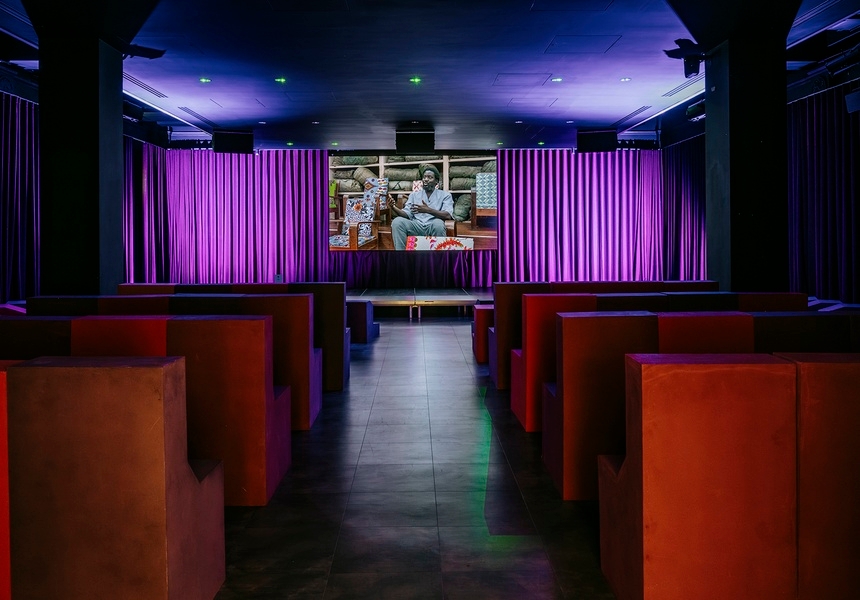
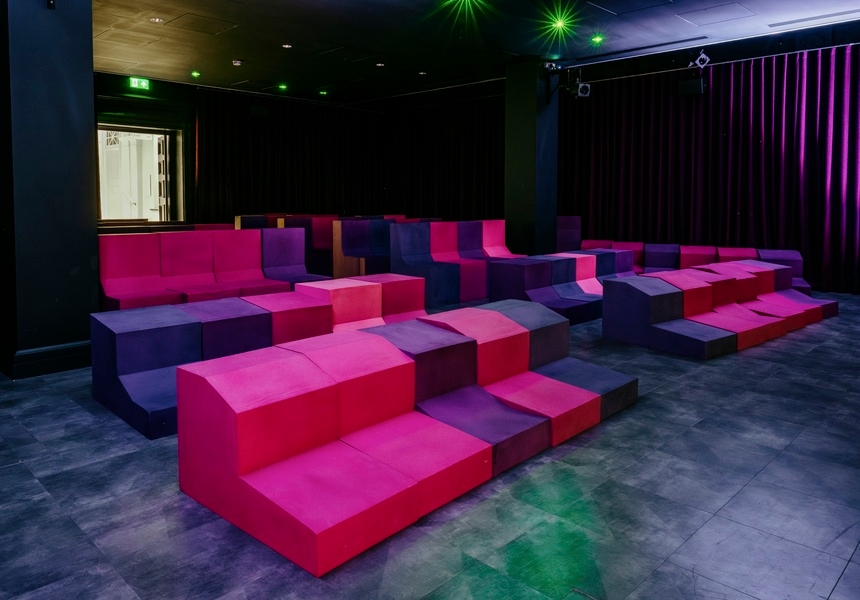
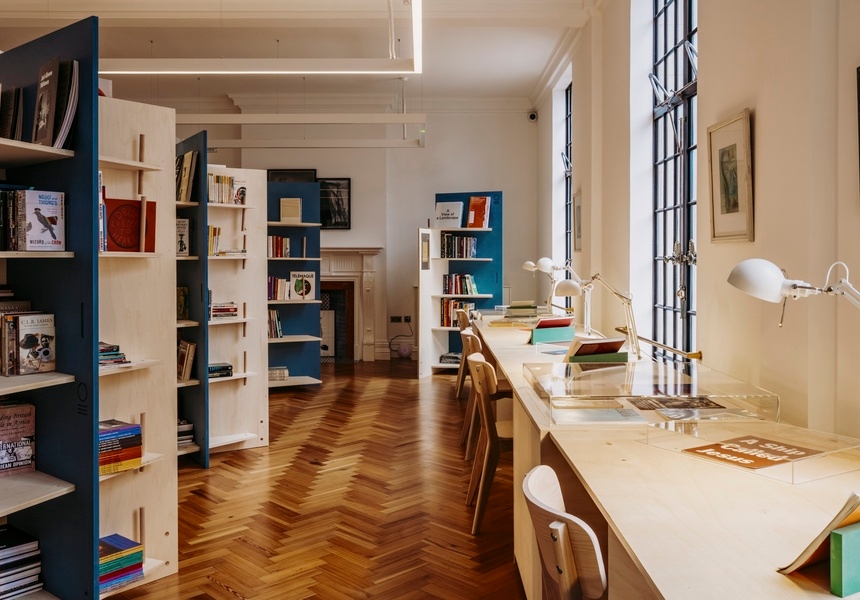
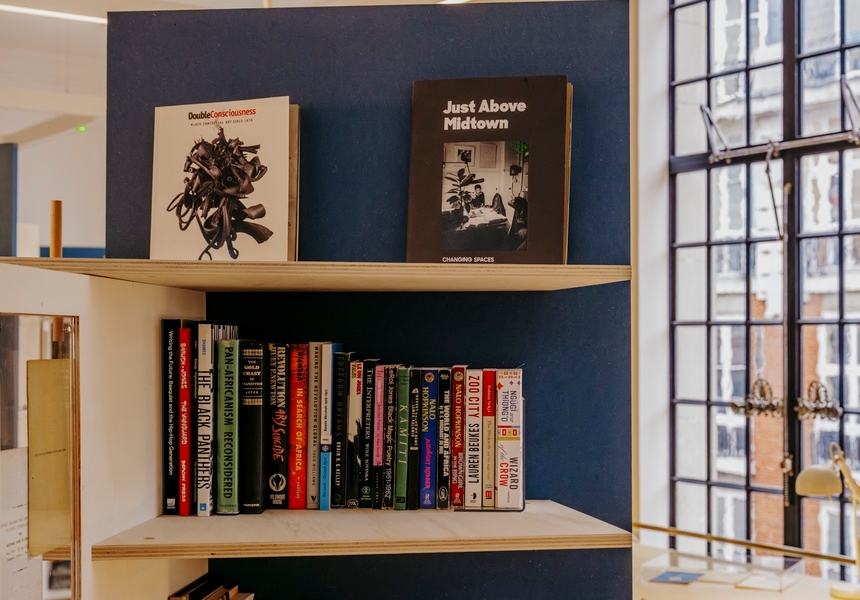
Upstairs, a library residency by The Otolith Group – the London collective known for its research-led films and installations exploring science fiction and postcolonial histories – further explores these ideas, opening its rich archive to the public. Visitors can browse books, play records or watch DVDs in a cosy viewing nook. “There are studios where people get their hands dirty; this is where you get your mind dirty,” says Nasar. Downstairs, the Minassa platform and theatre hosts music, film and live events by artists from across the Arab world. It's a room designed to shift functions between hosting concert, cinema and conversation.
For Lazaar, Ibraaz is a safe space for these conversations, but it is first and foremost a “brave space”. “Freedom of expression is contracting at the moment we most need openness and plurality,” she says. “A brave space is one in which welcoming, sharing and sitting together are not metaphors but foundations.”
Nasar sees Ibraaz’s opening as significant for London’s cultural scene. “It’s one of the most exciting things to happen here for a very long time,” he says. As for what he hopes visitors to Ibraaz will feel: “If they leave feeling nourished, heard and seen in some way, and they want to come back, that would be a wonderful thing.”
Ibraaz
93 Mortimer Street, W1W 7SS
Hours:
Wed to Sun 11am–6pm