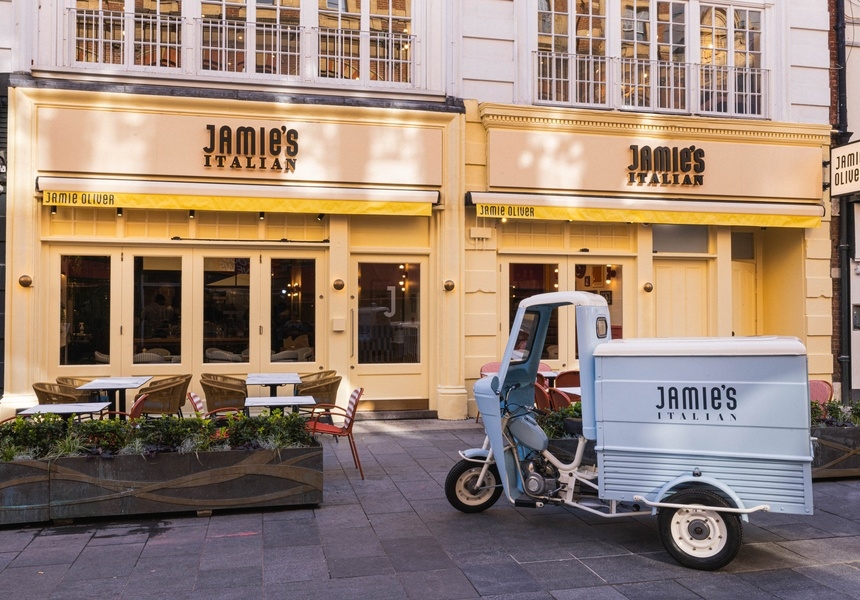
If you’re looking for a coldly objective take on the unexpected return of Jamie’s Italian – or perhaps even a few pointed jibes aimed at the bish-bash-boshing, Toploader-soundtracked horror of the early-2000s food scene – then I’m not your man. It’s not just that I belong to the specific generational and cultural cohort whose serious interest in food neatly coincides with the emergence of the erstwhile Naked Chef. It’s not even that I’m professionally compromised by the fact that, in a slightly mind-frying twist, I now know Oliver a bit and like him a lot. It is, in truth, mostly down to one very simple, not especially cool fact: I really, really loved Jamie’s Italian.
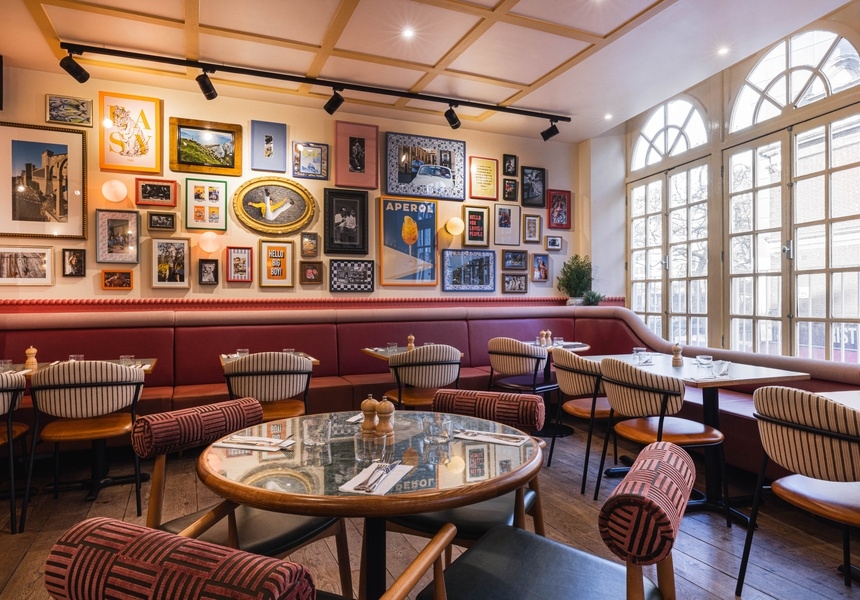
I loved the clamorous, turbo-rustic bustle of its market square-style design, the puppyish exuberance of its menu writing (“World’s best olives on ice!”) and the genuinely brilliant kids dishes that were a particular boon for befuddled new parents in the early 2010s. I loved the mad, money-spraying profligacy of its expensive custom Thomas Crapper toilets (which endure, like flushable headstones, in the basement of The Devonshire). I even loved the bit when a chirpy, “Hey guys” server would have to awkwardly construct a “prosciutto plank” from a salvaged piece of wood and a pair of giant tomato tins.
And yet I am also not so Jamie-pilled that I haven’t asked myself why. Why has an enterprise like Jamie’s Italian, newly wedged between a row of tourist-bait businesses near Leicester Square, been brought back at this precise moment? And why, more generally, is endlessly reviving or preserving fallen restaurant concepts seemingly in vogue?
The zombie corpse of TGI Fridays keeps getting reanimated, and Byron has been acquired by a gen Z entrepreneur looking, among other things, to reboot it in Dubai. Le Caprice (which already exists in suave, sensitively reimagined form as Jeremy King’s Arlington) is poised to return as part of the blockbusting dining offering at The Chancery Rosewood hotel. At the other end of the scale, Lee and Kate Tiernan’s seminal FKABAM shrugged off the mortal coil of a traditional restaurant for a period in cold storage, which will be followed by a yet-to-be-determined evolution of the concept. Everywhere you look across London’s dining scene, there is rebirth, renewal and resurrection.
The most obvious factor behind this movement relates to simple economics. Name recognition and customer affection – a little like my ardour for Jamie’s Italian and, for that matter, early Byron – is a potent, rightly prized commodity; the kind of deep emotional connection that, like a coveted piece of Hollywood IP, has both perceived cultural value and ever-tantalising financial potential.
Separately, at an especially vibe-forward moment for hospitality, exhumed restaurant brands can evoke a certain mood and approach far better than the involvement of a chef or restaurateur who may or may not still be attached to the project (see Polpo, Temper, Bubala and any number of other entities that have endured after the departure of a central founding partner). A new Richard Caring spot in Mayfair prompts a modicum of excitement and intrigue. Le Caprice 2.0 conjures a specifically alluring mode of monochromatic 1990s glamour, bang-bang-chicken-fuelled power lunches and the chance of spotting Kate Moss and Mick Jagger at a neighbouring table.
This calculated nostalgia-tapping works both ways. Part of the justification for reviving a shuttered business (as with Racine, the adored Knightsbridge brasserie restored by Henry Harris as a peerless Farringdon bouchon in 2022) is the chance to provide a second act to a venture that closed before its time. But how do we distinguish between the concepts that still have something to offer and those that have naturally aged out of relevance? Where is the line between alluringly retro and naffly old-fashioned? Will FKABAM’s pulverising nose-to-tail flavours and irreverent flourishes be better suited to some unglimpsed future restaurant era? These questions, alongside the intrigue factor, are what make restaurant revivals such an irresistible roll of the dice.
My hunch is that the reboots that prosper will not be able to recapture the specific glories of old, even if there is profitability and a rollout of new outposts. That there will not be the same lightning-in-a-bottle mix of critical and commercial success once enjoyed by the likes of Jamie’s Italian. Back then is not right now.
Today’s ascendent mode of restaurant nostalgia – the Scorsese-style glamour of Carbone, say, or the grand mid-century sparkle of Martino’s – is primarily about timeless, fantastical interpretations of bygone eras that the vast majority of diners won’t actually remember. But the revivals will keep coming. And I will, of course, be making my way down to a certain olive oil-drizzled blast from the past near Leicester Square. Sceptical. Trepidatious. But hoping against hope that, even if just for a couple of hours, I can still party like it’s 2009.
For more opinion pieces by award-winning restaurant writer and broadcaster Jimi Famurewa, sign up to get The Counter, his weekly column in Broadsheet London, sent to your inbox every Wednesday.