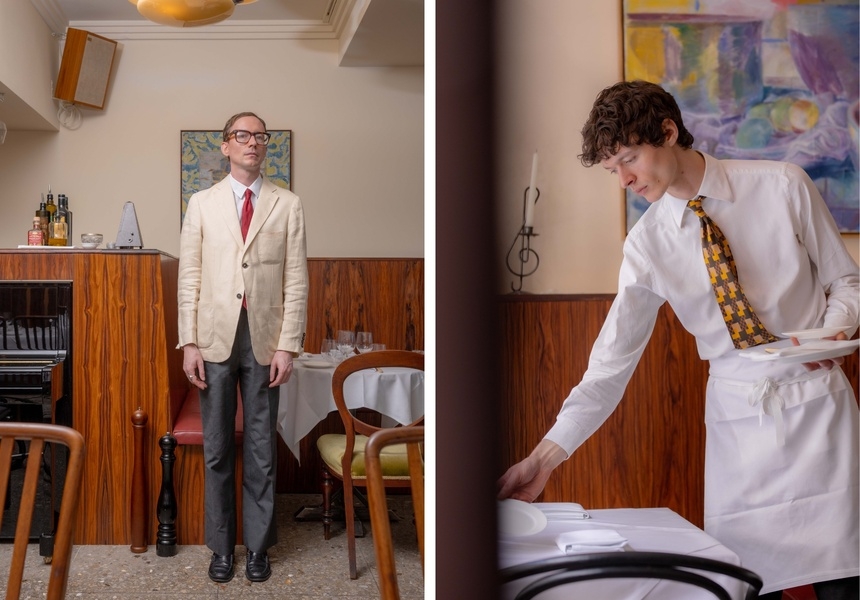
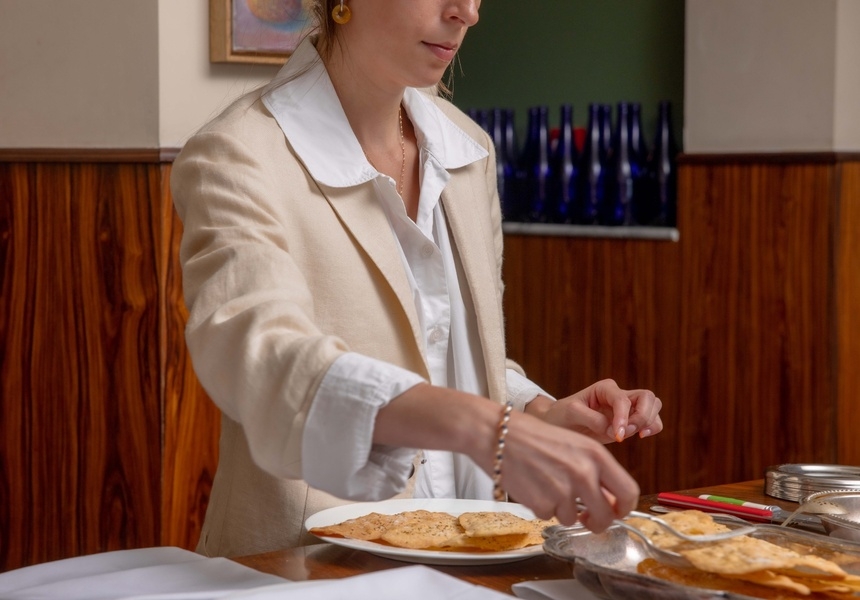
When you first step into Soho’s Osteria Vibrato, here is what you may notice: the piano by the stairs, the oil paintings on the wall, the light fixtures that transport you to a wine bar in Milan. During your meal, you might remark on the coldness of the Martini or how the white risotto is just creamy enough. And you might be particularly intrigued by the waitstaff. They’re friendly, sure, and professional, you bet, but they’re also exquisitely dressed. Charcoal pleated trousers, loafers, crisp white shirts. Ties that made me load up a reselling app on my journey home from dinner.
“I just like beautiful things,” the restaurant’s founder Charlie Mellor tells me over iced coffee on a hot summer afternoon. “I like craft, and I’ve been into tailoring my whole life.” So when it came to planning Osteria Vibrato, Mellor really focused on the staff uniform, which he describes as both “senza tempo” (timeless) and “a little 1930s” (wide lapels, wider ties). The overall look? An Italian waiter who took a detour through Savile Row.
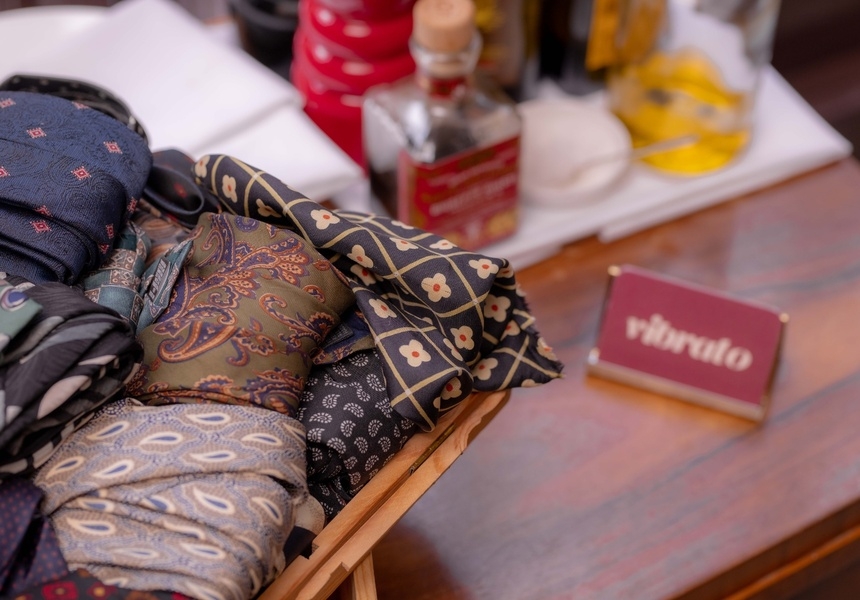
Rather than having a uniform designed or bulk-bought, Mellor scoured – and still does – Vinted, eBay and West Norwood’s much-loved vintage store Cenci for the wardrobe. A lot of the covetable trousers are old Ralph Lauren. The ties – with patterns so bright and detailed they could be mistaken for eye tests – are from Versace, Dior, Armani and Marks & Spencer’s old in-house brand, St Michael. The accessories are a highlight: a variety of art deco and punkish tie pins that elevate the outfits and frequently spark conversation between staff and curious diners.
Mellor isn’t alone in his sartorial focus – across London, staff uniforms have been receiving modish makeovers in recent years. At Max Rocha’s Cafe Cecilia, the front-of-house clothes have been created by his sister, the acclaimed designer Simone Rocha. London-based staples label Ronning collaborated on the uniform for Hackney Italian restaurant Auguste. At the St James’s bistro Maison François, staff wear shirts and ties from Drake’s and jackets from Dutch brand Bonne for a put-together workwear look. “The staff have always had compliments for their uniforms,” says Ed Wyand, the restaurant’s chief operating partner. “Most people want to know where they can buy them, which is always a good sign.”
There are considerations for the clothing, of course. Waitstaff are active and on their feet all day, and their garments will be washed often, so investing in higher quality fabric is clearly going to help with endurance. For Mellor, going vintage was a no-brainer: he avoids the pitfalls of fast fashion (though the staff’s shoes, GH Bass Weejuns, are all new). When I talk to the waiters here, it’s clear they enjoy the dress-up, too. They are territorial over the ties and pins, which are supposed to be stored in a communal box, though one of them admits to taking his favourite Dior tie home. “They’re talented people, you can’t really rob them of their personal identity and keep expecting them to have agency,” laughs Mellor.
So yes, this stuff matters. Maybe not quite as much as what’s on your plate (which is very good) or what’s in your wineglass (also very good). But the clothes are part of a restaurant’s story: a small part of the reason you’ve chosen this place over another. “At the end of the day,” Mellor tells me, as lunch service wraps up and the waiters take a breather, “it’s theatre, darling.”
This article originally appeared in the fifth issue of Broadsheet London's magazine.