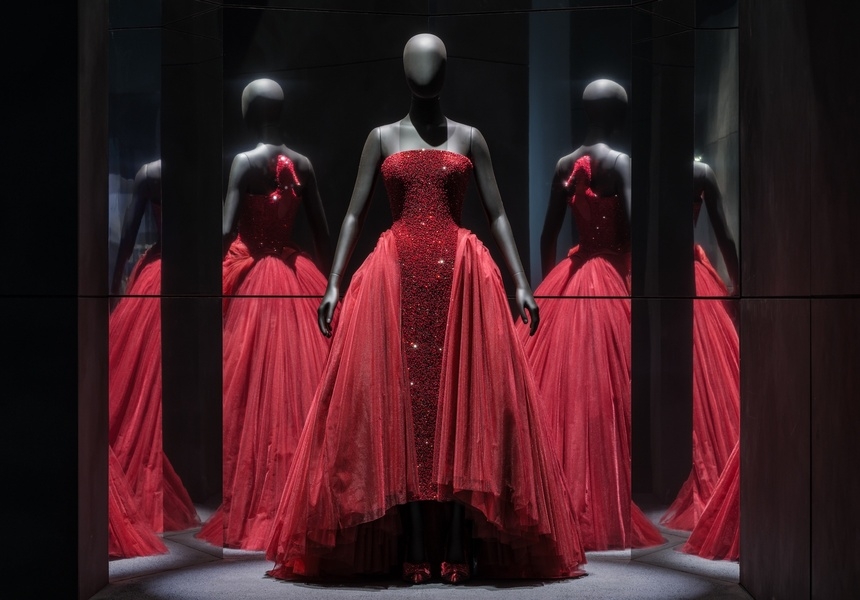
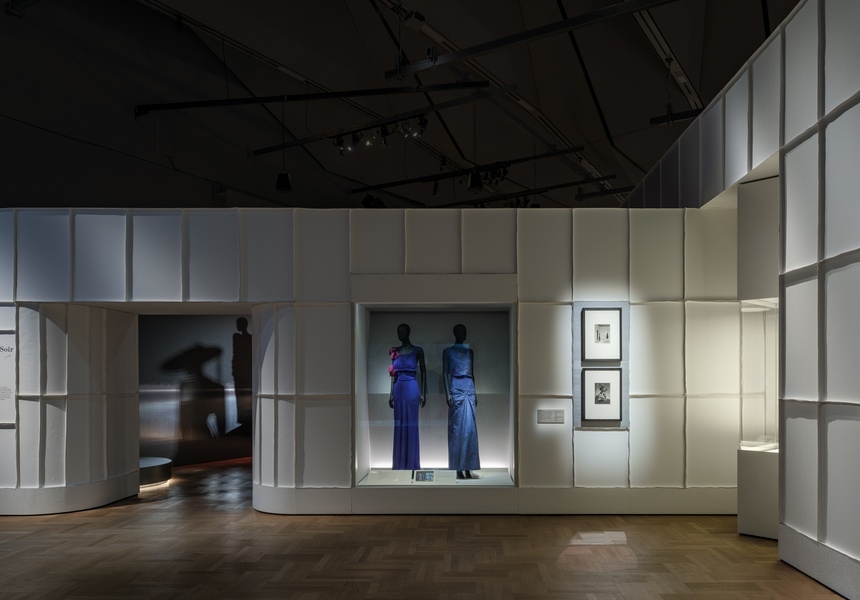
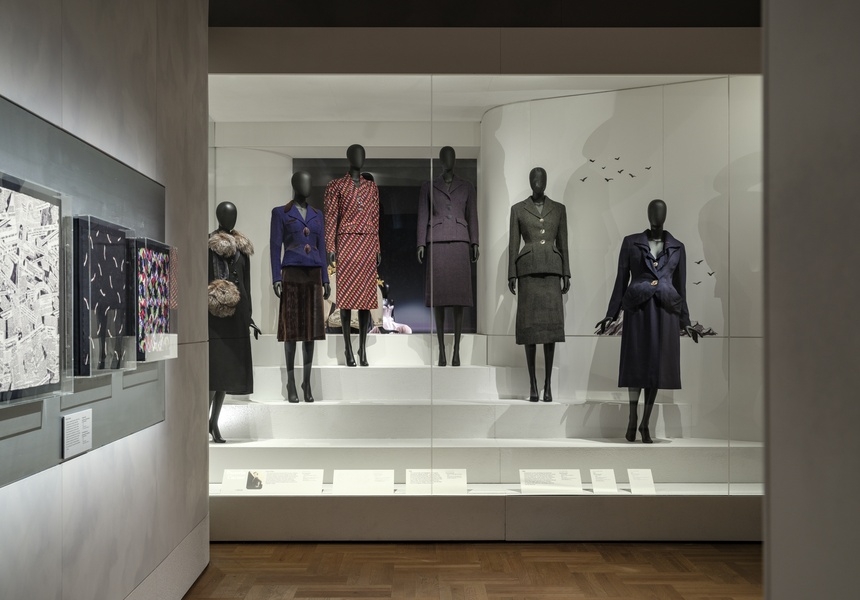
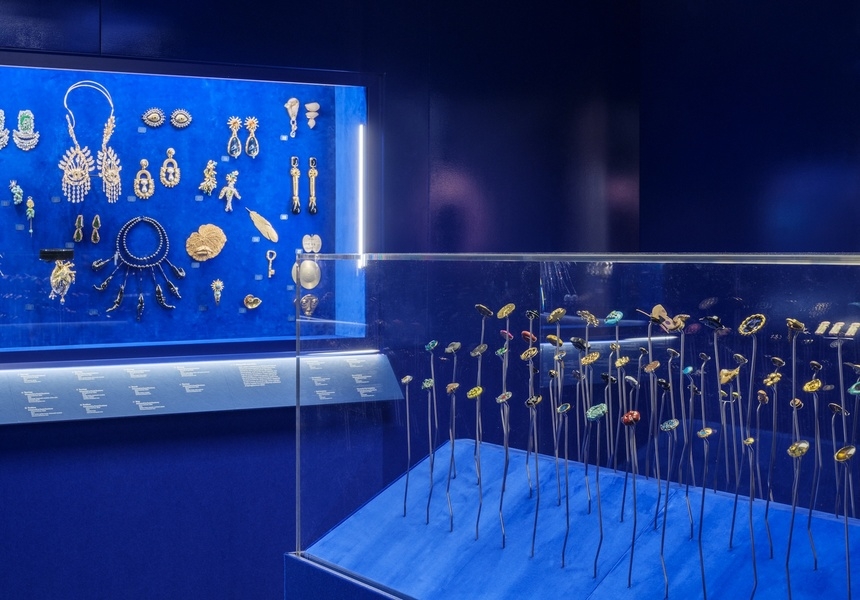
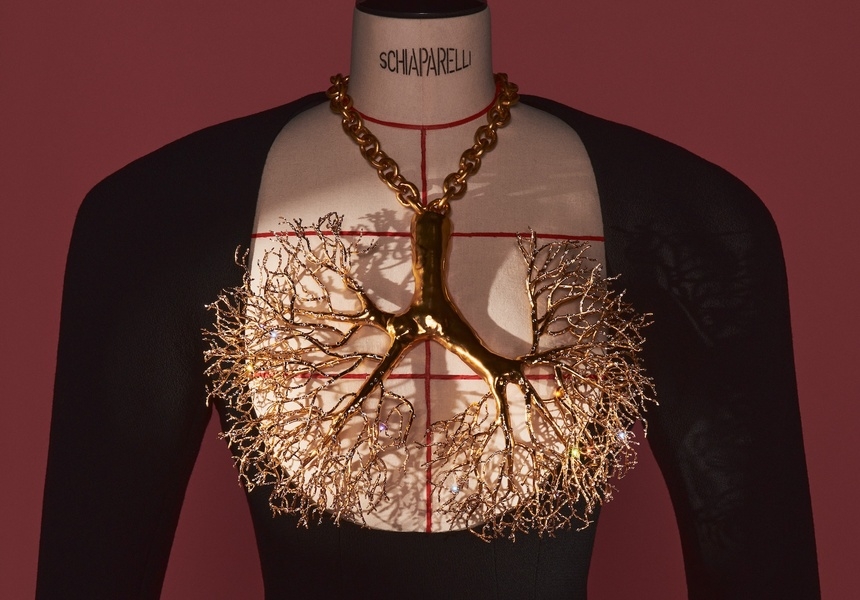
Within fashion circles, Elsa Schiaparelli is a legend and a heavyweight – an entrepreneurial renegade who walked so Miuccia Prada and Alexander McQueen could run. But on the average high street, her name would probably draw a blank. Despite her legacy, she is still less well-known than, say, her contemporary and alleged rival Coco Chanel. (That Schiaparelli’s brand was shuttered from 1954 until 2013 has played its part.) Now the V&A is attempting to correct that with the launch of the UK’s first exhibition dedicated to the Italian designer.
The showcase, Schiaparelli: Fashion Becomes Art, aims to celebrate not only her surrealist designs (she was the first designer to collaborate with artists, most famously Salvador Dalí), but also her extraordinary life. Schiaparelli was born to a wealthy family in Rome in 1890 but, keen to resist her parents’ plan to marry her off to a Russian aristocrat, moved to London. There she became engaged to a Swiss lecturer within 24 hours of meeting him; they married soon after. The newlyweds moved to Nice, then to New York, where they had a baby, Maria Louisa, nicknamed Gogo. Her husband, however, turned out not to be who he claimed and Schiaparelli eventually left him. (The last straw apparently came when he took the couple’s mink bedspread to a tailor and asked for it to be remade as his coat lining.)
Now a single mother, Schiaparelli moved back to Paris almost destitute. Chance meetings enabled her to step inside the art world, where she crossed paths with Dalí, Man Ray and Jean Cocteau, all of whom she would go on to collaborate with. Together, they created some of the most recognisable, original works in fashion: a dress adorned with a vivid lobster print; one covered with tears; a hat made in the shape of a shoe. Another design consisted of a lamb chop carefully placed above the head. “She wasn’t just someone borrowing motifs from artists; she really contributed to the surrealist movement at that time,” says Lydia Caston, one of three curators to have worked on the exhibition. “We’re also excited about showing her story as a female entrepreneur, someone who has, as she said, always ‘dared to be different’.”
Schiaparelli is best known for her avant-garde designs, but the V&A presents her as the paradox she was – a woman who loved experimentation but who, with a daughter to support, could also be fiercely commercially minded. The exhibition features more than 200 objects, including garments, accessories, jewellery, paintings and photographs. “She also created wearable but still quite disobedient fashion,” Caston explains. “There was always one subversive detail, whether it was glove fingertips that looked like claws or buttons that resembled insects.”
Much has been made of the supposed feuding between Schiaparelli and Chanel. Justine Picardie, fashion biographer and author of Coco Chanel: The Legend and the Life, says that her extensive research has found nothing to prove the two disliked each other. “They were set up as rivals,” she says. “It’s a bit of a cliche, isn’t it? Women are somehow forced into that position. I like to think that they would have respected one another.”
Although their work differs wildly, “both have such clear ideas of their aesthetic, artistic purpose and intent”, says Picardie. “To be working at a time when women didn’t even have the vote in France … It’s just extraordinary what they achieved.”
The fashion landscape today owes much to Schiaparelli. John Galliano’s famed newspaper dress, worn by Carrie Bradshaw on Sex and the City in 1998, has roots in her 1935 print. She used the form of a woman’s torso in a perfume bottle long before Jean Paul Gaultier did, and her shocking, statement-making clothes feel like forebears to the work of Alexander McQueen. She also, like Miuccia Prada, recontextualised conventionally ugly objects or visuals (a lobster, torn flesh) by turning them into couture. “She perpetuated the idea that you didn't have to dress for men,” says Picardie. “You could dress both to please yourself or to make a statement.”
Today, her work feels more relevant than ever. Under the tenure of Daniel Roseberry since 2019, the brand has become a red-carpet favourite and critical hit. Gabriela Gheorghe, who runs the popular Instagram account @schiaparelli.archive, says her biggest demographics are those aged from 25 to 34 and 18 to 24. “Her work is bound up in authenticity and fierceness,” she says. “In an industry dominated by homogenised aesthetics … her vision offers a compelling sense of individuality.”
Schiaparelli: Fashion Becomes Art is at the V&A from March 28 until November 1.