With its pink vinyl changing-room curtains, shelves of vintage Miu Miu and old copies of Love magazine, Isabella Vrana’s showroom has become a staple on the east London shopping circuit. The 28-year-old designer, whose namesake brand is known for its ’90s- and noughties-inspired wardrobe staples (including the regularly sold out Hooked Top), started out selling second-hand clothes on Depop before launching her own collection in 2019.
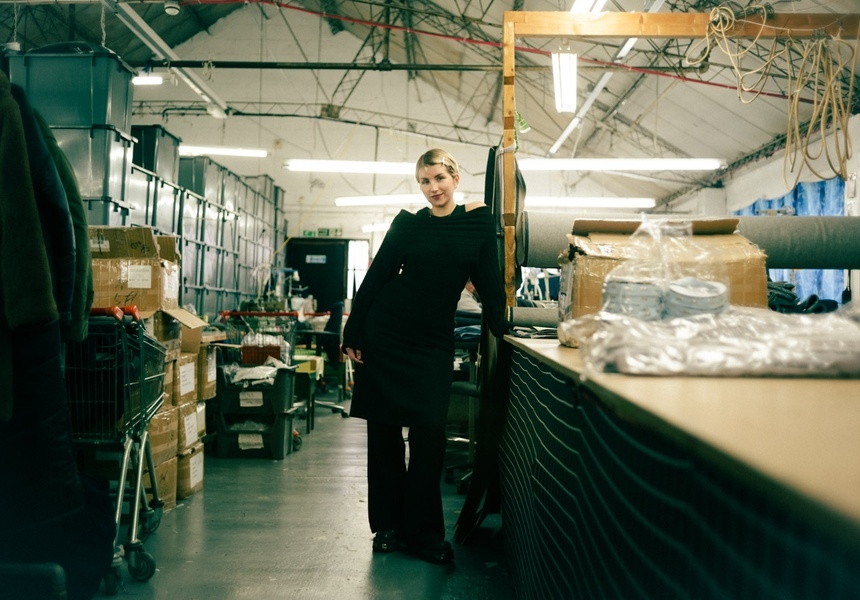
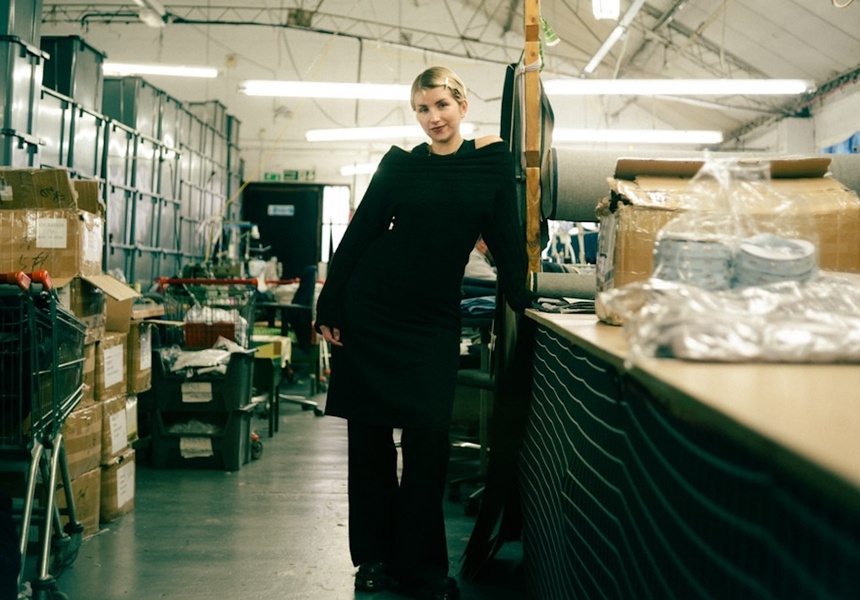
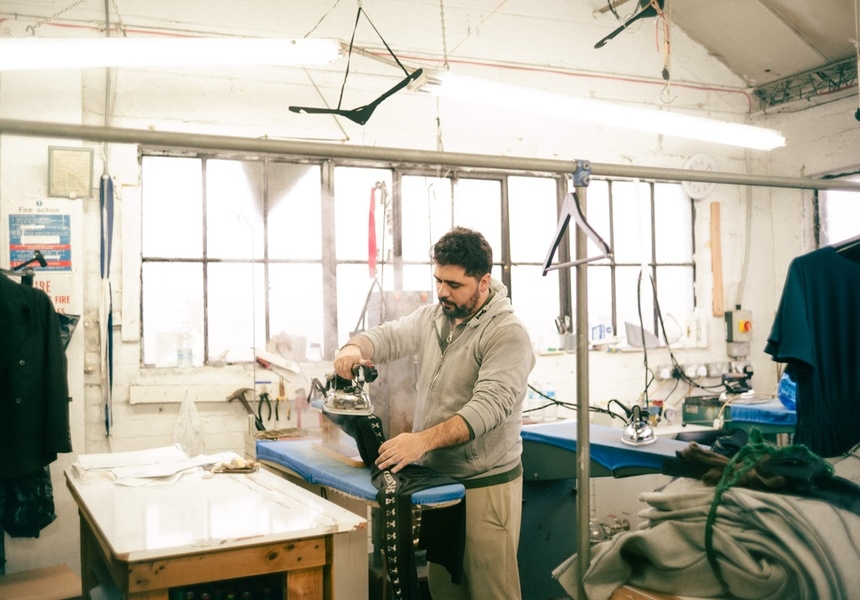
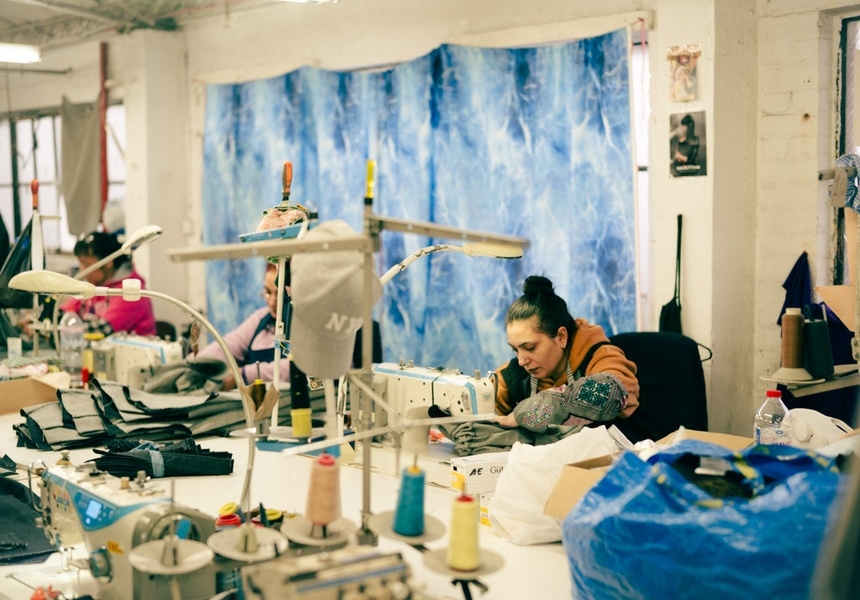
Vrana is part of a small wave of young independent British designers, which also includes Offkut Studio and Millie Jane, dedicated to keeping their garment production in the capital. She prioritises shorter supply chains, working with factories in South Hampstead and Tottenham, and she recently relocated her knitwear production to a factory in north London’s Harringay Warehouse District.
In the early 20th century, this part of Harringay was bustling with factories and warehouses where pianos, furniture and confectionery were made. After the Second World War, as larger-scale manufacturing shifted out of London to create jobs in other UK regions, the area’s production focus shifted to handbags, shoes and hosiery. But by the 1990s, local manufacturing slowed as production moved overseas, due in part to a lack of local investment as well as cheaper labour abroad. According to a research paper in the Journal of Fashion Marketing and Management, the proportion of imported clothes sold in Britain increased from 57 per cent in 1993 to 92 per cent in 2001, while a paper in the Journal of Cleaner Production found that 90 per cent of clothes sold in the UK in 2018 were imported. Meanwhile, government data shows that manufacturing more generally accounted for just two per cent of London’s overall economic output as recently as 2024.
But local fashion production still exists here, even if it’s harder to come by. “We recently launched our first leather set because we found this amazing specialist factory which has been running for 30 years … [It] made for Ted Baker and Topshop Boutique back in the day,” says Asal Tehrani, whose label, Susamusa, has built a following for its nostalgic style and classic silhouettes. Now stocked at Liberty London, it counts Olivia Dean and Bella Hadid among its fans. The 28-year-old Tehrani posits that the factory operators “probably wouldn’t have said hi to me back [in their heyday], because our quantities were so small to start with. But now they’re open to having the conversation.”
Manufacturing is more expensive in Britain than in the countries where the majority of fashion sold in the UK is made – places like China, India and Bangladesh, where wages, raw materials, utilities and rent are cheaper. Producing locally can also be more time-consuming. Unlike many of those abroad, UK factories tend to operate only as cut, make and trim, meaning the client has to source all the materials that go into making a piece, from the care label to the thread. But there are plenty of perks, too.
“There are little things, like being able to go to the factory when I need to,” says Vrana. “They send me my deliveries in an Uber, rather than waiting for deliveries from abroad, where you have to pay customs and shipping.” If Tehrani needs to make a custom piece, she can move swiftly: “I will just go in with patterns and sketches, and we’ll spend a few days together. There’s beauty in the momentum of making here.”
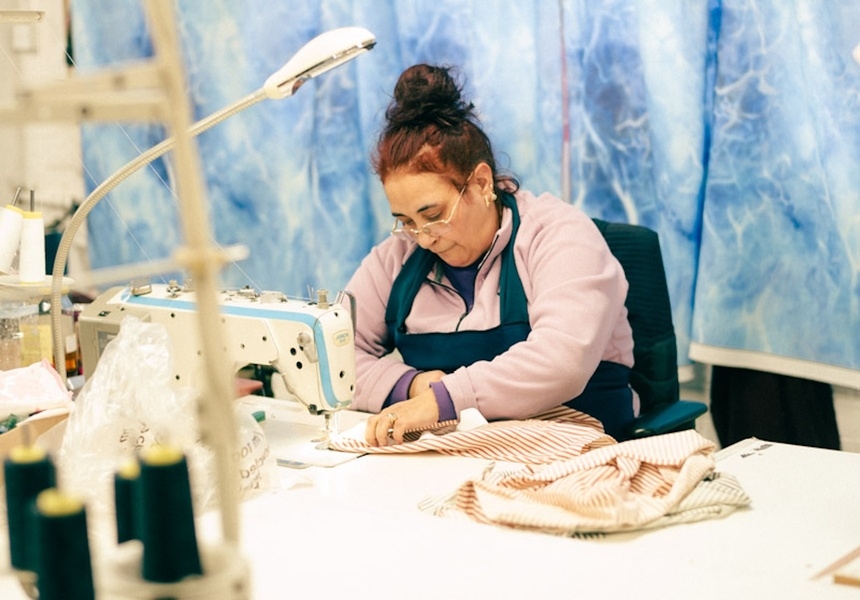
Tehrani produces her entire line in London, using four factories in Tottenham and Leyton that she discovered by word of mouth. Many of her machinists, she says, have been in the industry for decades, after taking over family companies and learning the craft from their parents.
Vrana, meanwhile, started by cold-calling factories, testing designs and gradually increasing order volumes as she expanded her collection. “The best places don’t have snazzy websites that know how to market to aspiring Instagram brands,” she says.
“It’s difficult to find people who know clothes and understand how to make them well,” says 32-year-old Rhianedd Dancey, founder of Rhi Dancey. “It’s a dying skill.” She describes her label’s signature statement tops, made in mesh and emblazoned with statement prints, as “wearable art” created through collaborations with artists. Dancey designs and operates out of a studio-showroom in Limehouse, and 95 per cent of the brand’s pieces are made by hand by seamstresses in Essex, East Sussex and the Midlands who run their own ateliers.
Scalability is trickier for those manufacturing solely in London, where there are fewer factories and skilled workers. But slower, more sustainable growth – producing in smaller units and being picky about where, and if, they do wholesale – is integral to these brands. Like Vrana and Susamusa, Dancey doesn’t work seasonally: she designs investment pieces intended to be worn for years to come.
As Tehrani puts it, “I’m trying to make the foundations of a long-lasting brand that’s going to be here forever. We don’t need to be making more clothes.”
This article first appeared in the third issue of Broadsheet London's magazine. Here's where to find a copy.