Anyone keeping half an eye on the London restaurant scene will know that there has been a lot of talk about the number of theatrical new trolleys being wheeled around in restaurants across the capital. At The Grand Divan at Simpson’s in the Strand, however, all restaurateur Jeremy King had to do was dust his off.
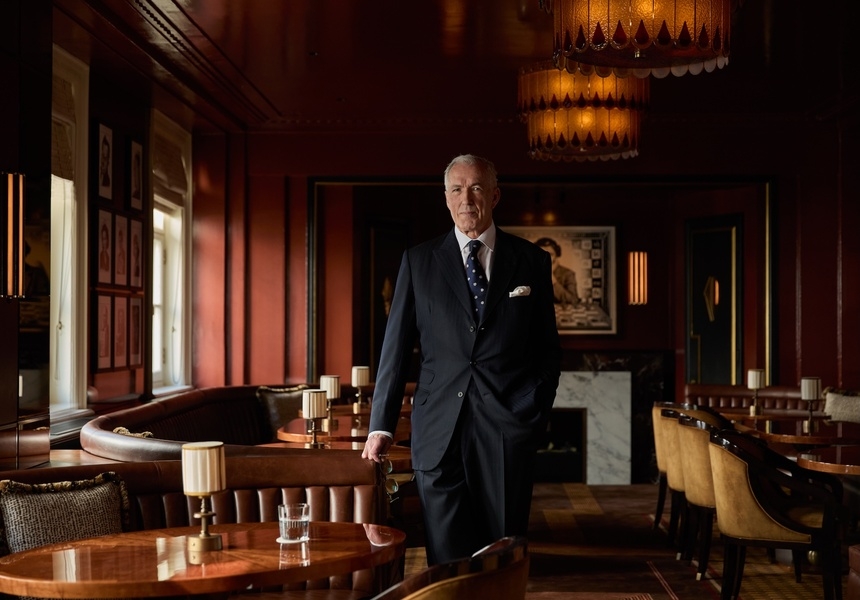
“If I was doing my job properly, people would walk in and say: ‘Oh good, you haven’t changed anything.’” King tells Broadsheet. “We changed a lot, but it doesn’t look as though we’ve changed anything.”
Simpson’s dates back to 1828. It began as a chess club and coffee house, before evolving into one of London’s most extravagant restaurants, famed for its white-coated carvers, silver-domed trolleys and hearty British menu. More recently, the restaurant closed in 2020 during the pandemic and did not reopen under its previous operators.
King had been trying to get his hands on the site for some time. “I was beguiled by it. There are very few such places left in London.” After multiple failed attempts to acquire the site in 2000, 2008 and 2015, he finally got his wish in 2022. “Simpson’s was always the one.”
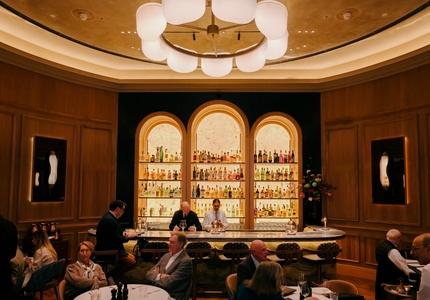
Today’s iteration of Simpson’s has been unveiled in stages over the past month, and is split into four parts: The Grand Divan, Romano’s, Nelle’s Bar and Simpson’s Bar.
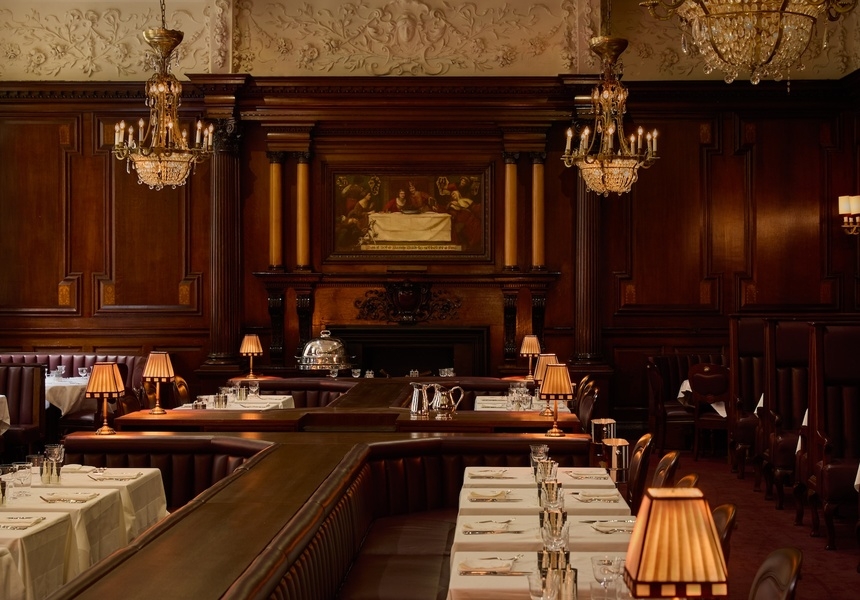
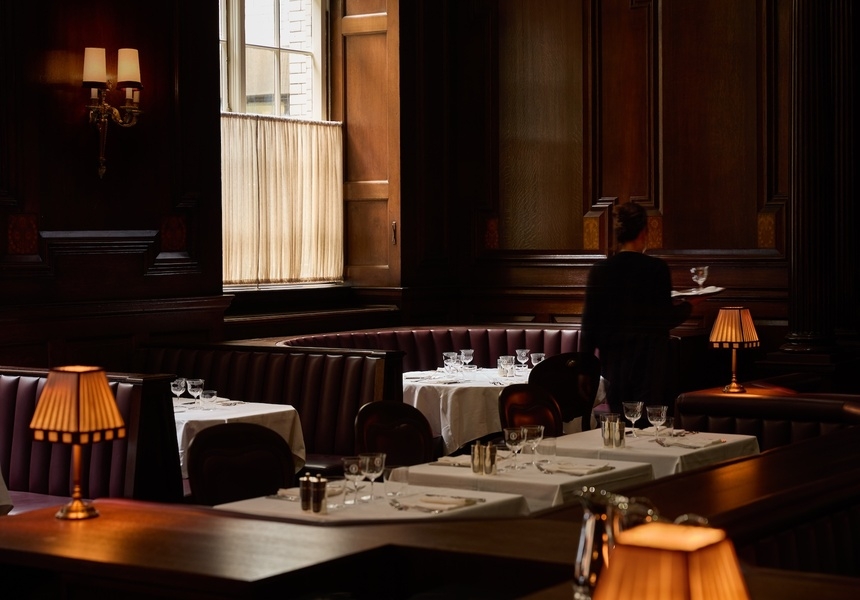
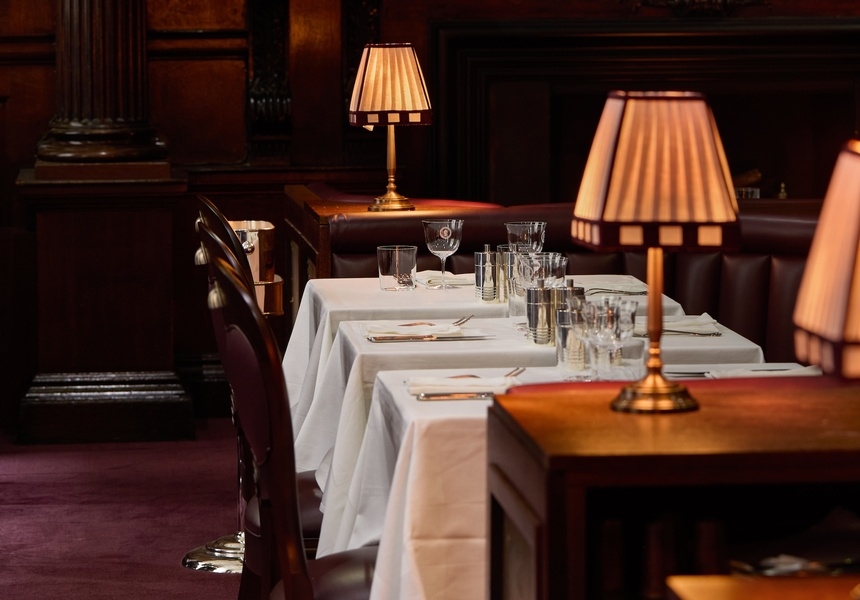
The Grand Divan is King’s reinterpretation of the original restaurant’s main dining room, restored and designed by interior designer and Interior Design Masters judge, Shayne Brady, who also imagined interiors for two of the restaurateur’s other sites, The Park and Arlington.
The space lives up to the name. Overlooked by an ornate plaster ceiling and shimmering chandeliers, the cosseting, wood-clad space lined with burgundy booths has all the romance and intimacy of an old-school institution without feeling stuffy. According to King, “The feeling is very much that it could have been like that a hundred years ago.”
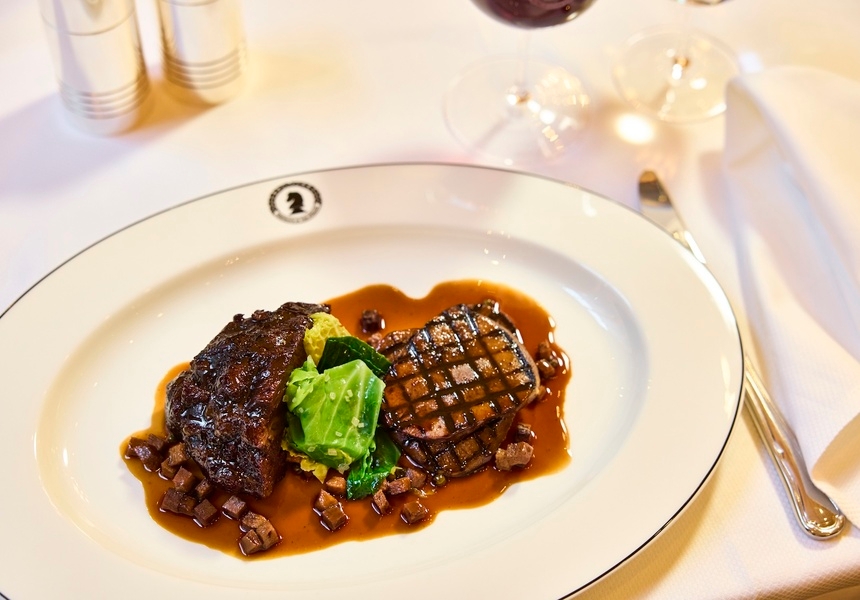
The menu is all about balancing the nostalgia of Simpson’s with how Londoners eat today. “There’s a kind of revised history of how terrible British food was, but actually you’ve got a wonderful variation,” says King. Still, “We’re not trying to create a menu exactly as it was 100 years ago.”
Overseeing the menu was executive chef David Stevens, who first worked with King at the original Ivy in the mid-1990s before rejoining him at The Wolseley Group in 2014. His research began with the archives, working through historic menus dating back to before 1900 and consulting The Savoy’s archivist to understand what had once defined the Simpson’s kitchen. “You see dishes on those old menus and think: that could be a great dish – but let’s do our version of it,” he says.
Breakfast brings honeycomb-topped crumpets, devilled kidneys on toast and grilled kippers in mustard butter. Stevens has also revived and refined Simpson’s historic “ten deadly sins” in lieu of a classic full English. A sprawling, nap-inducing plate of eggs, cumberland sausage, streaky bacon, black pudding, lamb chop, devilled kidneys, bubble & squeak, grilled tomato, mushrooms and fried bread, it comes in at £28.75.
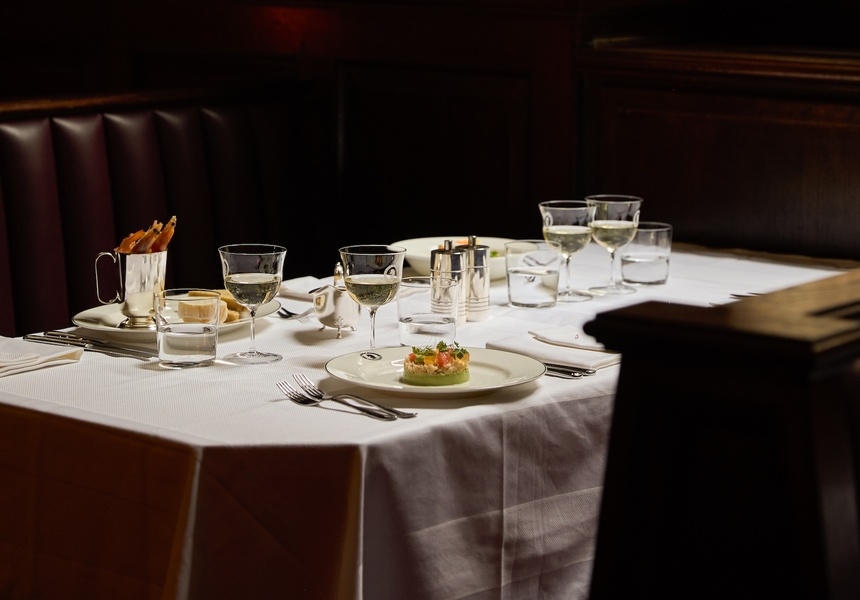
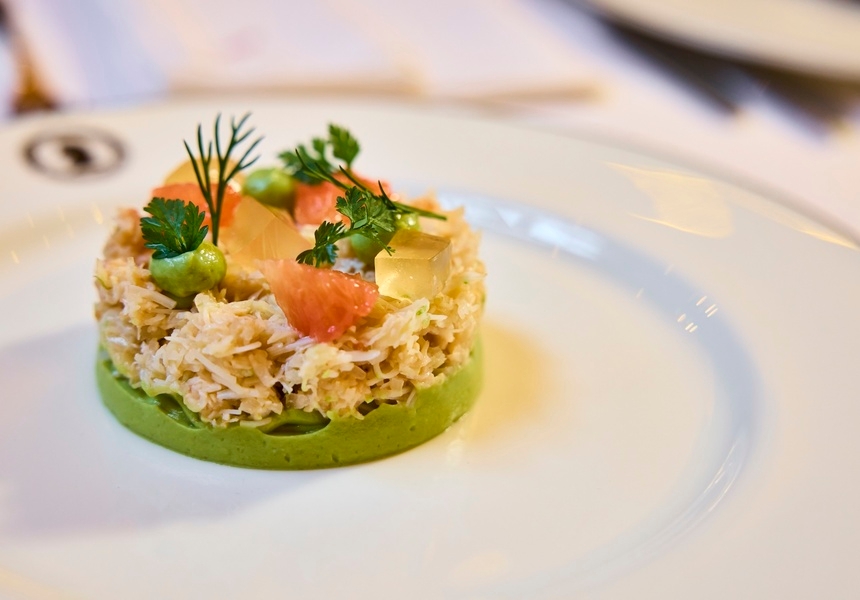
For lunch and dinner service, starters include rabbit and tarragon terrine with spiced apricot chutney, mulligatawny soup and prawn cocktail with buttered brown bread and marie rose sauce.
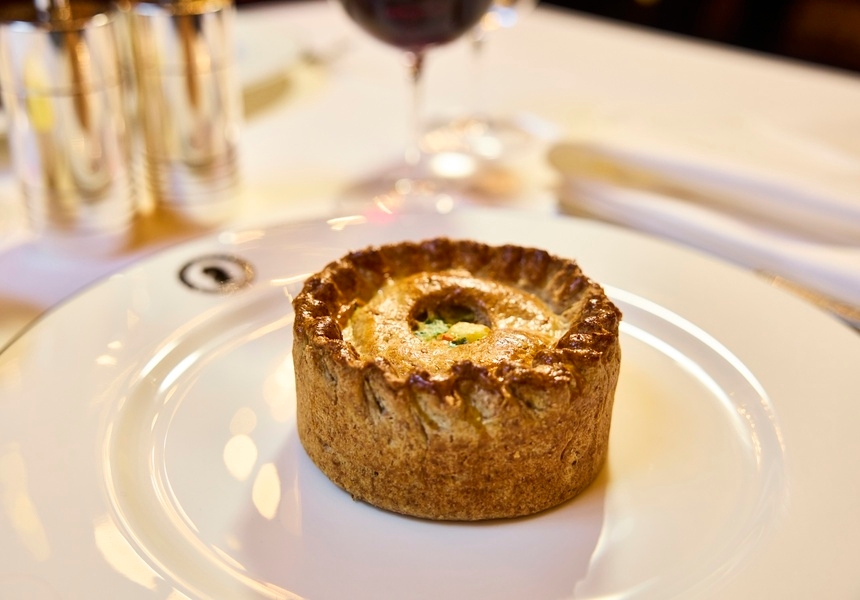
Elsewhere on the menu, a veggie, wartime-inspired woolton pie featuring swede, potato, carrots and puréed cauliflower sit alongside a daily-changing offering of pies and puddings, from beef and ale on Mondays to curried mutton on Sundays.
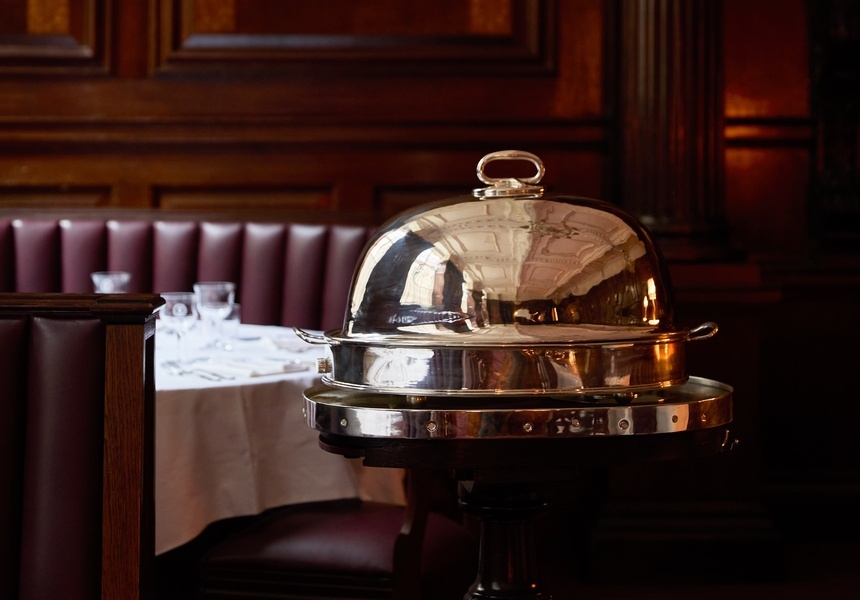
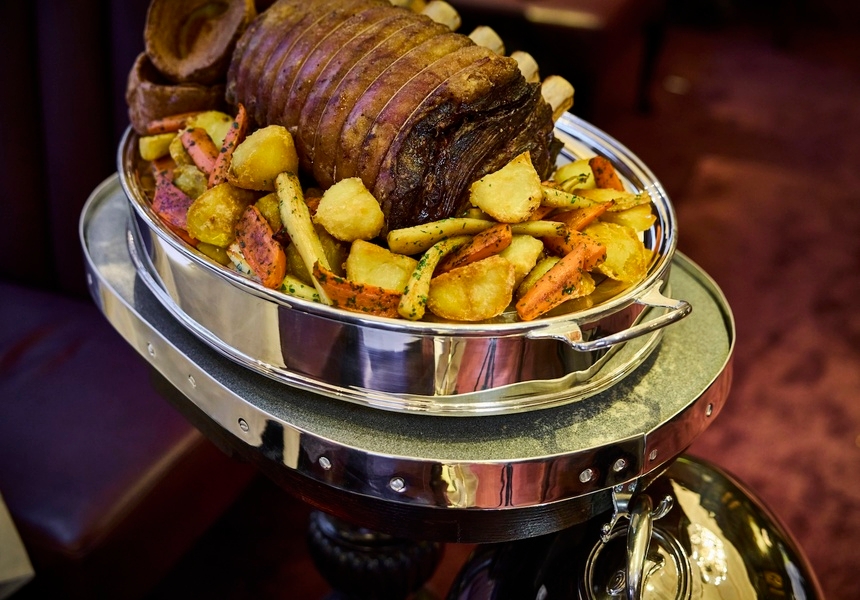
The roast beef is must-order – not least for the theatrics. “The trolleys – the theatre behind it – that’s what people go for,” says Stevens. Wheeled through the room under a silver dome and carved tableside, it comes with Yorkshire pudding, roast potatoes, parsnips, carrots and gravy.
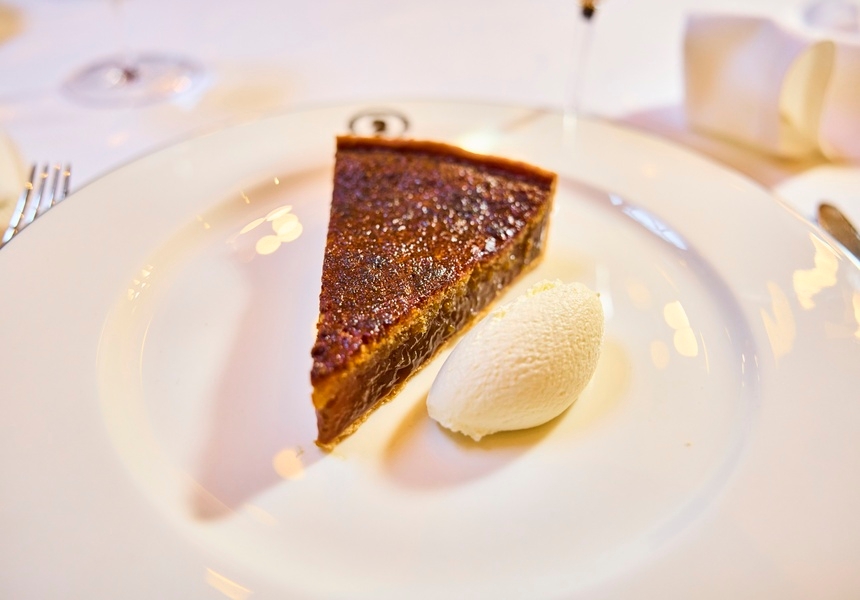
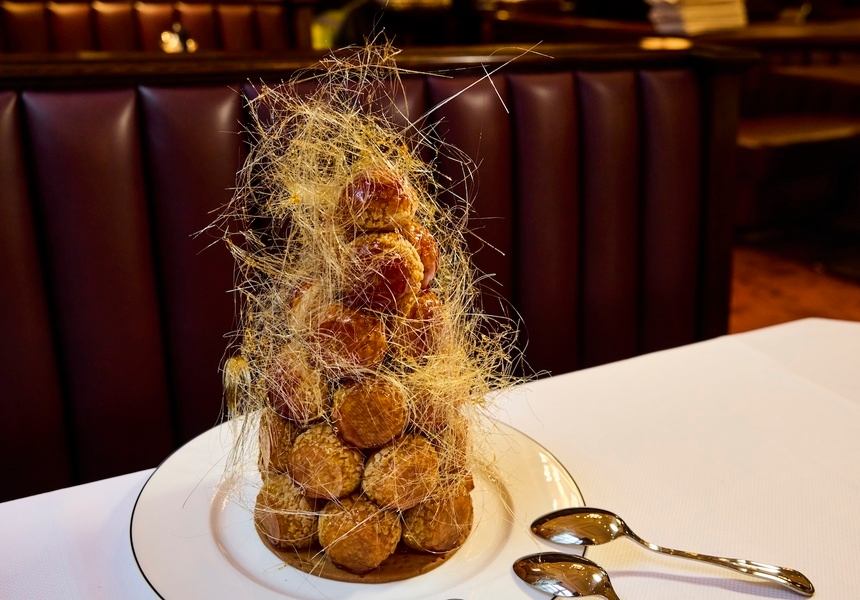
Keep space in your second stomach for the croquembouche with crème diplomate for two, or burnt Trinity cream – an English take on the crème brulée. No sweet tooth? There’s Devils on Horseback (oysters wrapped in bacon), an array of British cheese, and spiced, potted anchovies named “gentleman’s relish” on soldiers.
To wash it down, house Chablis and red burgundy is available in half or full litre carafes, while French, German and British glasses and bottles make up the bulk of the wine list, which also spotlights a range of English vermouths.
It’s taken a long time for King to finally become the custodian for Simpson’s. “The nice thing about it is that the time it’s taken has enabled me to think very, very carefully about its manifestation,” he says. Now, he’s enjoying the thrill of other people occupying the space. “I’m taken aback when other people come in. Seeing it through other people’s eyes is very gratifying.”
Grand Divan, Simpson’s in the Strand
100 Strand, WC2R 0EW
Hours:
Breakfast: Mon to Fri 7am–10.30am; Sat & Sun 8am–10.30am
Lunch: Daily midday–3pm
Dinner: Daily 5pm–11.30pm