The Counter is a weekly column from award-winning restaurant writer and broadcaster Jimi Famurewa. Sign up to get The Counter first, sent to your inbox every Tuesday.
Hello team.
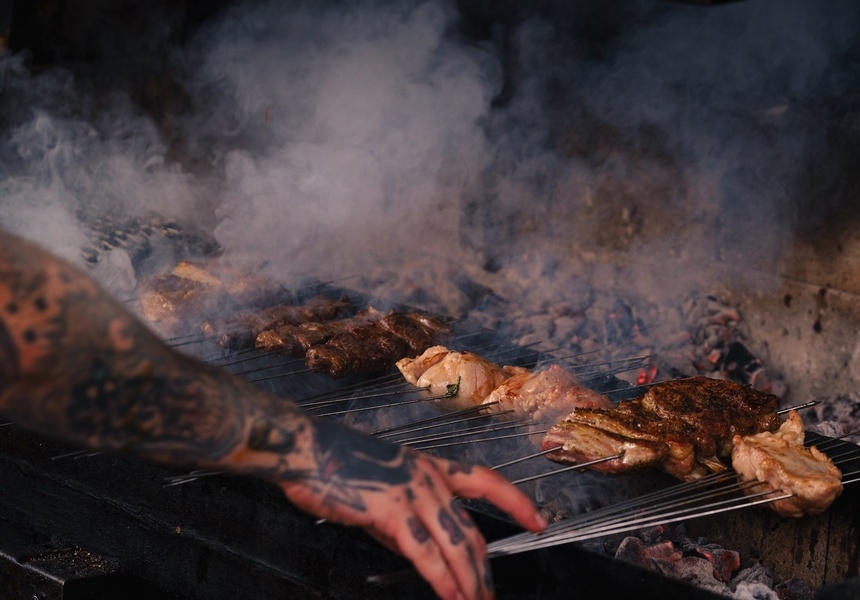
If you have walked along the north end of Dean Street in the last few weeks then there’s every chance that, amid the exhaust fumes and stray puffs of blue raspberry vape, you will have been hit by an intriguing new scent on the air. There, drifting out from the ecru frontage and paper-covered windows of a mysterious double unit, has come the beckoning, unmistakable waft of fire cooking: smouldering wood, barbecued animal fat and the low, crackly musk of freshly baked bread. The business creating these smoke signals is Impala – the long-marinating, rabidly anticipated debut restaurant by Meedu Saad, co-owner and executive chef of Soho Thai restaurant, Kiln. And though the scent isn’t an official marketing strategy, the man responsible is embracing it as a fitting lure and positive omen.
“When you smell a wood oven before you see it, it’s usually a good sign because those tend to be the good ones,” says Saad, standing beside the hulking stone furnace that heralds Impala’s spare, ruggedly modernist space, and connects to a central custom grill and metal pass, lit like a shrine. “We’re making bread daily here and this is based on a community oven – these [shared] ovens that exist in Egypt, across North Africa and in parts of southern Europe, where people bring fish from the market or other dishes and pay for heat, basically. As I’ve been working in Soho, at Kiln, for a decade now, I think of it as a community. So it was a no-brainer to have something that symbolises that.”
Impala takes its inspiration from Saad’s childhood trips to visit his father’s side of the family in Egypt (that name comes from the 1964 Chevrolet that he and his cousins used as a holiday whip), plus the interlocking food cultures of the Maghreb region and beyond. And the notion of a shared community heat source (in a figurative sense; I don’t think you can just show up with a hopeful expression and a supermarket pizza under your arm) is just one of a number of North African culinary traditions that the restaurant – co-authored by Kiln founder Ben Chapman – will bring to central London when it opens this week. Scorched berets of aish baladi flatbread (roughly translated as “life of the city”), coated in biscuity wheat bran, and served with a pool of peppery oil and floral harissa from Nebeul. A puffy ring of fryer-bronzed dough, primed with a runny fried egg, slow-roasted winter tomatoes and Aleppo pepper. Langoustine kibbeh wrapped in perilla leaves, and a bewitching, deceptively simple stew of braised greens and black-eyed peas.
The excited pre-opening publicity, and there has been a flowing, Nile-sized river of it, has tended to focus on Saad introducing Londoners to unfamiliar dishes and a thrillingly alien universe of smoke-wreathed flavours. But it is worth asking: why does a blockbusting modern restaurant, unapologetically flying the flag for North African cuisine feel quite so novel? Yes, the capital has stalwart, ersatz souks like Balham’s Tagine, beloved Algerian cafes such as El Marsem on Old Kent Road, and places like The Barbary, which present North African flavours through a Levantine lens. Yet the prominence and acclaim that has more recently been enjoyed by, say, restaurants steeped in regional South Asian, West African and Southeast Asian cuisines seems to have somewhat eluded it. Whatever happened to London’s lesser-spotted North African restaurants? And does Impala herald both a revival and an inflection point in how we think about the flavours of this vast, varied and somewhat misunderstood region?
If we want to trace the roots of splashy, North African-inspired restaurants in the city then we probably have to go back to Momo. Launched on Heddon Street in 1997, by livewire French-Algerian restaurateur Mourad Mazouz, this vast proto-“clubstaurant” was both a storied celebrity hangout and the spot where an entire generation of late-1990s London scenesters were introduced to pastilla, tagines and fluffy mountains of couscous. “In London in the mid 1990s, I looked around and saw that there were no North African [restaurants] apart from one in Soho that had just closed,” says Mazouz today, from his office in Paris. “Everybody was telling me, ‘It’s never going to work. It’s not the culture. Nobody knows about it. You’re never going to succeed.’”
That Momo absolutely did succeed – still drawing crowds and favourable reviews until 2020 when a combination of Covid and a challenging period for Mazouz’s personal life and global restaurant empire forced its closure – helped popularise an entirely new lexicon of Maghrebi flavours that seemed to pack all the best things about Mediterranean and Middle Eastern cuisines into a vivid greatest hits compilation. “We have thousands and thousands of recipes,” says Mazouz. “These are ancestral civilisations. So there is Berber and African [influences] but we have a Roman base, a Jewish base, a French and a Spanish base. It is a total melting pot.”
The flip side of this melting pot (a coast of neighbouring nations that stretches to more than 5000 miles) and of the easy way that harissas, ful medames (fava bean stews), and tabboulehs jibe with southern European and broadly Levantine ways of eating, is that North African cuisine in London has often tended to be absorbed into a broader Middle Eastern whole. “From bottarga to fermented fish, so much of North African food is woven into other cultures,” says Saad, with a smile. “I always say to people that, actually, they’ve been eating Egyptian food all along, without realising it.”
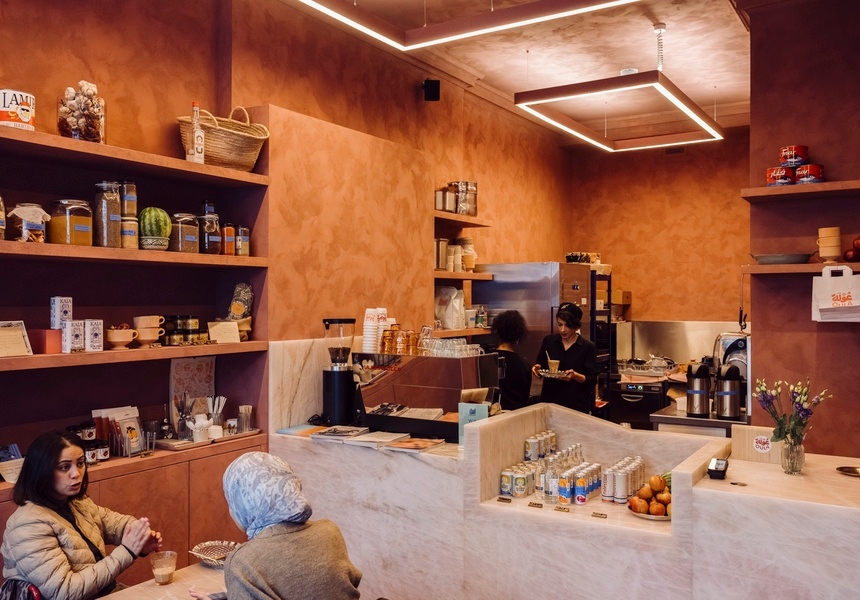
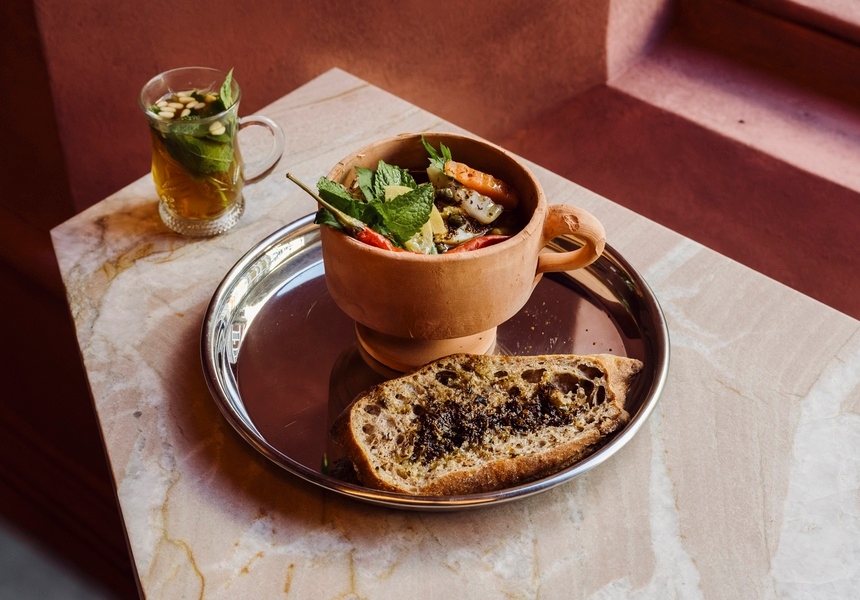
It’s important to stress that this is generally a natural byproduct of migration and cultural exchange rather than conscious pillaging. But, almost 30 years after Momo first opened, one of the encouraging developments in the city is that a new wave of North African-heritage chefs are trying to push towards something that is more complex and culturally specific. Lamiri Harissa, an independent sauce company founded by south Londoner Sam Lamiri in 2020, is using imported harissa and shakshouka kits to reaffirm the slow-dried chilli condiment’s Tunisian origins. Moroccan chef Nargisse Benkabbou’s Ladeed concept – recently in residence at The Pilgrm in Paddington – modernises the souk dining model with buttermilk barley couscous and a mint-spiked riff on the Belgian ice cream sundae, Dame Blanche. Boutheina Ben Salem’s Oula cafe, meanwhile, has planted a celebration of Tunisia’s melded cultures (and vividly spiced keskrout tunisien sandwiches) in the heart of Fitzrovia. “Too often, North African food is flattened into one idea or folded into something else entirely,” says Ben Salem. “I wanted to create a space where people feel comfortable asking, unlearning, and discovering something more precise and more honest.”
Precision and honesty brings us back to Impala. Though Saad is unabashedly spotlighting the project’s North African influences, he’s not shying away from the fact that it’s equally rooted in what we might call the social terroir of his upbringing in Tottenham. “Impala is a London restaurant,” he says. “Specifically pulled from north London grills and the Turkish, Kurdish, Greek, Caribbean and African communities that I grew up around.” No dish exemplifies this like Impala’s grilled sweetbreads in bordelaise sauce with salted “kebab shop” onions and pickled peppers: a miracle of richly glazed, creamy offal, sharp, nudging allium and exhilarating smoke that unexpectedly corrals North Africa, Green Lanes, and Escoffier-level French technique into a few mind-expanding bites.
It is one of the most sensational things I have eaten this year, and it perhaps points us to Impala’s true impact. Yes, it will cement a nascent scene and likely help to inaugurate North African cuisine as a food culture capable of producing the kind of cool, serious and star-anointed progressive restaurants that dominate end-of-year-lists. But it also shows the value, particularly in London at the moment, of places that can push beyond standard genres to create their own culinary language. “I can only cook what I know,” said Saad, before I let him return to putting the finishing touches to dishes. “I’m not trying to make something authentic to anyone but myself.”
For Jimi Famurewa’s dish of the week, sign up to get The Counter first, sent to your inbox every Wednesday.