The Counter is a weekly column from award-winning restaurant writer and broadcaster Jimi Famurewa. Sign up to get The Counter first, sent to your inbox every Tuesday.
Hello again.
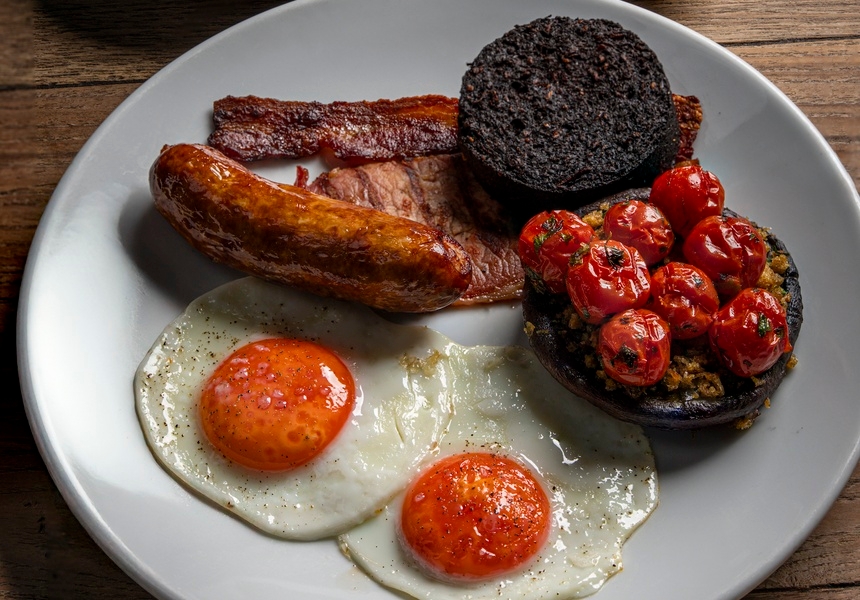
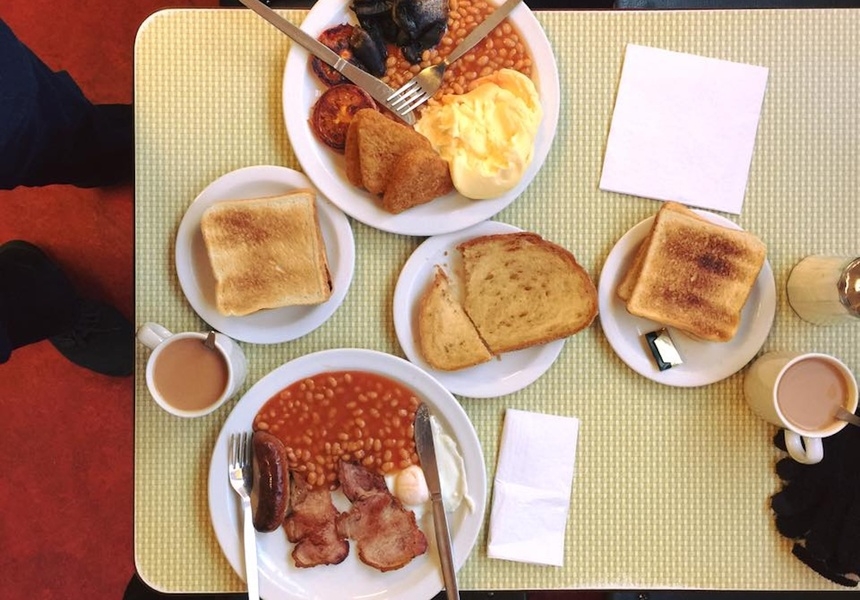
Last weekend saw a much-discussed newspaper investigation into whether the full English breakfast – once a beloved daily staple and universal expression of ketchup-splatting national pride – is in serious decline or not. It was, I think it’s important to say, a nuanced and thoughtful exploration of the subject. But what is your leading emotion on reading that Britain may have “turned its back” on the fry-up? Is it surprise? Intrigue? An impulse to consider the last time you sat at a formica table, penetrating the yolk of a fried egg with a dipped toast corner or pushing a speared bit of sausage through a seeping lake of value baked beans?
For me, and I’m sure many others, the overriding feeling whenever this topic comes up is a nagging sense of deja vu. For the best part of a decade, multiple mainstream press stories have wrung their hands about the apparent demise of the fry-up. In early 2018, outlets like Restaurant magazine ran research suggesting diners were increasingly swapping cooked breakfasts for lighter options like granola and avocado toast. In 2020, a catnip survey claiming one in five 18- to 30-year-olds had never eaten a full English was picked up by absolutely everyone and debated on daytime television. Last year, Tory MP Mark Pritchard suggested, with grave seriousness, that Labour’s failure to get a grip on rising food costs was endangering the proud patriotic tradition of the cooked breakfast.
Meanwhile, other corners of the London food ecosystem suggest that caff culture and varying forms of the fry-up have never been more popular: Instagram reviews of time-warp greasy spoons; E Pellicci’s continued dominance; widespread jitters over the new ownership of the Regency Cafe. The full English question is a topic we can’t quit; a story that, like a stubborn attack of black-pudding burps, keeps bubbling back up. So what is going on? What sort of state is the fried breakfast actually in? And why is this topic such a reliable vessel for a builder’s strength brew of anxiety, obsession, culture war and misguided patriotism?
It’s useful to zoom out a little. A big part of what has made all these surveys about the fry-up’s dwindling popularity so seductive (and it is worth noting that those grabby 2020 statistics were literally self-commissioned by the research arm of a media agency) is that they hit on something that is instantly graspable: avocado- and matcha-obsessed younger generations are drifting away from the stolid plates of eggs, bacon and accompaniments first popularised by the Victorians. It is a sentiment that both feels true and has the engagement-baiting pithiness to cut through in morning ideas meetings at newspapers, websites and TV stations. The same applies to confected debates related to fish’n’chips, roast dinners and gen Z’s relationship to things like clubbing and drinking. The psychodrama over the imperilled bastions of British dining culture is everlasting and self-sustaining.
Beyond that, lots of the discussion around the demise of the full English seems to use sound data as the basis for questionable assumptions. Yes, many of us are no longer fuelling ourselves every single morning with an enormous platter of fried things. Yes, health-consciousness and a emphatically cosmopolitan food scene have occasioned a wider range of breakfast options. But the fry-up’s evolution from a glut of vital daily calories to an occasional treat feels like a natural shift. As does its adaptability in terms of style and pricepoint, from the more traditional end (Rock Steady Eddie’s) to the contemporary (Norman’s, RIP) and more luxurious (Hide, Fallow). The affordable utilitarianism of caffs and full English-purveyors strikes me as uniquely well-suited to our fractious, price-hiked age (as I wrote late last year, one of my favourite restaurant finds of 2025 was Sema’s Cafe, an unassuming little Anglo-Turkish spot in Catford). What’s more, at a time when everyone wants to signal their timeless unpretentiousness through their dining choices – from Guinness and scampi fries to jacket potatoes and mince rolls – the cultural cachet of a well-made full English (or full Scottish or Ulster fry) has never been higher.
That certainly seems to be what the Gungors, the new custodians of Pimlico’s legitimately canonical Regency Cafe, are betting on. You could practically hear the horrified screams last year when the family won the business at auction and promptly began discussing the prospect of an aggressive global rollout and brand partnerships – a twinkling empire of ersatz Regencys that could soon be serving up baked beans, bubble and bread-and-butter pudding everywhere from Amsterdam to Dubai. If we set aside the fact that this hardly tracks with the image of the full English as a doomed culinary relic, it does feel like a fundamental misunderstanding of the specific social context that gives London’s historic caffs their allure and soulfulness.
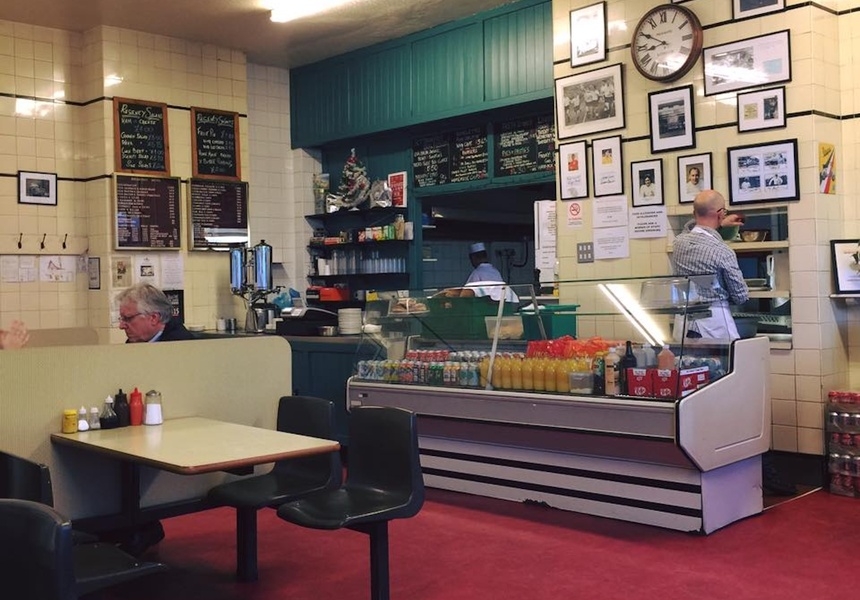
More to the point, neither this mooted expansion, nor any of the changes that devotees of the 80-year-old business feared, have yet materialised. Last week, I popped into the Regency’s sun-bathed, ecru-tiled corner space and found a pleasing sort of constancy. There were the faded yellow tables, gingham bistro curtains, gleaming period tea urns and signs reminding people to order before finding a seat. There was the mixed, multigenerational crowd – including tradesmen, lanyarded office workers, mildly bewildered tourists and pensionable regulars picking at the exceptionally good, hand-cut chips. There was the soothing, mid-century atmosphere that always reminds me of the cafe at the end of The Tiger Who Came to Tea (aka history’s greatest fictional restaurant). And there, on my plate, was bacon, sausage, beans, egg and a soft, yielding plinth of bubble and squeak – like a brilliantly ridiculous, age-old power ballad that I hadn’t heard in ages.
To ponder whether the full English is the fading past or the emergent future is to miss the point. What it offers, when it is done well, is an infinitely adaptable framework and a glorious, cosseting stasis. I really think that it will be fine. When you are this unapologetically unfashionable, you can basically never go out of style.
For Jimi Famurewa’s dish of the week, sign up to get The Counter first, sent to your inbox every Tuesday.