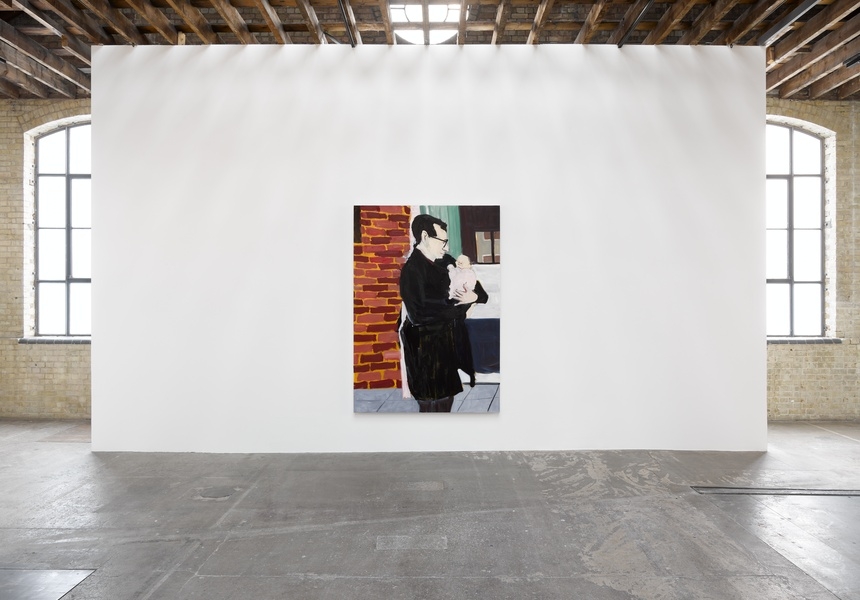
When American artist and writer Joe Brainard released his cult classic memoir I Remember in 1970, it was praised for stitching together a life through deceptively simple recollections of bubble gum, apricot pie and blue-and-tan sandals. London-based artist Chantal Joffe’s latest exhibition, which borrows its title from the memoir, similarly captures fleeting memories that endure. In her 14th show at Victoria Miro in Islington, Joffe revisits the everyday moments of her childhood, rendering them in large-scale paintings. “All we have to paint about is the everyday,” she tells Broadsheet. “I’ve always been interested in the shared experience of daily life.”
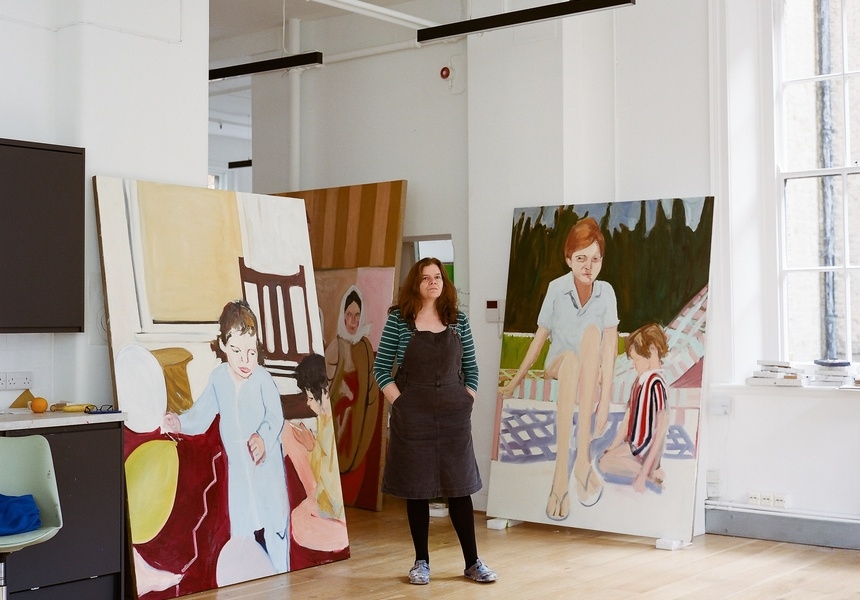
Joffe – who typically depicts women and children in her work – has long favoured thick, decisive sweeps of paint, but in I Remember she returns to the past with softer, expressive, more open strokes. As her friend and collaborator writer Olivia Laing writes in Time Transmission, a new text to accompany the exhibit, Joffe has allowed herself “a new indefiniteness, a surrendering of precision and edge”. The result is a body of work that is suspended between recollection and the present.
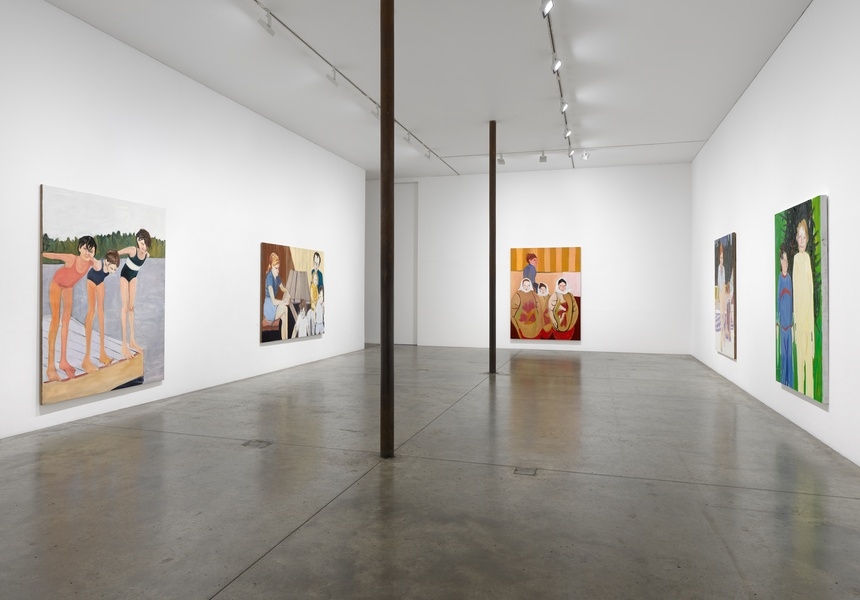
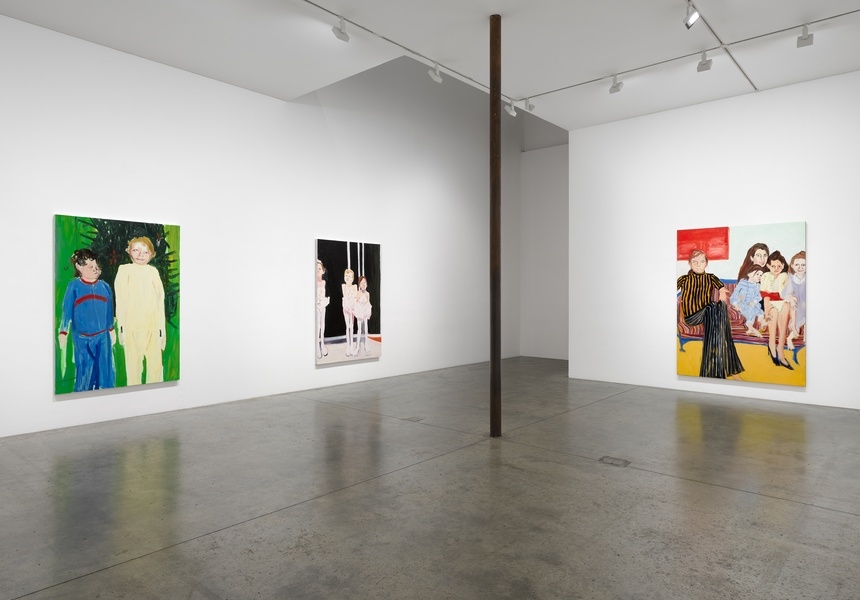
The cast depicted in the works is tight knit. “It’s just me, my mum, my dad and my three siblings,” Joffe explains. These figures form the backbone of a childhood initially spent in the US in the 1970s before her family moved to the UK. The exhibition is like bearing witness to a carousel slide projection of an upbringing: beach holidays, Christmases, back gardens, ballet classes, a father holding a newborn. But Joffe makes clear that the show isn’t driven by nostalgia but is focused on the elasticity of memory. She says painting allows her to “travel into memory and bring things to the surface”.
To make the work, she combed through albums of old photographs – an undertaking she describes as unsettling. “It was a weird process; you can fall down a hole,” she says. “The first painting I made was of my dad holding my sister as a newborn, before I was even born. That was hard. He was about 30 then, and suddenly I’m older than my parents were in those pictures. There’s this strange shift of perspective.”
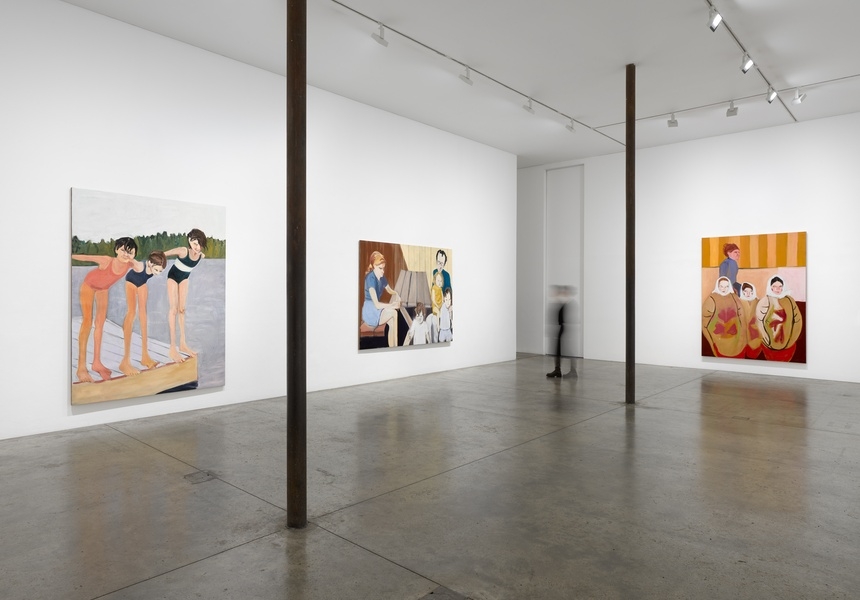
One of the exhibition highlights, Matrushka Dolls, shows Joffe and her sisters in homemade Russian doll costumes sewn by their mother. “Some photographs just call out to you,” she says. “Maybe it’s the light or the colour, but that one felt like an obvious metaphor – the child becoming the mother, each person unfolding into the next.” In the painting, the sisters’ cheeks flush red, and their eyes dart to the side, unsure what to make of these new layers.
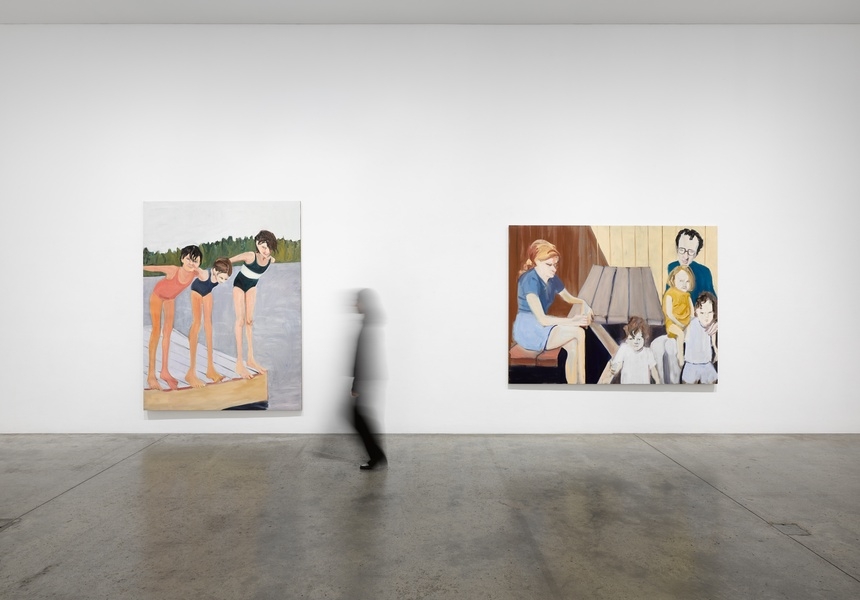
Many of the works in I Remember feel instantly recognisable, as though they could be anyone’s memories. In Bananafish, a family stands ankle-deep in the Florida shallows, feet dissolving into the water, all stripes, shorts and awkward smiles. In Birmingham, a father cradles a newborn, his expression caught between awe and apprehension. And Divers is one of the most joyful canvases: three girls on the edge of a diving board, spindly legs and oversized feet capturing the comic bravado of early adolescence.
A sense of circling back runs through the show. “I’ve been reading [artist] Philip Guston, and he says this great thing about how we never go forward, we just circle back,” Joffe says. “That’s completely true for me.
“My parents are no longer alive, so everything about certain images has changed. You keep returning to the past, but your relationship to it shifts each time.” Her thinking has also been shaped by physicist Carlo Rovelli’s idea of non-linear time. “I like the thought that they don’t die – they’re existing somewhere else in space, just in a different bit of time,” she says. “I find that very comforting.”
In the end, Joffe believes a painting has just one task. “You have no control over how anyone will feel, but if a painting moves someone, then it’s done its job.”
Chantal Joffe’s I Remember runs at Victoria Miro Gallery until January 17, 2026.