
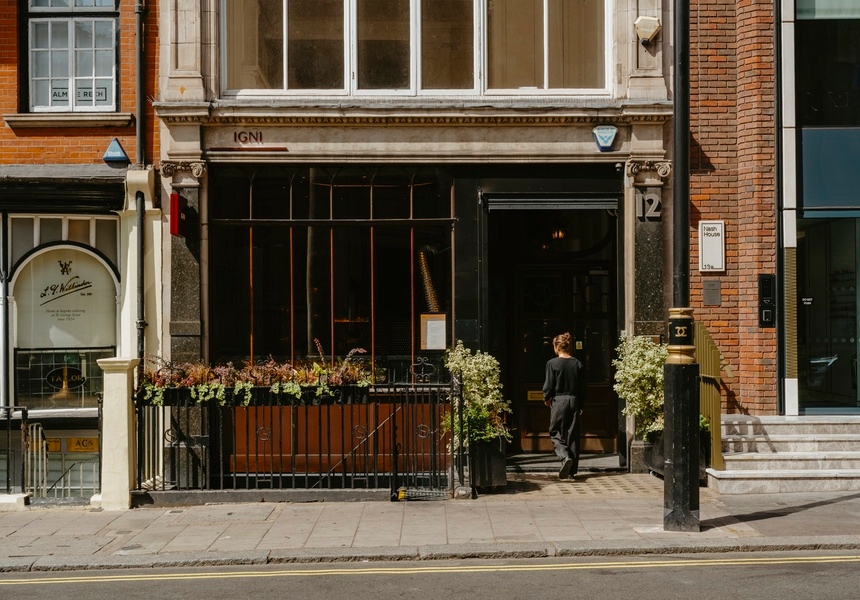
You think you know what you’re getting with restaurant bread. At a small plates joint you might expect a wodge of sourdough with whipped butter. Upmarket diners might give you a few different options with endless refills. At some more old-school spots? You’re in for a rock-hard roll and an even firmer roundel of butter. But at sultry fire-driven restaurant Igni in Mayfair, executive chef Theo Clench (ex-Cycene) has reimagined the bread course.
Whenever the restaurant – which was formerly Humo and relaunched as Igni in April – came up in conversation, friends and peers would go a little misty-eyed when they cast their minds back to the bread. Expectations had been set. And when I cracked open that warm, dense-yet-fluffy circle of bread, I instantly understood the hoopla.
“I judge a restaurant on its bread course,” Clench tells me. “I guess that’s what everyone else is doing, and we seem to have nailed it.”
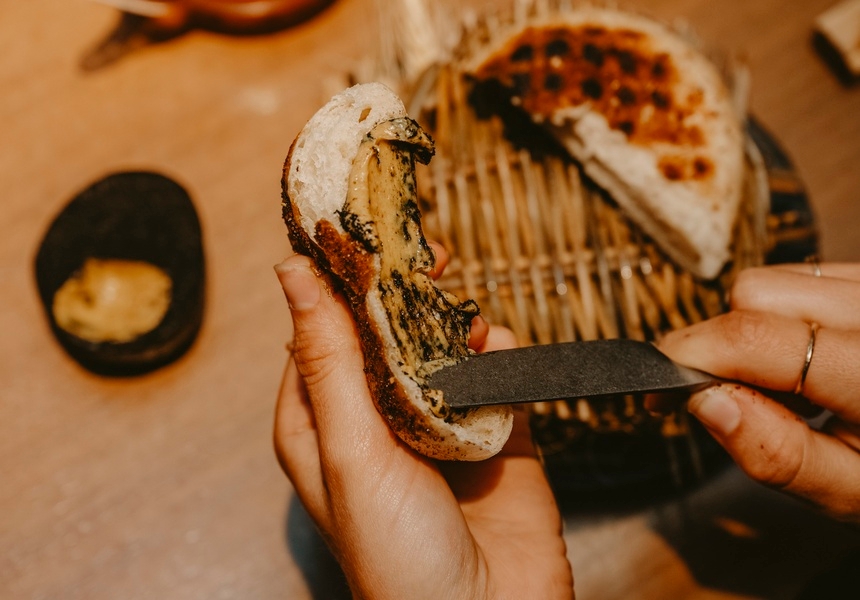
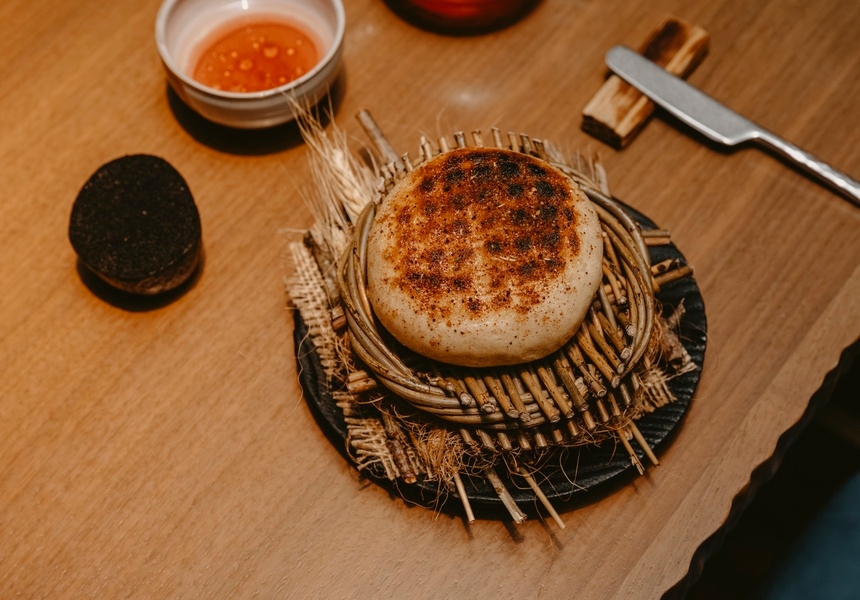
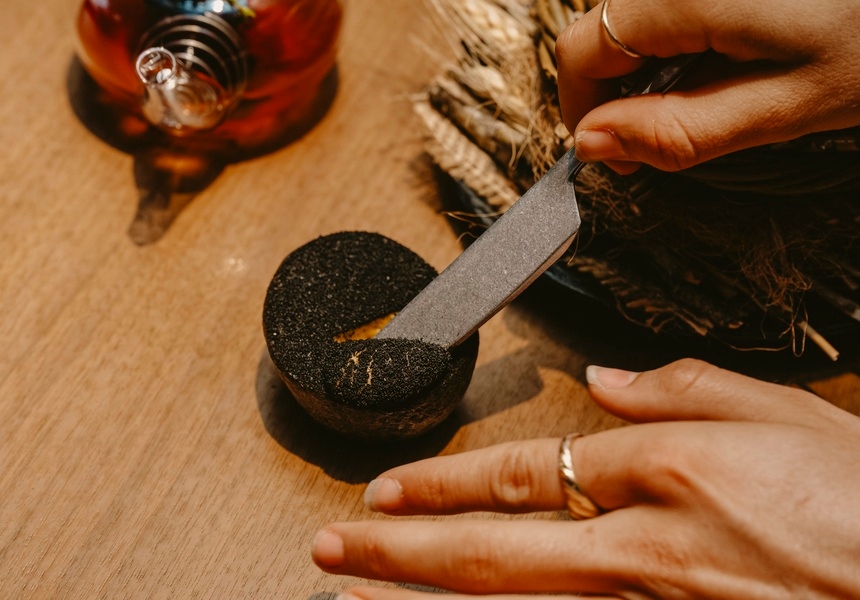
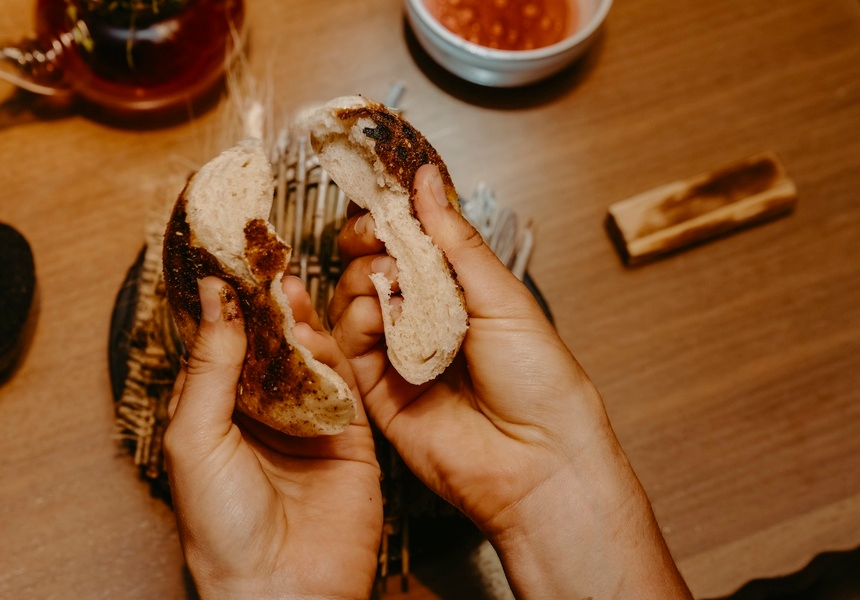
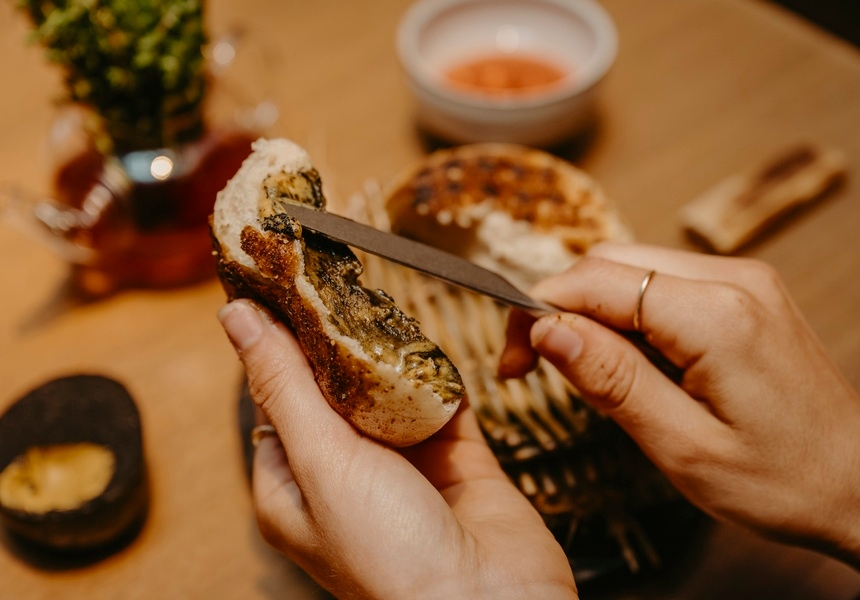
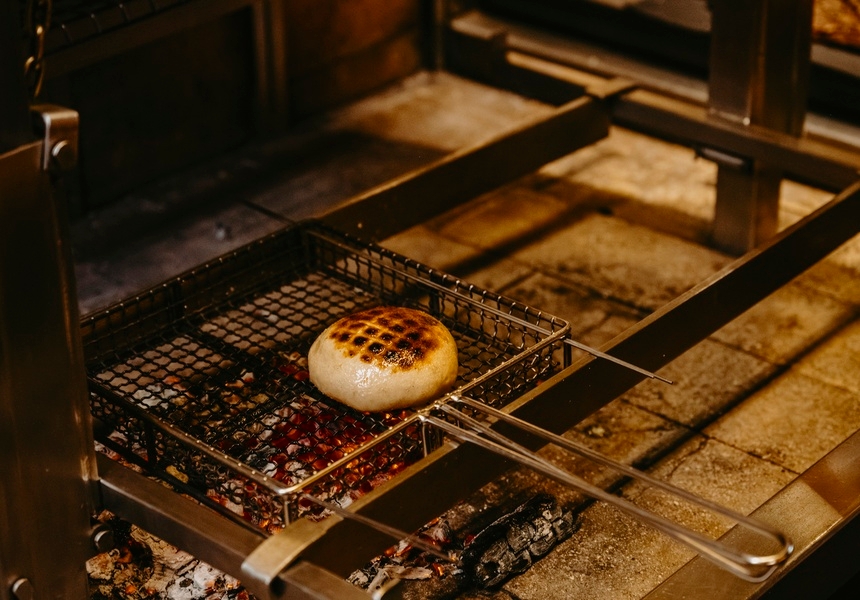
The bread in question is an event. It arrives after a sequence of bite-sized snacks, resting on a woven willow basket made in Sussex, which itself sits atop wheat and blackcurrant wood. It’s a plump, round pillow of a thing, inspired by fluffy Taiwanese bao. The butter, spiked with vadouvan (a French curry spice blend) is disguised as a pebble, delivered in a slightly misshapen granite vessel with a layer of blackened leek powder disguising the golden, aromatic butter below. Diners simply tear the bread – which has already been cut in half for ease – with their hands and load up the butter.
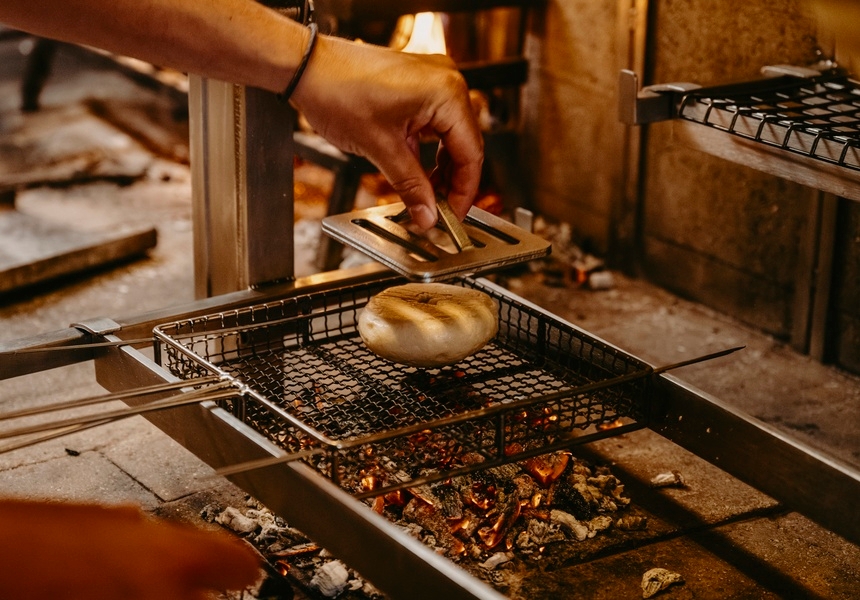
The result is immensely satisfying. It’s got a bit more chew and density than the cloud-like texture of a bao, and is finished over beech embers giving it a delicate crust and slight char. Igni might be a lovely Mayfair fine diner, but if you’re anything like me and my companion you’ll finish the bread course with buttery fingers and a deep groan of pleasure.
Clench says for every single day for three and half weeks he worked on perfecting the bread before hitting the jackpot. “I think bread courses can be quite the same, especially in London. I love a bao, and [we had to consider] what works well over the fire.”
Clench and his team experimented with fermented noodles and fermented courgettes – alongside the woodfire, fermentation plays a big role at Igni – among other bases, before landing on Yukon gold potatoes. “We found that potato was basically the most stable and it also gives a depth of flavour and acidity to the to the bun. So it was a lot of trial and error.”
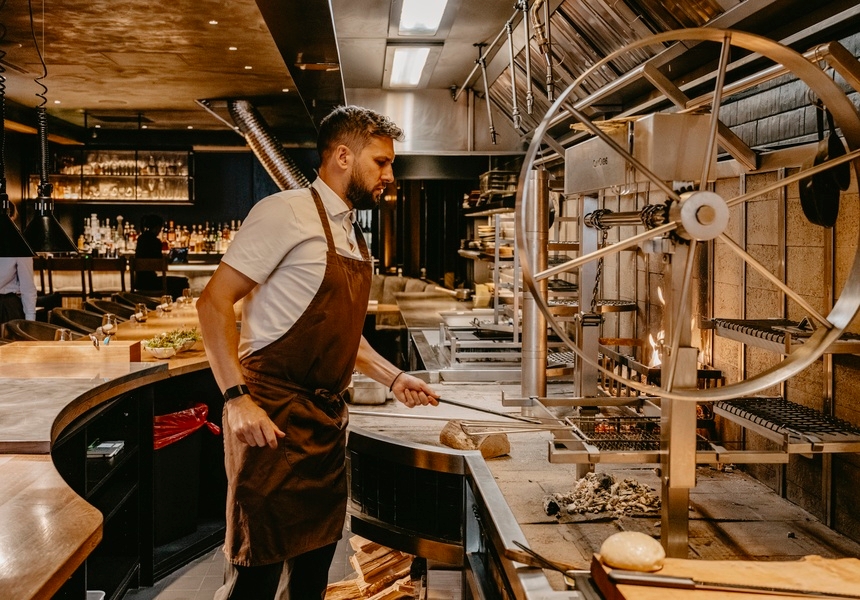
The potatoes are boiled, then mashed with salt and fermented for around a week to 10 days under regular conditions (the heatwave has meant much a much shorter fermentation of around three days). After the dough has been made, proved, shaped into balls and proved again, it’s steamed, much like a bao, then given a final cook over the embers.
As for the pebble of butter? “It’s a little bit fun,” Clench says. And it doesn’t end at bread and butter. The bread also arrives with a teapot of broth, garnished with a bunch of herbs sticking out the top like Sideshow Bob’s hair. At the time of writing it’s a chilled broth, all the better for dealing with the ongoing summer heat (another nifty Igni heat-battling trick: it supplies personal fans to cool down diners). It’s ultra-savoury yet refreshing, and when I visited it was spiked with oil made from blackcurrant wood back when the bushes were being pruned in March and April.
“It’s to refresh the palate as well, and depending on people’s tolerance to spice, it's good to have something that can tone [the vadouvan] down a little bit,” Clench says. “It can be quite intense with the butter and the crumb on top of the bread.”
While Clench is keen to point out the rest of the menu is just as meticulous and enjoyable as the butter – a tribute to the bounty of the land and sea, cooked and transformed over flames – he’s pleasantly surprised that the bread has become a draw. “It’s always the least expected thing that becomes the ‘thing’. I thought it would be the tuna or the tofu dessert. People love bread.
“It turns out that we’ve seemed to nail it. I think it ties in with the fire very well, and [diners] like the interactiveness of the broth and having the butter that you can’t tell is butter. It’s a little bit playful, and it just tastes really nice.”