The Counter is a weekly column from award-winning restaurant writer and broadcaster Jimi Famurewa. Sign up to get The Counter first, sent to your inbox every Wednesday.
Hello again.
How often do you actually think about fish’n’chips? Beyond the reliable cravings that attend very specific circumstances (a trip to the seaside; encountering the beckoning vinegary waft of a neighbourhood chippy on a Friday), I have a working theory that fish’n’chips – one of Britain’s unofficial national dishes – is so inescapable and obvious that it is almost invisible: an ambient part of London’s tourist-friendly social furniture in the same broad genre as black cabs and malodorous red phone boxes.
So it’s been a surprise, over the past few weeks, to see a couple of notable fish’n’chips stories dominating culinary conversation online and in the city. First was the sudden, shock disappearance of Fish Central, a beloved, uncommonly high-quality traditional chippy near Old Street that has been forced to close – the owners insist it is temporary – while its premises are being redeveloped. Next, and perhaps linked to a wider sense of endangerment and precarity across the industry, was a recent national newspaper story about inflationary price-creep hitting the world of fish frying. “Fish and chips for four? That’ll be more than £45, please,” ran the headline to a rigorous investigation in The Sunday Times; a story that itself trailed in the wake of similar summertime reports from The Guardian (“Can the UK kick its cod habit?)”) and BBC News (“Why has the price of fish and chips gone up?”).
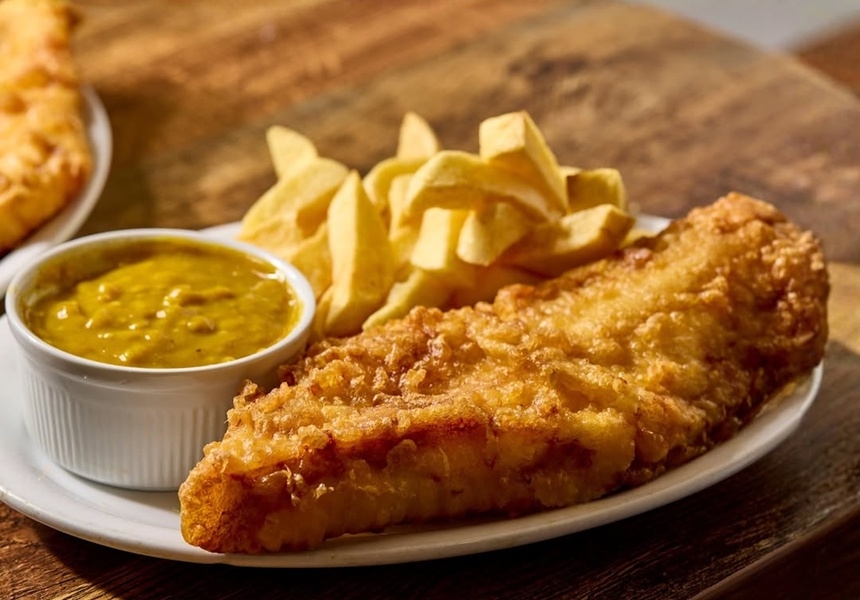
These stories – which examined how everything from the war in Ukraine to energy costs have uniquely imperilled the nation’s chippies – struck me as revealing, only perhaps not in the way they were meant to be. Maybe it is that more than five years of the cost-of-living crisis has warped my sense of what constitutes a reasonable price for eating out in London. Maybe, like a saveloy-loving Marie Antoinette, I am telling on myself, in terms of relative privilege and culinary spending budget. But, in the context of 2026, does £45 to feed four people really seem that outrageous? Isn’t the best possible version of a chippy tea – a golden, bubbled wave of battered haddock, a cascade of hot, vinegar-doused chips and a sharp splat of tartare sauce – worth the £12 a head many would drop on the meagrest Five Guys or Wingstop order imaginable?
And, more broadly, does this summer’s fish’n’chips pricing panic in fact nudge us towards an uncomfortable central truth? Namely: have we actually just been wildly underpaying for some of our most treasured culinary mainstays for far too long?
As ever, it’s useful to go back to the beginning. Shaped by frying techniques brought to Britain by Sephardic Jews fleeing persecution in Spain and Portugal, the practise of serving paper-wrapped parcels of crisp, batter-dredged fish proliferated in the late 19th century but really exploded around the 1930s. Fish’n’chips attached itself to the national consciousness during the interwar period (famously, though it became more expensive during World War II, it was never rationed), but its popularity also coincided with an era of industrialised change and plenitude, boosted by newly rail-connected cities and towns, plus newfangled steam-trawling boats bringing in unprecedented monster catches of white fish from the North Sea. This atmosphere of abundance (similar to the supply of readily available eels that precipitated the initial boom in pie and mash shops) turned fish’n’chips into inexpensive workers’ fuel; a foodstuff where the cheapness and absurd generosity – order a “regular” portion of chips and you can generally expect enough of a shovelled mound to fill a Trader Joe’s bag – was practically enshrined in law.
As a dish, it is still a culinary anachronism (complete with retro built-in friers, ersatz newsprint packaging and ancient counter-top jars of pickled eggs) but the modern operating landscape could hardly be more different. Overfishing of cod, haddock and even pollock have led to dwindling supplies and catch quotas. The wars in Russia and the Middle East have caused the wholesale equivalent of surge pricing, and VAT and wage costs have further eroded margins. The result is the current tension between our vague, half-remembered sense of what fish’n’chips should cost and the brutal reality of what these businesses currently have to charge to make any sort of profit.
There is no getting away from the sticker shock of some modern prices. The fact that my (very good) favoured local chippy is charging £14.15 for haddock without chips feels like the kind of thing that might spark insurrection north of the Watford Gap. Plus, there is very little to match the profound disappointment of dropping an inflated sum on terrible fish’n’chips (my entire family is still genuinely haunted by a soggy, faintly putrid Deliveroo order from a once-brilliant Greenwich spot last year).
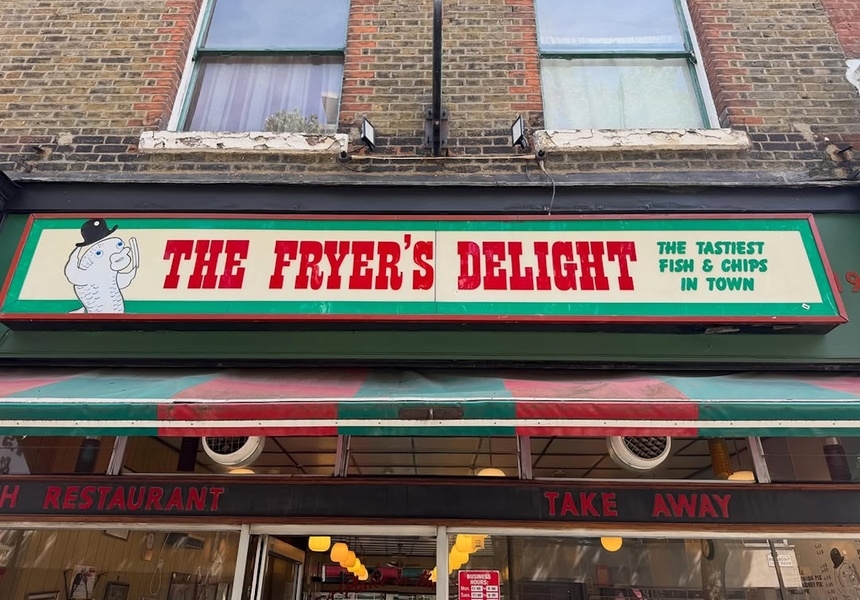
But if you have recently tried to buy responsibly sourced sustainable fish from a decent fishmonger, then you will know that this is a base product that carries a considerable outlay. Moreover, it does feel like we need to recalibrate our sense of the value placed on a simple but immensely skilled and freshly made expression of local food culture. The $38 plate of lavishly bronzed battered hake and chips on the menu at Jess Shadbolt’s Dean’s is arguably the hottest dish in New York. Is the gulf between that and what is served at, say, Brockley’s Rock in south east London, The Fryer’s Delight in Holborn or Marlow Fish Bar in the wilds of Anerley really so great? The hope is that long-running foreign conflicts will end, inflationary pressures will ease, and the days of abundance once enjoyed by the East End’s original fish fryers will return. But until then, and especially if they are not going too far beyond the threshold of around £10 a portion, London’s committed, independent chippies need our patronage and support. If fish’n’chips is more expensive, then it is because almost everything is. Just because something is part of our culinary past, doesn’t mean its prices have to stay there.
For Jimi Famurewa’s dish of the week, sign up to get The Counter first, sent to your inbox every Wednesday.
Got a question about London's dining scene that you'd like Jimi to answer, or a hot tip about a great place to eat or drink in London? Email jimi@broadsheet.com.