The Counter is a weekly column from award-winning restaurant writer and broadcaster Jimi Famurewa. Sign up to get The Counter first, sent to your inbox every Tuesday.
Hello team.
Like most restaurant obsessives, I spent a good chunk of last week looking on, with a kind of rapt, mounting horror, as Noma’s gastronomic empire seemed to crumble in slow motion. You will almost certainly know how it all played out. First, a rigorous muscle-flex of a New York Times investigation (prompted by weeks of social media whistleblowing) ripped through the industry, detailing jaw-dropping accusations of alleged historical physical and emotional abuse, largely enacted by René Redzepi at his phenomenally successful and groundbreaking three Michelin-starred restaurant-turned-travelling epicurean circus. Next, headline sponsors of Noma’s sellout, US$1500-a-head LA pop-up hurriedly departed, just as hordes of placard-wielding protestors thronged the mushroom inflatables beyond its gates. Finally, after Redzepi’s initial apologies had prompted industry-wide debate and noisy disagreement, the inevitable development came via a deeply weird announcement video: after more than 20 years turning Noma into an enormously influential cultural and culinary phenomenon, the Danish Albanian chef would be stepping down from his roles at the company, and its spin-off nonprofit Mad, with immediate effect.
Is there a single take on all of this that hasn’t yet been put forward? That has been my primary thought, over the past few days, as I have looked at the ravaged discourse buffet (this being Noma, I am mostly picturing a buffet of elk brain remnants and nibbled fruit leather invertebrates) and weighed what I could possibly contribute to what has felt like a long, wearying jamboree of take and counter-take. To be an informed observer with a degree of proximity (though I haven’t been to Noma, I once hosted an event for its spin-off consumer packaged goods brand, Noma Projects) is not the same as having something novel to contribute. Noma alums, restaurant writers and commentators on both sides of the Atlantic have chipped in with their two cents. Beyond feeling a pervading sadness for all involved – for those allegedly subjected to violence while tweezering delicate garnishes into place, for the Noma staff who now have to pick up the pieces and deliver a three-month pop-up under a noxious cloud and, yes, even dimly, for megalomaniac chefs who have ended up perpetuating the systems of bullying and intimidation they themselves survived – there did not seem a great deal to add.
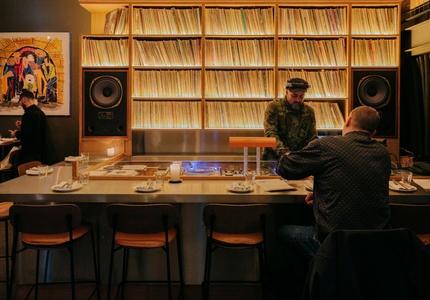
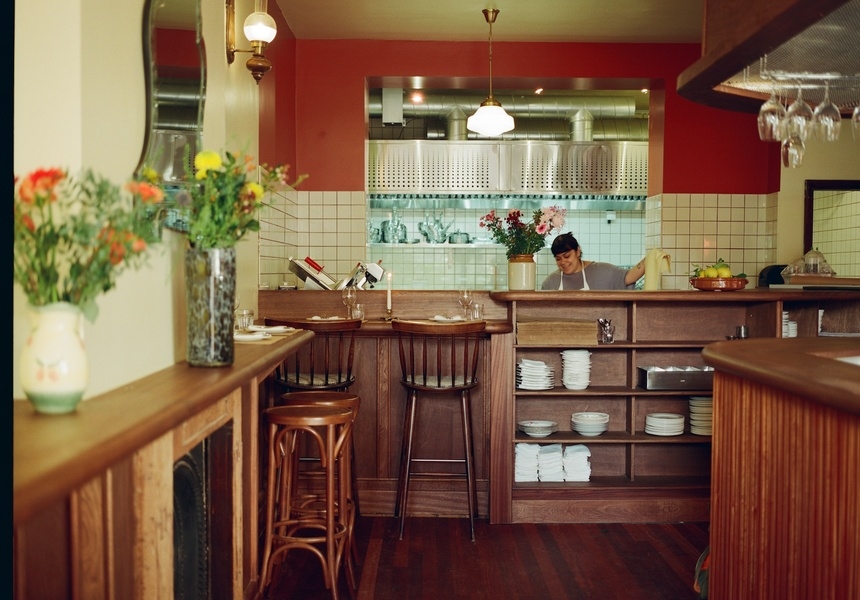
But then, I found that there was one very familiar aspect of the story that I couldn’t stop thinking about: open kitchens. If you are anything like me then the most indelible accusation of that original New York Times story will be that Redzepi would occasionally crouch beneath counters so that diners couldn’t see him poking employees, or jabbing them with barbecue forks, for perceived infractions. It is a shocking image; almost comic in its depiction of cruelty at its most conniving, vindictive and petty. Yet, at the same time, it seems to brightly illuminate a truth about open kitchens that we sense but perhaps do not often acknowledge. Namely, that these supposedly borderless zones between front and back of house – literally referred to as “show kitchens” within some restaurants – are merely another layer of performance; a choreographed razzmatazz of flambeed pans, nestled quenelles and olive oil drizzles that keeps the messy realities of the kitchen hidden from view. So how open can an open kitchen really be? Should a restaurant’s workplace culture matter to diners? And what will be the lasting impact of this horrifying glimpse beneath the serene, idealistic iceberg-tip of a restaurant like Noma?
The first thing to say is that even forms of artifice can be inadvertently revealing. Yes, in my many years observing restaurant workers in open kitchens, I have come to recognise the stiff, rictus-grinned display of a team muzzling their natural inclinations for the diners’ benefit. But masks do not tend to stay fully in place amid the heat and noise of a busy service. I have seen dressing downs delivered at a whisper through the corner of a mouth; overcooking disasters communicated through just a widening of the eyes; a power jostle between an exasperated pastry chef and a cocky subordinate that, genuinely, felt like watching a gripping one-act play.
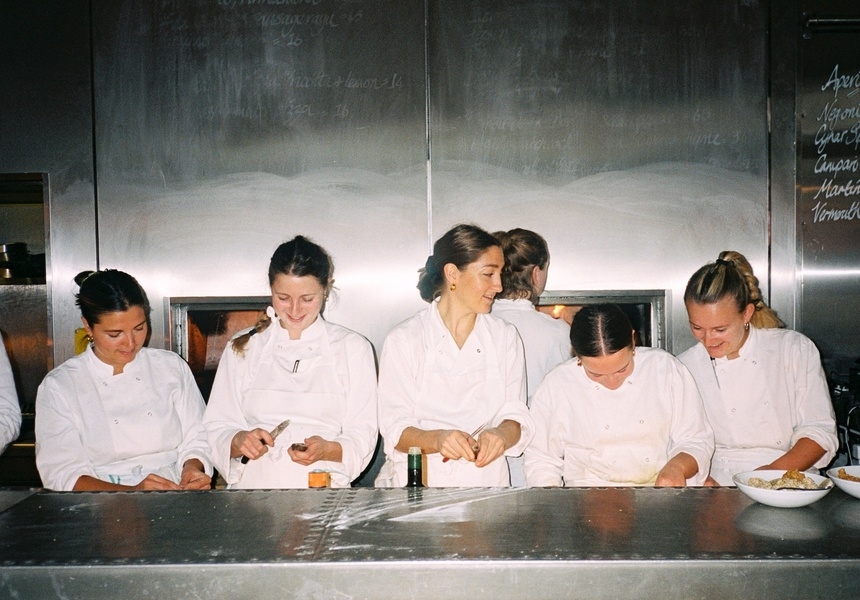
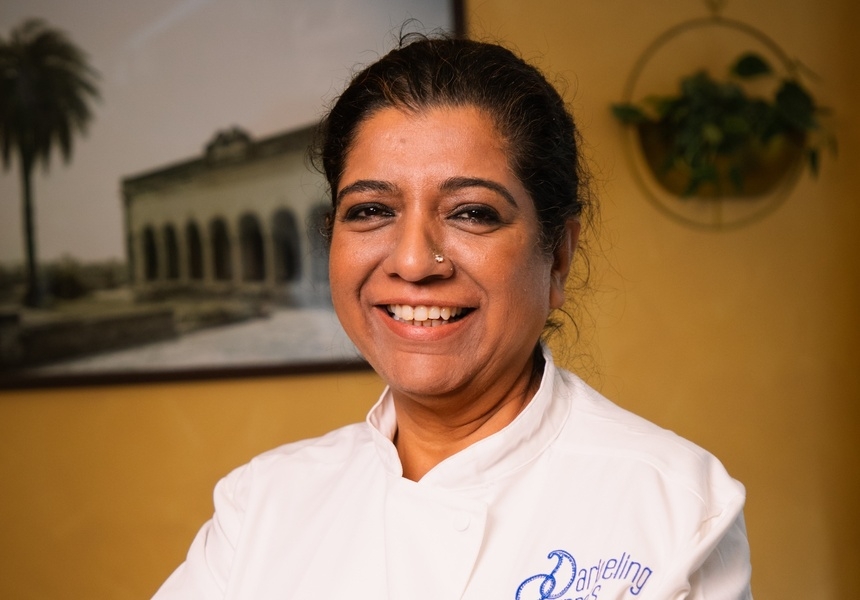
Moreover, I thought of the open kitchens where the behaviour seemed to radiate an infectious positivity that is impossible to fake. I thought of the famous all-female brigade at Darjeeling Express, nudged along by Asma Khan’s firm, sisterly encouragement. I thought of Jessica Filbey at Canteen, leading a young team through the raging furnace of a lunchtime service, with a steely, supportive calm that I still think about often. I thought of the prowling band of roguish, sparky professionals who are as integral to Tiella’s success as Dara Klein’s bay leaf panna cotta. That all these kitchens happen to be led by women feels significant – though I would also say that Doug McMaster’s Silo (RIP) shows how to run a benign, Noma-influenced cult with some palpable warmth, humour and a team of what appears to be happy, supported true believers.
We should resist the binary of bracketing restaurants and their workplace cultures as either “good” or “bad”. Most chefs or restaurateurs publicly hailed for their kindness will have a former employee with some scurrilous tea to spill; successful businesspeople in hospitality, inevitably, often have a flinty determination that means they can be both charming and monstrously difficult. The image of the screaming chef-perfectionist – as evinced by the fact you will soon be able to eat an “idiot sandwich” special at the London outpost of Gordon Ramsay’s Hell’s Kitchen – persists, and greatness, both critically and commercially, tends to launder bad behaviour. There is the myth of a saintly, perfect hospitality boss on one side, the unconscionable (and potentially criminal) alleged behaviour at Noma on another, and a vast ocean of imperfect human behaviour in between.
Fundamentally, the past 10 days or so have brought a fundamental shift in what we all think when we see the name Noma. What used to be the international imprimatur of a certain mode of boundary-pushing, high-level gastronomic creativity and locavore progressiveness – the kind of thing any chef would kill to have on his or her CV – now has the taint of toxicity. This does not totally take away from the brilliant things that Noma, as both restaurant and travelling entity, did or is still doing. But it just isn’t easily pushed aside. If there is a legacy to all this, then I hope it will be a renewed appreciation of how important a baseline of kindness and fairness is to both chefs and diners. As well as, perhaps, a shift in how we measure and discuss true culinary greatness.
Late last week, I headed to Towpath, Lori De Mori and Laura Jackson’s justly adored and recently reopened seasonal cafe on the Regent’s Canal, for a reminder of the sorts of places that perhaps stand to benefit from this recalibration. Now in its 17th year of spring-to-autumn operation, the reassembled team shuffled in and out of its slender kiosk spaces (there is no option but an open kitchen here), bundled up in snoods, and projecting capable, hardy contentment despite a whipping, Baltic wind that hadn’t got the crispy-sage-eggs-in-the-sunshine memo. That the dishes from the daily changing menu – poached leeks beneath a carpeted heaping of chopped egg; toothsome, delicate dumplings in a shimmering wonder of a chicken broth – were rough-hewn did not take away from their breathtaking deliciousness and clarity. Even better: I am going to stick my neck out and say that no one had to be slammed against a wall or screamed at in order to produce them.
Midway through the meal, Jackson let me nip into the staff toilet that lies beyond her compact kitchen. “It’s messy and it’s small but it’s warm,” she warned me, as I crossed over into her domain and opened the door to a room that literally doubled as a broom cupboard. It’s a sentence that could almost work as a mission statement for this special, energising little business. And I think, in a week when we have all been reminded of the hidden human toll encoded into the DNA of restaurants like Noma, we will all take mess, smallness and warmth over problematic perfection.
For Jimi Famurewa’s dish of the week, sign up to get The Counter first, sent to your inbox every Tuesday.